Expression and clinical significance of MCF2L-AS1 in stomach adenocarcinoma
Chaowen Sun, Jun Guo, Bixia Chen, Xiayang Lu, Huihui Jiang

TL;DR
This study finds that MCF2L-AS1, a long non-coding RNA, is linked to stomach cancer progression and poor survival, suggesting it could be a new target for treatment.
Contribution
The study identifies MCF2L-AS1 as an oncogenic long non-coding RNA that negatively regulates miR-503–5p in stomach adenocarcinoma.
Findings
MCF2L-AS1 is upregulated in stomach adenocarcinoma tissues and correlates with advanced cancer stages and poor survival.
MCF2L-AS1 negatively regulates miR-503–5p, acting as a competitive endogenous RNA.
Knockdown of MCF2L-AS1 inhibits cancer cell behaviors, which are reversed by low miR-503–5p levels.
Abstract
Stomach Adenocarcinoma (STAD) poses a significant burden due to its high prevalence and costly, painful treatments, exerting considerable pressure on individuals. This study intends to explore novel therapeutic targets to enhance prognosis and alleviate patient stress. Quantitative Real-time Polymerase Chain Reaction was employed to detect MCF2L-AS1 expression in STAD tissues and cell lines. The correlation between this expression and patients' clinical conditions and prognosis was analyzed utilizing the Chi-squared test and Kaplan-Meier method. To investigate the regulatory mechanism of MCF2L-AS1, the Luciferase reporter gene system and transfection experiments were implemented. Cellular behaviors were analyzed through CCK8 and Transwell assays. MCF2L-AS1 expression was upregulated in STAD tissues and cells, strongly correlating with TNM stage and lymph node metastases. High…
Genes, proteins, chemicals, diseases, species, mutations and cell lines named across the full text — each resolved to its canonical identifier and authoritative record.
Click any figure to enlarge with its caption.
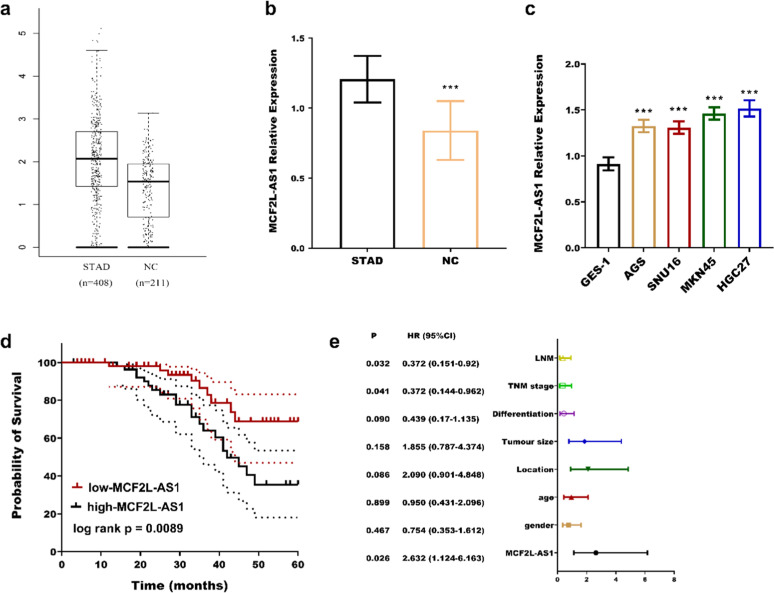 Figure 1
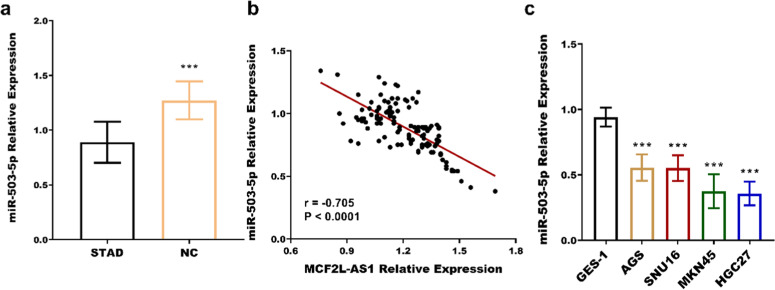 Figure 2
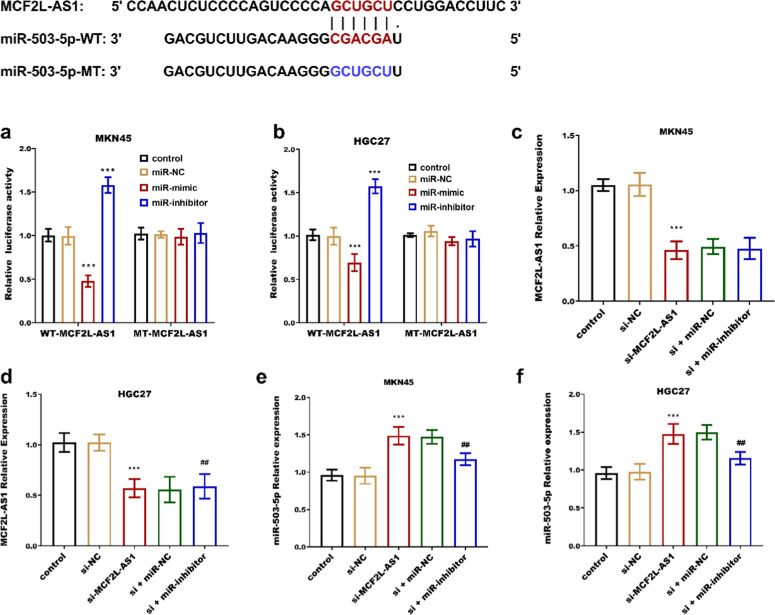 Figure 3
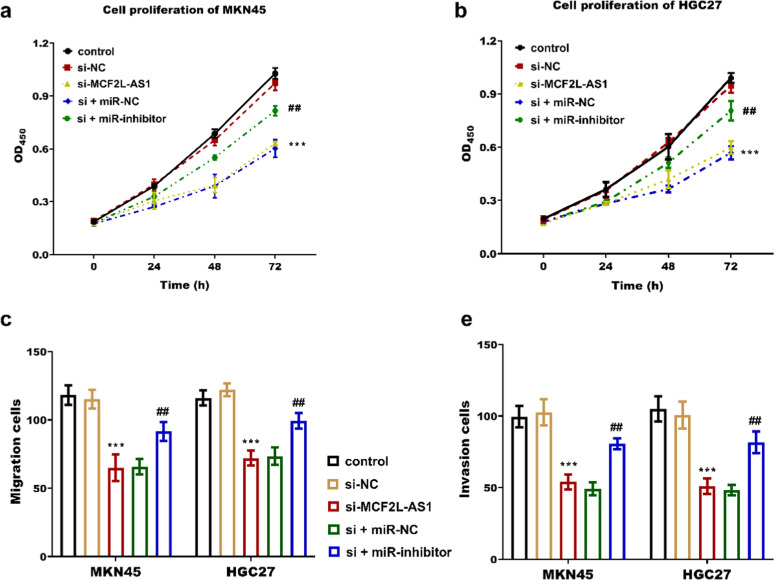 Figure 4
Peer Reviews
No public reviews on file for this paper yet. If you reviewed it on a platform where reviews are public (OpenReview, ICLR, NeurIPS, ICML), you can paste yours below so the community can read it here.
Videos
No videos yet. Explain this paper in a talk, walkthrough, or lecture? Add one.
Taxonomy
TopicsCancer-related molecular mechanisms research · RNA modifications and cancer · MicroRNA in disease regulation