The binding sites of carbon dioxide, nitrous oxide, and xenon reveal a putative exhaust channel for bovine cytochrome c oxidase
Kazumasa Muramoto, Tomohiro Ide, Kyoko Shinzawa-Itoh

TL;DR
Researchers identified a potential channel in cytochrome c oxidase that expels gases like CO2, Xe, and nitrous oxide, which could help understand how the enzyme manages gas molecules.
Contribution
The study reveals a putative exhaust channel for CO2 and other gases in bovine cytochrome c oxidase using high-resolution crystal structures.
Findings
Xenon binding supports the proposed O2 transfer pathway in cytochrome c oxidase.
CO2, nitrous oxide, and xenon bind to a common site near a branching hydrophobic channel.
A second channel involving subunit VIIc may passively expel CO2 from the O2 pathway.
Abstract
Cytochrome c oxidase (CcO) catalyzes oxygen (O2) reduction at the heme a3–CuB site in the transmembrane region of the enzyme. It has been proposed that the hydrophobic channel that connects the transmembrane surface of subunit III through subunit I to the heme a3–CuB site is the O2 transfer pathway. Gas molecules other than O2, including carbon dioxide (CO2) generated in the tricarboxylic acid cycle, should also enter the hydrophobic channel, but it is not clear how these molecules are expelled from CcO. We analyzed the crystal structures of CO2-, nitrous oxide-, and Xe-bound bovine CcO in the oxidized and reduced states at resolutions of 1.75 to 1.85 Å. Binding of Xe in the channel of subunit I near the interface with subunit III supported the proposed O2 transfer pathway. CO2, nitrous oxide, and another Xe were all bound to a common site near the branching point of another hydrophobic…
Genes, proteins, chemicals, diseases, species, mutations and cell lines named across the full text — each resolved to its canonical identifier and authoritative record.
Click any figure to enlarge with its caption.
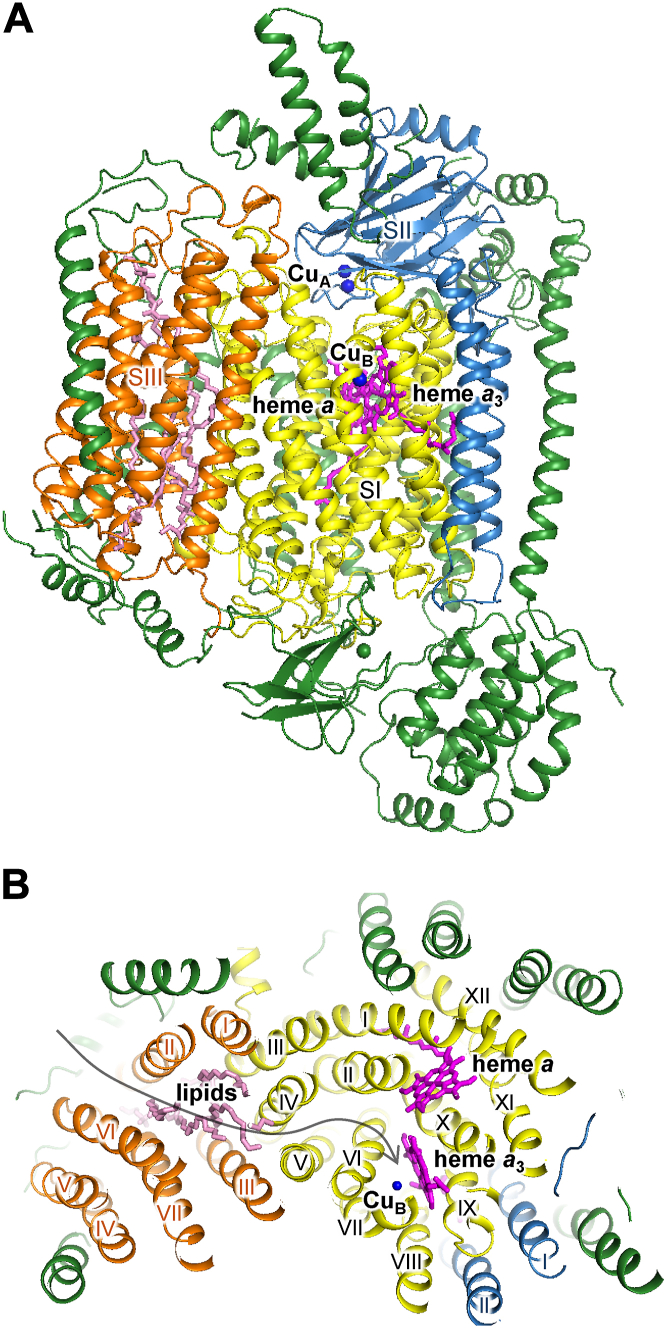 Figure 1
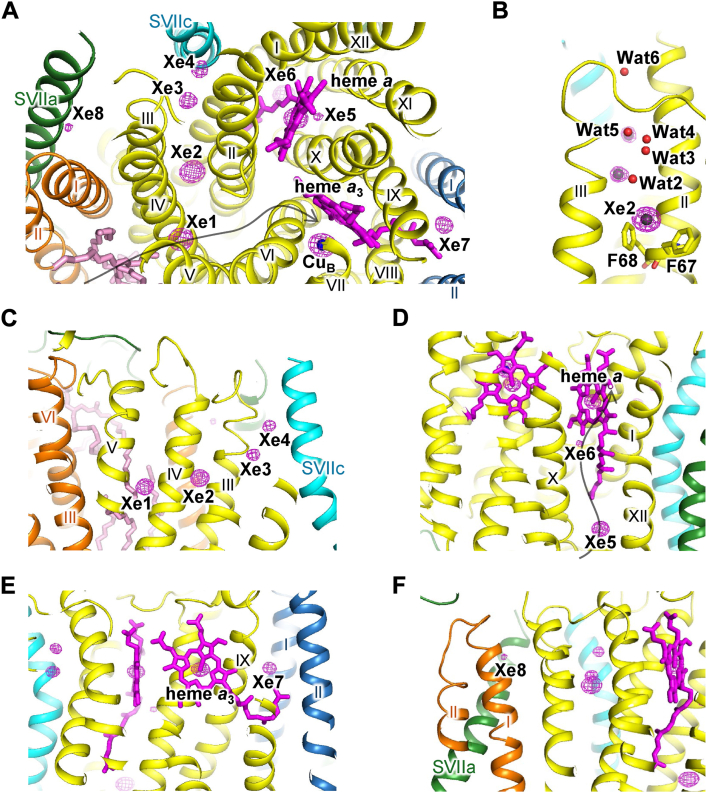 Figure 2
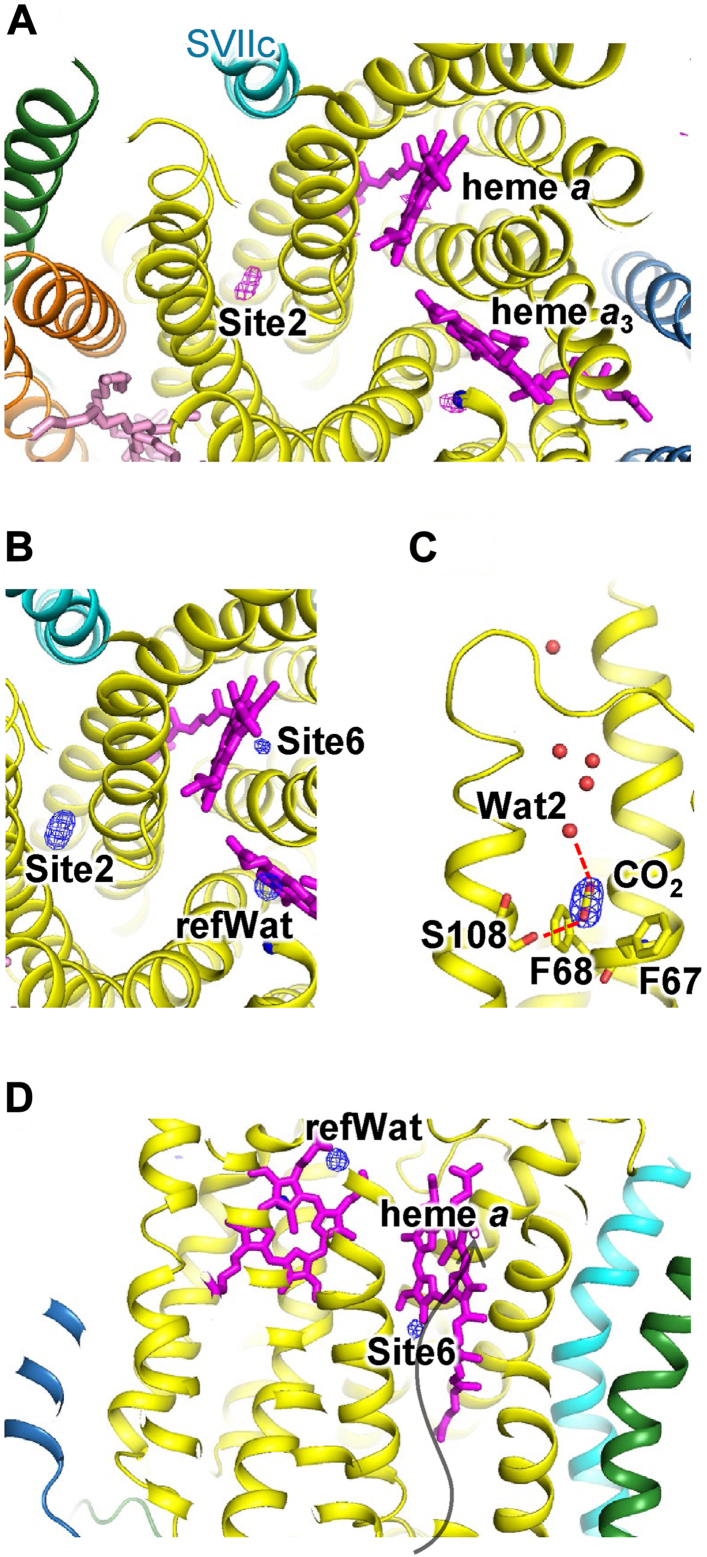 Figure 3
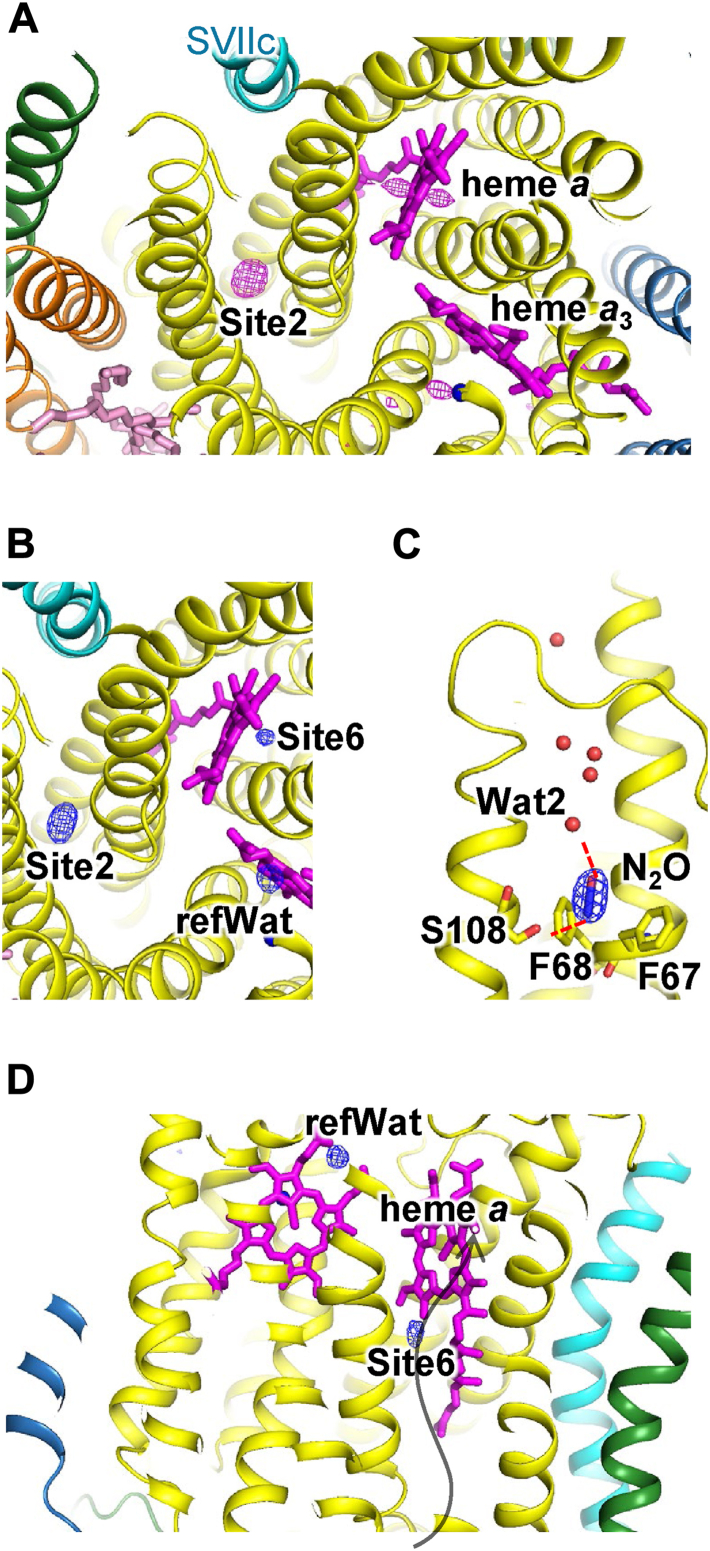 Figure 4
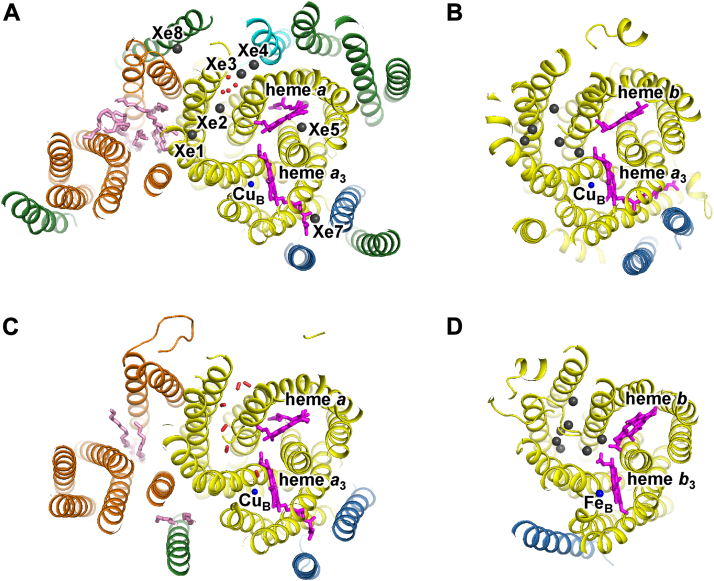 Figure 5
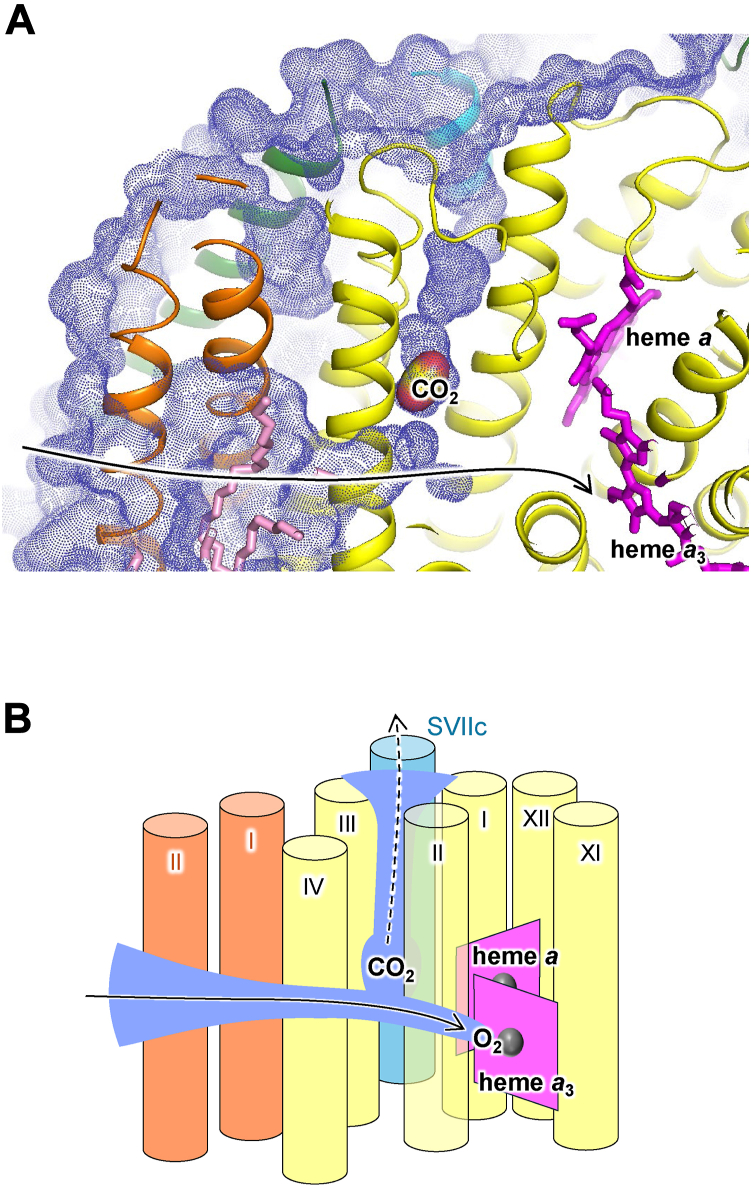 Figure 6
Peer Reviews
No public reviews on file for this paper yet. If you reviewed it on a platform where reviews are public (OpenReview, ICLR, NeurIPS, ICML), you can paste yours below so the community can read it here.
Videos
No videos yet. Explain this paper in a talk, walkthrough, or lecture? Add one.
Taxonomy
TopicsPhotosynthetic Processes and Mechanisms · Photoreceptor and optogenetics research · Mitochondrial Function and Pathology