TNFα stimulates osteoclastogenesis and expression of CX3CL1 in non-adherent bone marrow cells
Yuto Otsuka, Narumi Hattori, Hiromasa Aoki, Kohki Toriuchi, Yasumichi Inoue, Hidetoshi Hayashi, Gen Kuroyanagi, Yohei Kawaguchi, Yuko Waguri-Nagaya, Mineyoshi Aoyama

TL;DR
TNFα has a time-dependent effect on bone cell formation, with late-stage stimulation promoting bone breakdown via CX3CL1 in marrow cells.
Contribution
The study reveals a biphasic, time-dependent role of TNFα in osteoclastogenesis and identifies CX3CL1 as a key mediator in non-adherent bone marrow cells.
Findings
Late-stage TNFα stimulation promotes osteoclast formation via upregulation of CX3CL1 and CXCL7 in non-adherent bone marrow cells.
TNFα's effect on osteoclastogenesis is time-dependent, with early inhibition and late promotion observed.
Neutralizing TNFR1 and TNFR2 suppresses osteoclastogenesis and reduces CX3CL1 mRNA expression in marrow cells.
Abstract
The balance between bone formation by osteoblasts and bone resorption by osteoclasts is a critical step in maintaining bone homeostasis. Excessive activation of osteoclasts is important in the bone destruction seen in diseases such as osteoporosis and rheumatoid arthritis. The microenvironment around bone marrow cells regulates osteoclastogenesis through cytokine expression. Tumor necrosis factor–α (TNFα) is a proinflammatory cytokine that plays an important role in bone loss in rheumatoid arthritis. Therefore, this study investigated the effect of TNFα on osteoclastogenesis via chemokines produced by microenvironmental cells. In in vitro culture of mouse bone marrow cells, TNFα added simultaneously with receptor activator of nuclear factor kappa-B ligand (RANKL) and macrophage colony-stimulating factor (M-CSF) from the initiation of culture significantly inhibited osteoclast formation.…
Genes, proteins, chemicals, diseases, species, mutations and cell lines named across the full text — each resolved to its canonical identifier and authoritative record.
Click any figure to enlarge with its caption.
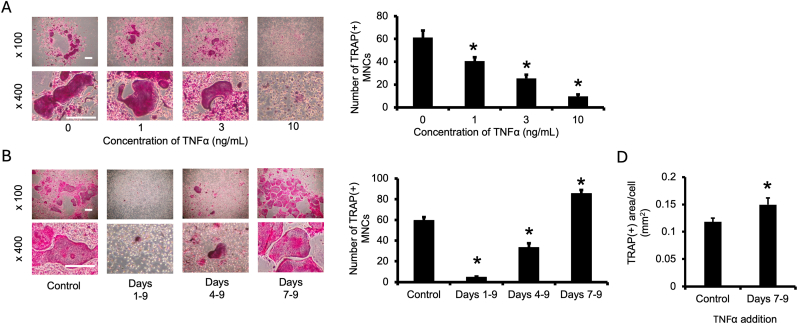 Figure 1
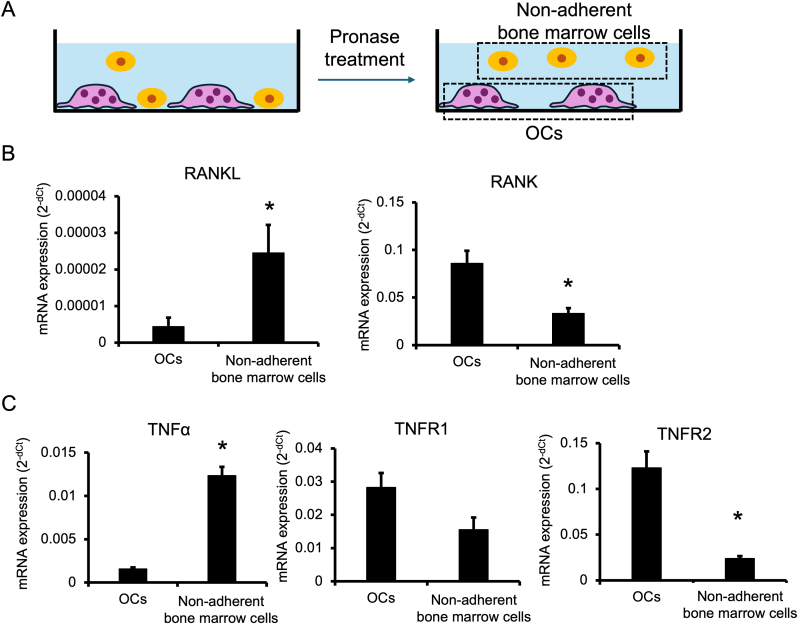 Figure 2
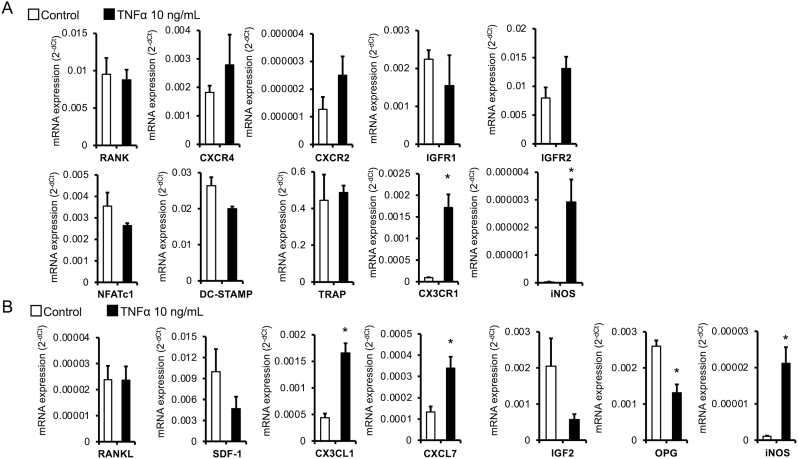 Figure 3
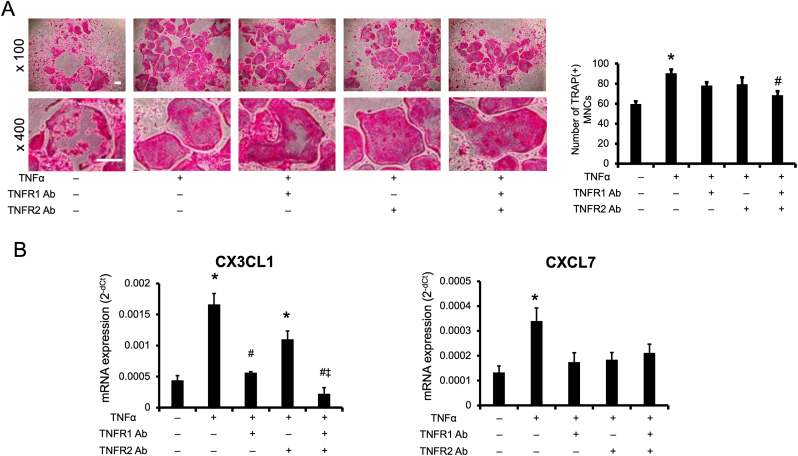 Figure 4
Peer Reviews
No public reviews on file for this paper yet. If you reviewed it on a platform where reviews are public (OpenReview, ICLR, NeurIPS, ICML), you can paste yours below so the community can read it here.
Videos
No videos yet. Explain this paper in a talk, walkthrough, or lecture? Add one.
Taxonomy
TopicsBone Metabolism and Diseases · Bone health and treatments · Cell Adhesion Molecules Research