A dataset of risky and ambiguous decisions using a novel Linked Colored Lottery Task across two studies
James B. Wyngaarden, Yi Yang, Jeffrey B. Dennison, David V. Smith

TL;DR
This paper introduces a new task to study how people make decisions when outcomes are uncertain, capturing individual differences in beliefs about probabilities.
Contribution
The Linked Colored Lottery Task allows for examining decision-making under ambiguity beyond max-min assumptions by incorporating beliefs about probabilities.
Findings
The dataset includes demographic and questionnaire data alongside decision-making behavior in ambiguous scenarios.
The task enables analysis of how individual beliefs about probabilities influence decisions beyond worst-case and best-case assumptions.
Abstract
How individuals make decisions under ambiguity (i.e., uncertain situations where the probability of an outcome is unknown) has been related to numerous individual differences of clinical importance including aging, substance use, and autism spectrum disorders. Despite this, many studies rely on a max-min model of ambiguity decision-making, which assumes that individuals evaluate ambiguous options based solely on worst-case and best-case scenarios. However, this approach does not account for the role of individual beliefs about underlying probabilities, which can significantly shape decision-making behavior. We introduce a novel task, the Linked Colored Lottery Task, in an in-person (N= 53) and online sample (N= 300) which allows for analyses that examine the effect of these beliefs. Along with this novel task, demographic information and data for several personality and clinical…
Genes, proteins, chemicals, diseases, species, mutations and cell lines named across the full text — each resolved to its canonical identifier and authoritative record.
Click any figure to enlarge with its caption.
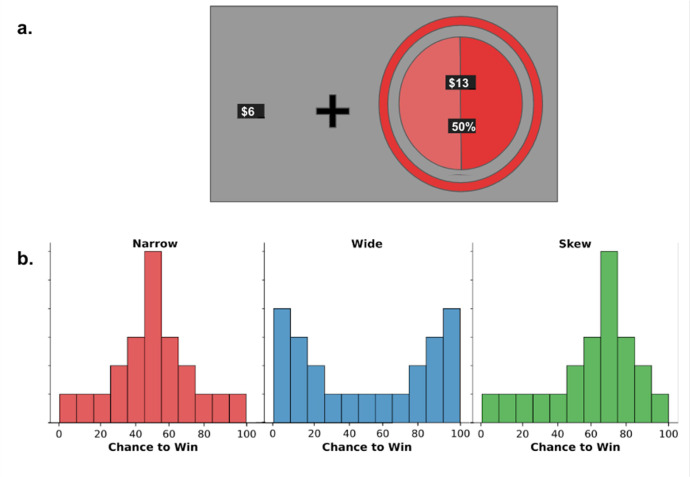 Figure 1
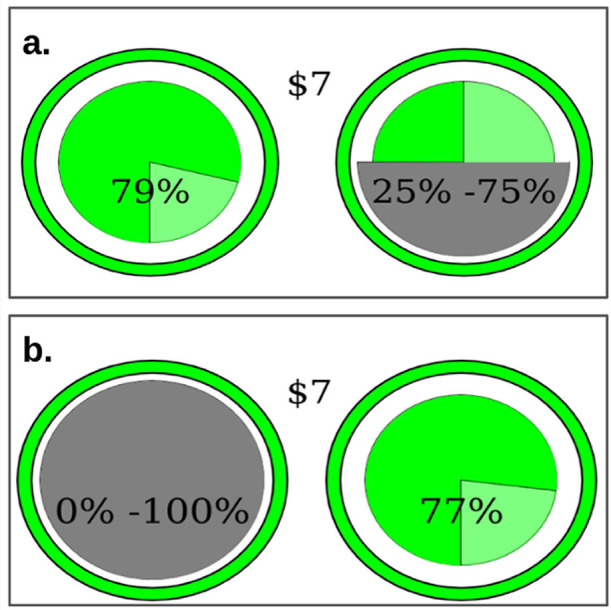 Figure 2
Peer Reviews
No public reviews on file for this paper yet. If you reviewed it on a platform where reviews are public (OpenReview, ICLR, NeurIPS, ICML), you can paste yours below so the community can read it here.
Videos
No videos yet. Explain this paper in a talk, walkthrough, or lecture? Add one.
Taxonomy
TopicsGambling Behavior and Treatments · Artificial Intelligence in Games