Long-Term Outcome After Mustard Repair at Young Age: Longitudinal Follow-Up Into the Fifth Decade After Surgery
Sahra Ünlütürk, Robert M. Kauling, Judith A.A.E. Cuypers, Annemien E. van den Bosch, Alexander Hirsch, Mieke M.P. Driessen, Chiara Pelosi, Daniel J. Bowen, Ad J.J.C. Bogers, Willem A. Helbing, Isabella Kardys, Jolien W. Roos-Hesselink

TL;DR
This study follows patients with transposition of the great arteries who had Mustard repair as children into their 40s, finding high long-term mortality and complications.
Contribution
The study provides the longest follow-up of Mustard repair patients, revealing late deterioration and risk factors for heart failure and arrhythmias.
Findings
Cumulative survival at 48 years was 61%, with heart failure becoming the main cause of death after 35 years.
Event-free survival was 14%, with cardiac reintervention, arrhythmia, and heart failure as the most common events.
Prolonged QRS duration and reduced systemic right ventricular function predicted adverse outcomes.
Abstract
Concerns remain regarding the high incidence of morbidity in transposition of the great arteries (TGA) patients who underwent Mustard repair. The purpose of this study was to evaluate the long-term outcome and quality of life of patients with TGA up to 48 years. Single-center, longitudinal cohort study evaluating consecutive patients with TGA who underwent Mustard repair between 1973 and 1980 at young age with extensive cardiac and subjective quality of life evaluation every decade. Of the original cohort of 91 patients, 31 died and 2 underwent heart transplantation. Cumulative survival at 48 years was 61% (51% to 73%), with a shift in cause of death from sudden death to heart failure (HF) after 35 years of follow-up. Of the 44 eligible survivors, 34 (77%) were evaluated (71% male, median age 46 years) with a median follow-up of 46 (range: 40-48) years. Event-free survival was 14%,…
Genes, proteins, chemicals, diseases, species, mutations and cell lines named across the full text — each resolved to its canonical identifier and authoritative record.
Click any figure to enlarge with its caption.
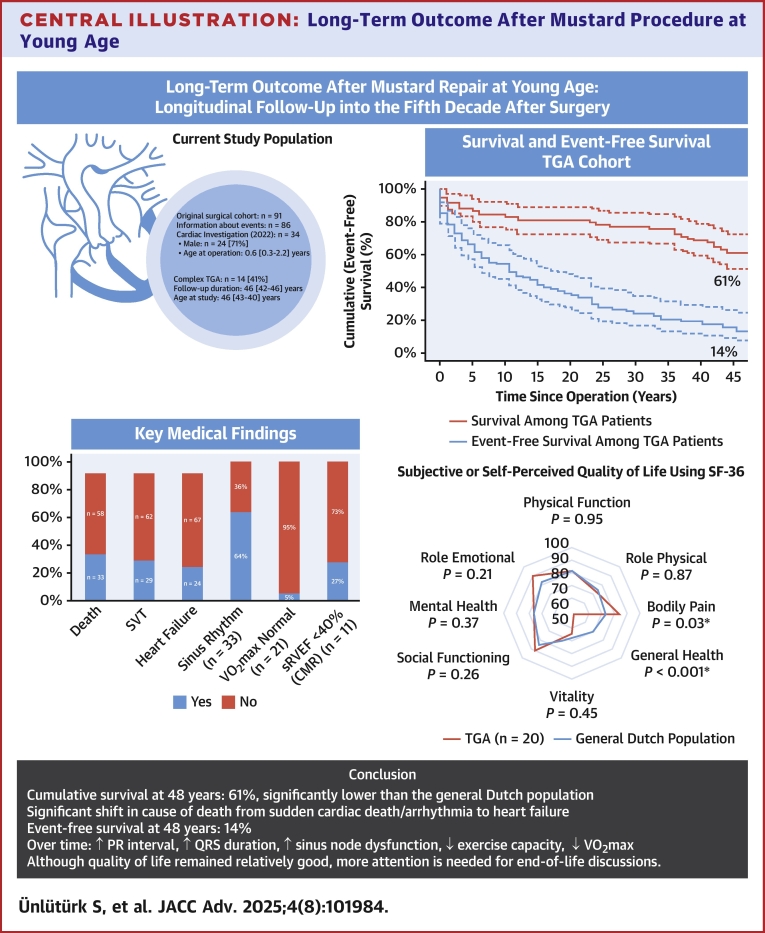 Figure 1
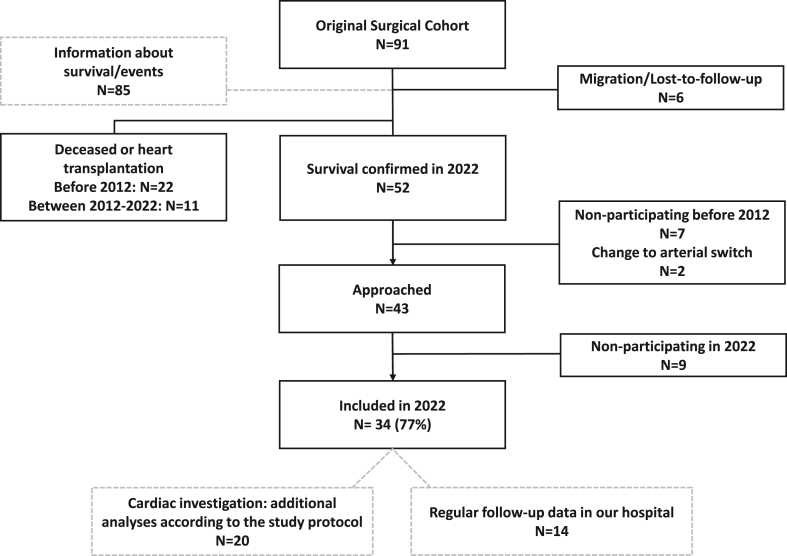 Figure 2
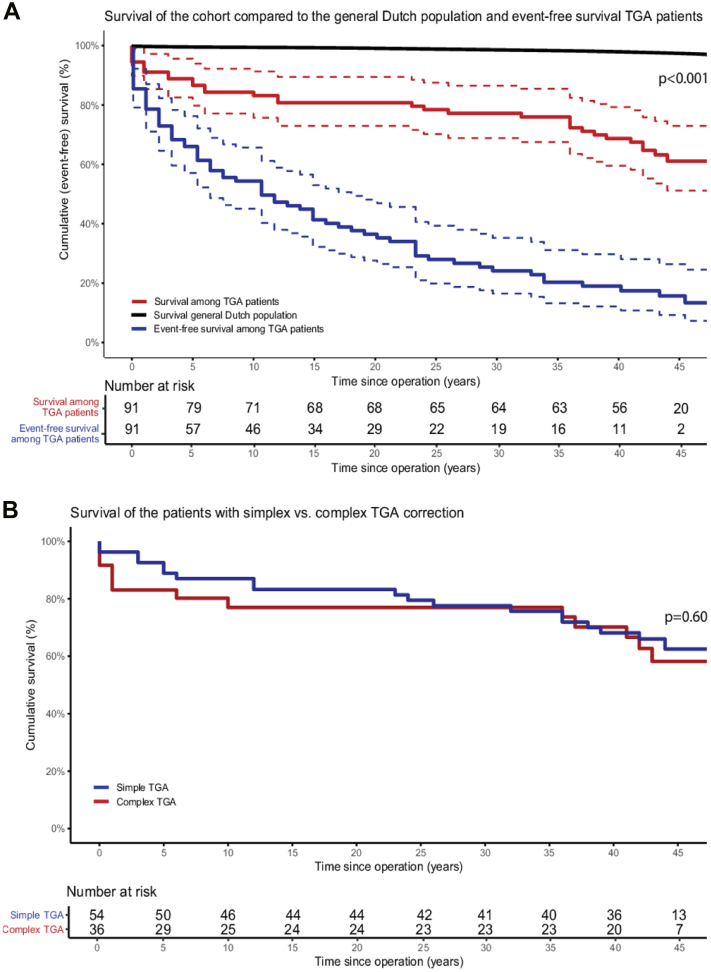 Figure 3
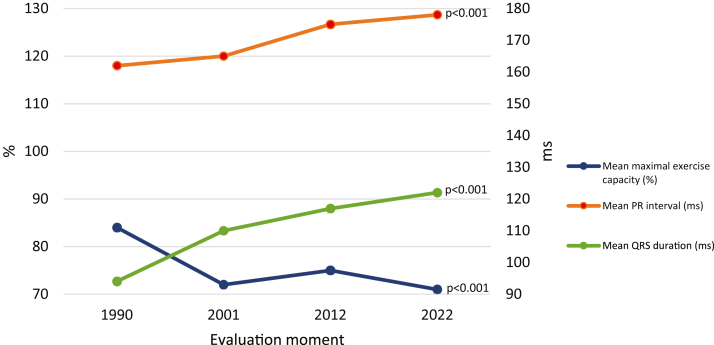 Figure 4
 Figure 5
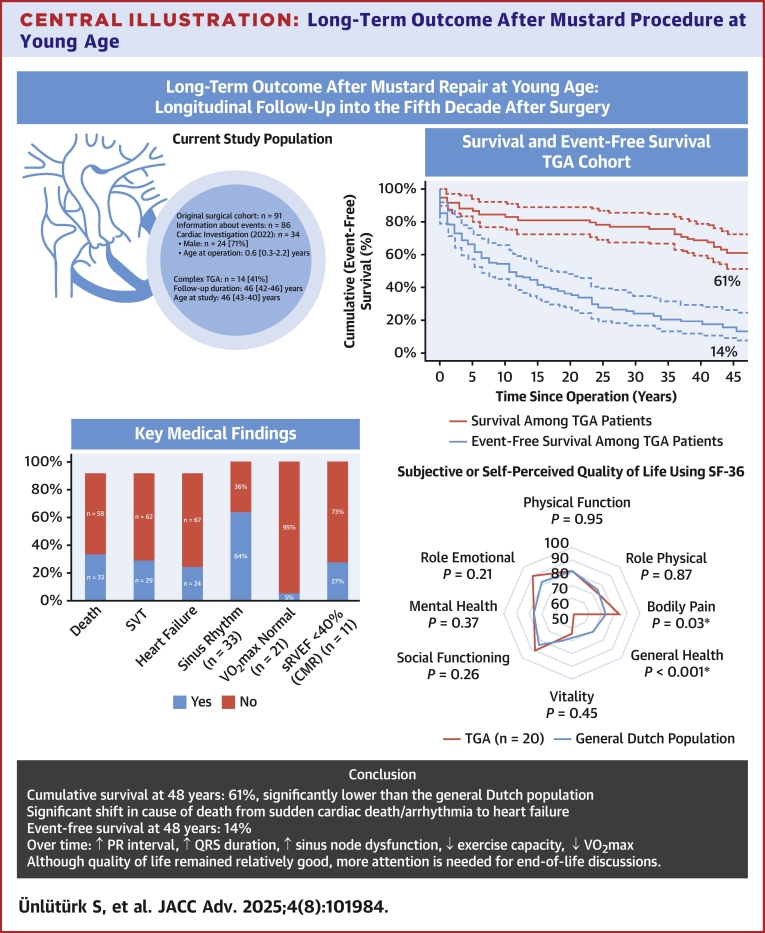 Figure 6
Peer Reviews
No public reviews on file for this paper yet. If you reviewed it on a platform where reviews are public (OpenReview, ICLR, NeurIPS, ICML), you can paste yours below so the community can read it here.
Videos
No videos yet. Explain this paper in a talk, walkthrough, or lecture? Add one.
Taxonomy
TopicsCardiovascular Effects of Exercise · Cardiac Structural Anomalies and Repair · Cardiovascular Issues in Pregnancy