Induction of host genes by nested genes during C. elegans development
Fabien Soulavie, Carole Couillault, Matéo Melki, Khulganaa Buyannemekh, Antoine Barrière, Paul Villoutreix, Vincent Bertrand

TL;DR
This study shows how nested genes in C. elegans can influence the expression of their host genes during development.
Contribution
The study reveals that nested genes can induce host gene transcription and that coexpression is common during development.
Findings
The nested gene ceh-10 induces transcription of a short version of its host gene polq-1 in neurons.
Coexpression between nested and host genes is relatively common, especially in cells expressing the nested gene.
polq-1 transcription in neurons is regulated by ceh-10 cis- and trans-regulators.
Abstract
Embryonic development relies on tightly controlled gene expression. In this study, we analyzed the transcriptional effect during C. elegans development of a striking genomic topology, the opposite nested configuration, where a gene is located in an intron of a host gene in the opposite direction. Using CRISPR genome engineering and single molecule FISH, we characterized the regulatory interactions between ceh-10, a transcription factor involved in neuronal specification, and its host polq-1, a DNA repair enzyme, showing that the nested gene induces transcription of a short version of its host in neurons. Extending our analysis to the hundreds of protein coding genes in opposite nested configuration and using single-cell RNA-seq data covering C. elegans embryogenesis, we observed that coexpression between nested and host genes is relatively common especially in cells positive for the…
Genes, proteins, chemicals, diseases, species, mutations and cell lines named across the full text — each resolved to its canonical identifier and authoritative record.
Click any figure to enlarge with its caption.
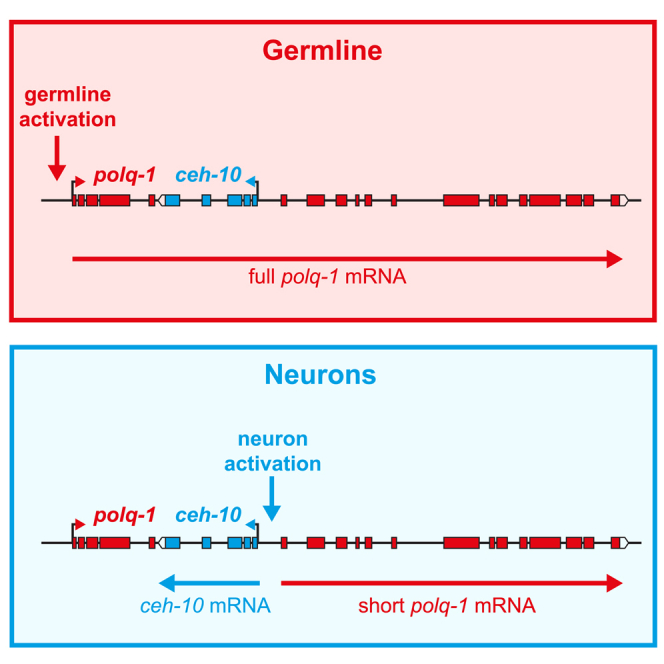 Figure 1
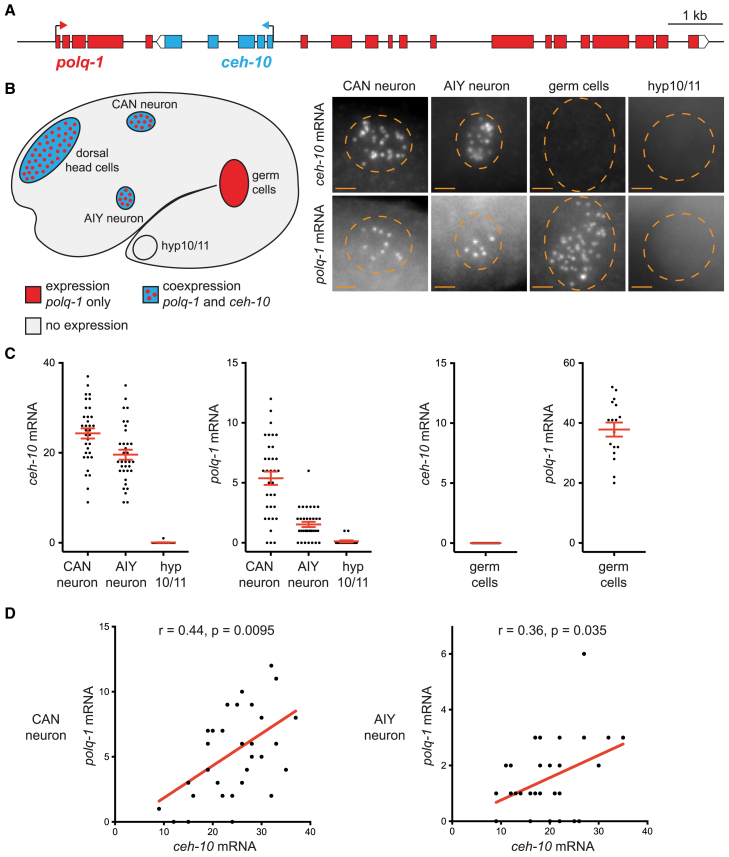 Figure 2
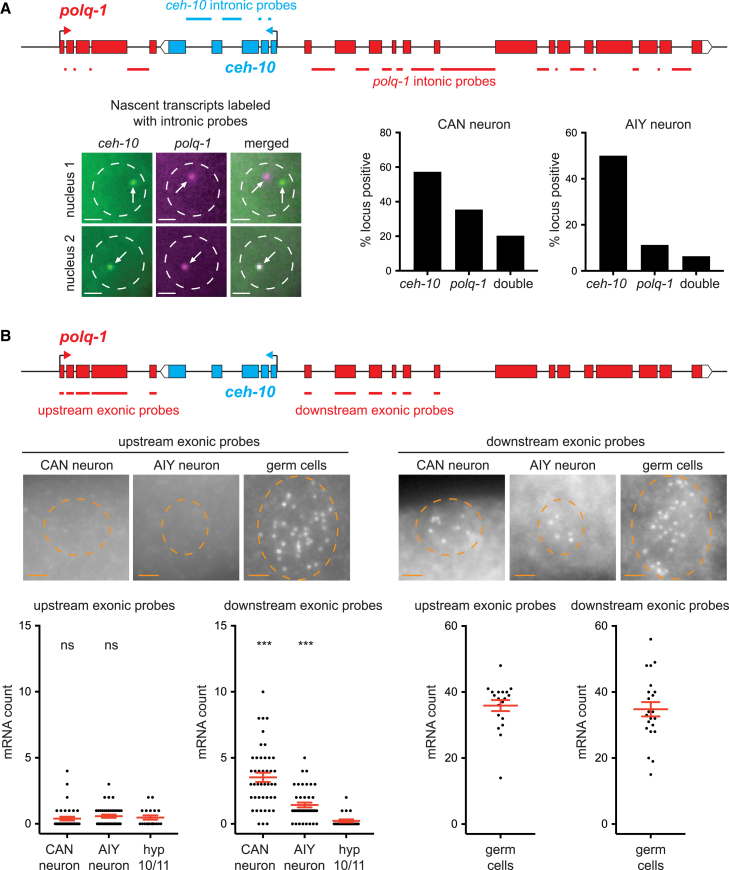 Figure 3
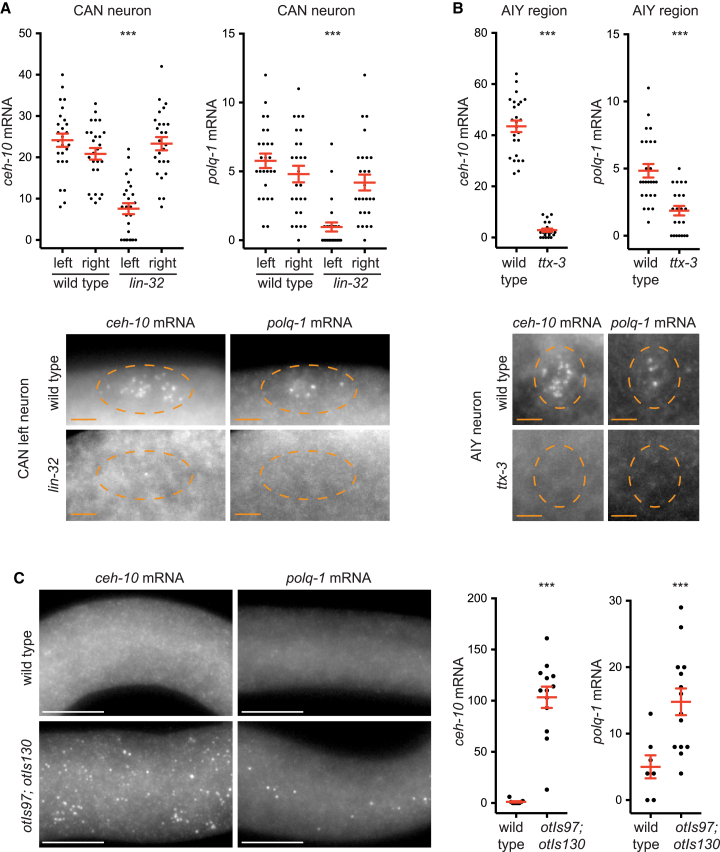 Figure 4
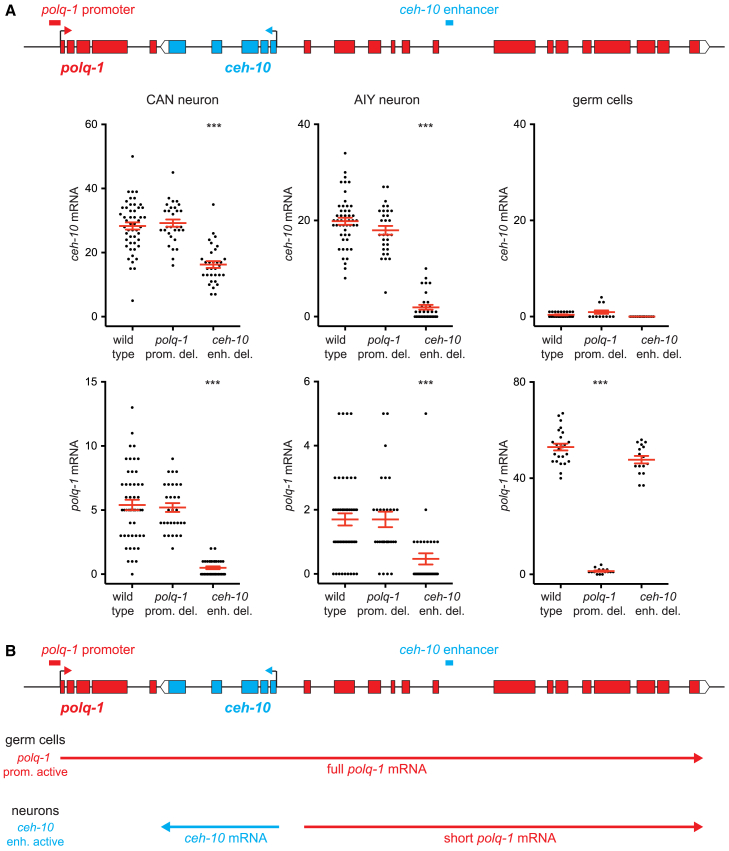 Figure 5
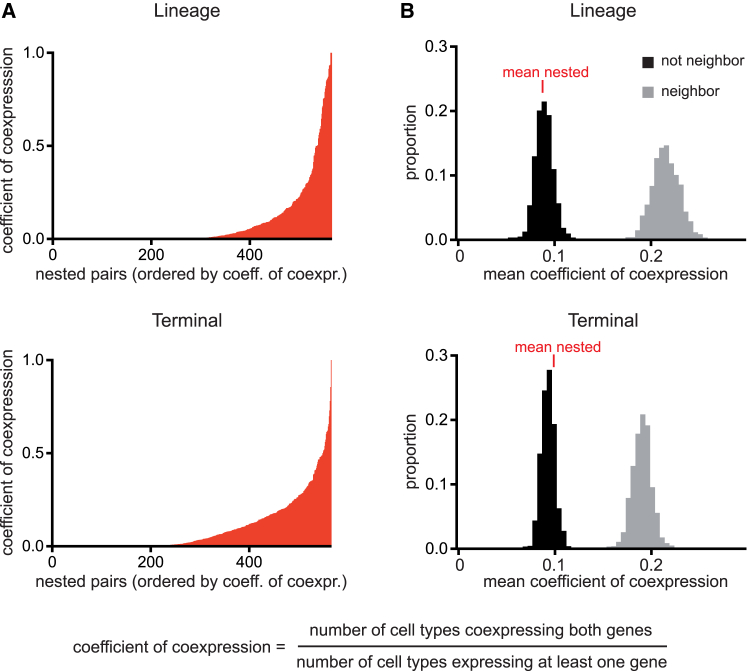 Figure 6
Peer Reviews
No public reviews on file for this paper yet. If you reviewed it on a platform where reviews are public (OpenReview, ICLR, NeurIPS, ICML), you can paste yours below so the community can read it here.
Videos
No videos yet. Explain this paper in a talk, walkthrough, or lecture? Add one.
Taxonomy
TopicsGenetics, Aging, and Longevity in Model Organisms · CRISPR and Genetic Engineering · Mitochondrial Function and Pathology