Potential blocker of SARS-CoV entry and a narrow functionality of its spike protein motifs on Qubevirus platform
Aristide Dzelamonyuy, Augustin Ntemafack, Millie M. Georgiadis, Alain Bopda Waffo

TL;DR
This study identifies key residues in the SARS-CoV spike protein that bind to human cells and uses a Qubevirus platform to test potential blockers and vaccine designs.
Contribution
The study identifies the smallest active spike protein motif and validates key residues for SARS-CoV entry using the Qubevirus platform.
Findings
Five essential residues (L472, N473, N479, D480, Y491) are critical for SARS-CoV binding and entry.
An engineered RBSM insert with mutant residues abolishes recognition of hACE2 and anti-RBD antibodies.
QβRBSM1 reduces SARS-CoV pseudovirus infectivity without cytotoxic effects.
Abstract
Targeted disruption of SARS-CoV entry remains a critical strategy in antiviral therapeutic design. Central to this process is the viral spike (S) protein, which mediates host recognition via interactions with the human angiotensin-converting enzyme 2 (hACE2). Here, we expand our previous work by identifying the smallest active spike (S) protein binding motif (RBSM) and key residues of SARS-CoV (S473–492) that recognize hACE2. Using the Qubevirus (Qβ) platform, we validated five essential residues (L472, N473, N479, D480, and Y491) that are critical for SARS-CoV binding and entry. Qβ phage-displayed RBSM variants disrupted hACE2 recognition and infection initiation. An engineered RBSM insert containing all five mutant residues completely abolished recognition and binding to both hACE2 and anti-RBD antibodies. Furthermore, QβRBSM1 exhibits no cytotoxic effect on HEK293T cells and reduces…
Genes, proteins, chemicals, diseases, species, mutations and cell lines named across the full text — each resolved to its canonical identifier and authoritative record.
Click any figure to enlarge with its caption.
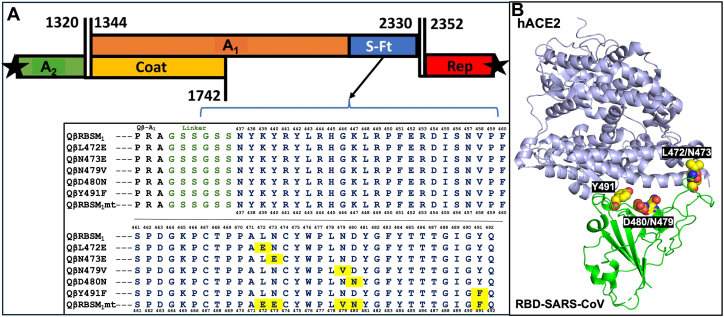 Figure 1
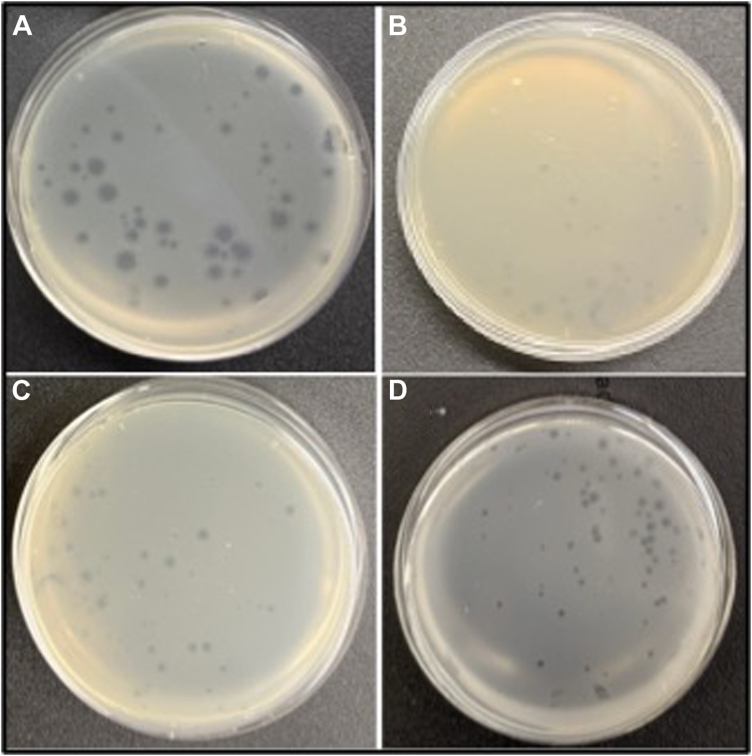 Figure 2
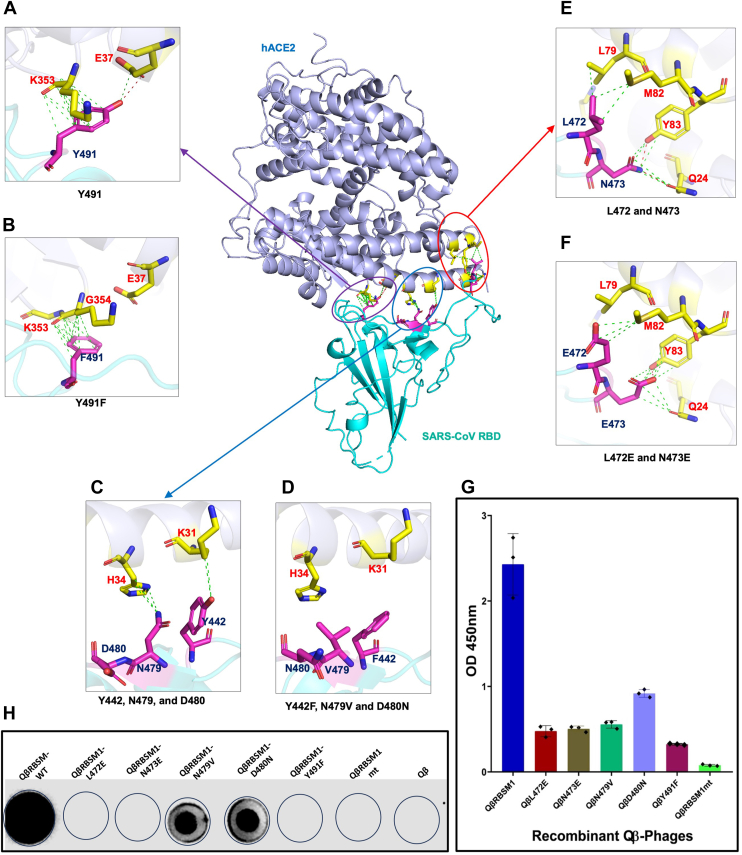 Figure 3
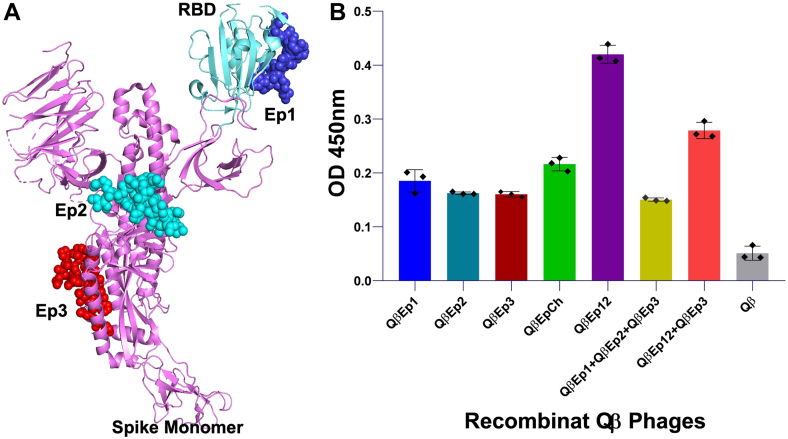 Figure 4
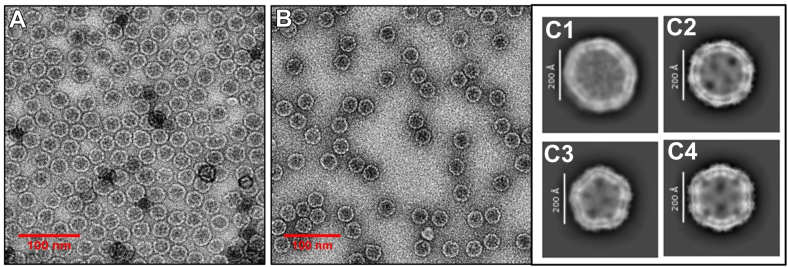 Figure 5
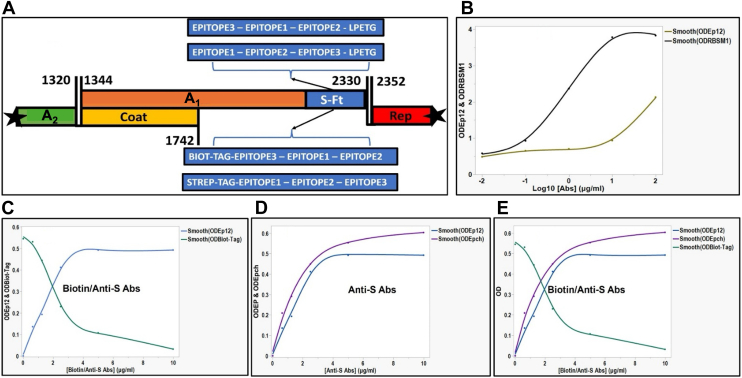 Figure 6
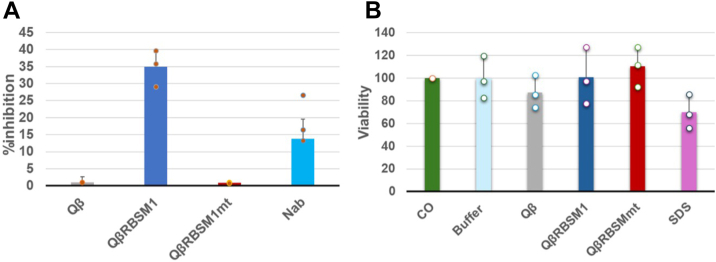 Figure 7
Peer Reviews
No public reviews on file for this paper yet. If you reviewed it on a platform where reviews are public (OpenReview, ICLR, NeurIPS, ICML), you can paste yours below so the community can read it here.
Videos
No videos yet. Explain this paper in a talk, walkthrough, or lecture? Add one.
Taxonomy
TopicsSARS-CoV-2 and COVID-19 Research · SARS-CoV-2 detection and testing · Viral gastroenteritis research and epidemiology