Contrasting Responses of Oceanic and Coastal Synechococcus to Iron Limitation and Warming Interactions
Ran Duan, Min Xu, Xiaopeng Bian, Conner Y. Kojima, Shengwei Hou, Qiang Zheng, Seth G. John, David A. Hutchins, Fei‐Xue Fu

TL;DR
This study compares how two types of Synechococcus bacteria from different ocean environments respond to iron shortages and warming, finding that the open ocean strain adapts more effectively.
Contribution
The study reveals distinct physiological and transcriptional strategies in oceanic and coastal Synechococcus under iron limitation and warming.
Findings
Oceanic Synechococcus upregulates photosynthesis and nutrient transport genes under iron limitation and warming.
Coastal Synechococcus has higher iron quotas and faster D1 gene turnover but fewer regulatory responses to stress.
Fe-temperature interactions may influence marine biogeochemistry and plankton dynamics in warmer oceans.
Abstract
This study explored the contrasting physiological and transcriptional responses to iron (Fe) and warming temperature interactions in two South China Sea Synechococcus isolates belonging to clade II from the open ocean and CB5 from the coastal ocean. The two picocyanobacterial strains utilised contrasting photosynthesis, Fe uptake, and nutrient acquisition strategies to cope with Fe limitation. In the oceanic strain, moderate warming under Fe limitation upregulated expression of photosynthesis and nutrient and Fe transport genes, increasing its growth and photosynthesis. In contrast, gene expression under low Fe in the coastal strain was less affected by warming. The oceanic isolate exhibited substrate regulation of Fe acquisition and preferred organic nutrient sources. The coastal strain had a much higher Fe quota, faster turnover of the D1 gene in photosystem II, and was optimised for…
Genes, proteins, chemicals, diseases, species, mutations and cell lines named across the full text — each resolved to its canonical identifier and authoritative record.
Click any figure to enlarge with its caption.
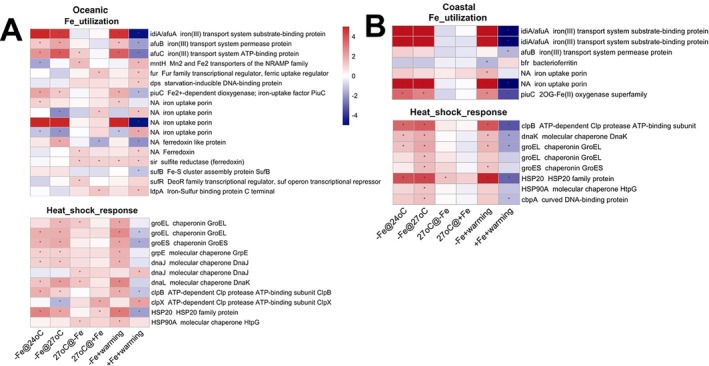 Figure 1
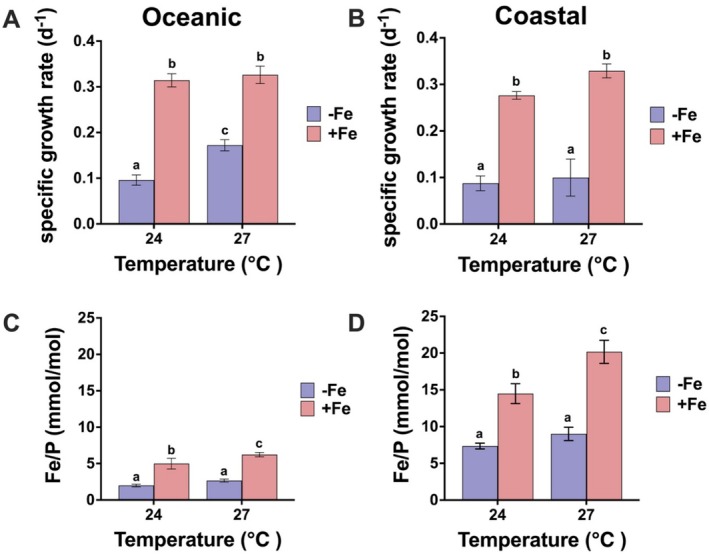 Figure 2
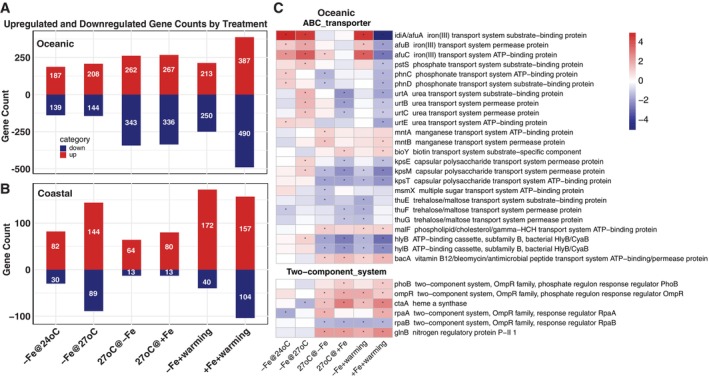 Figure 3
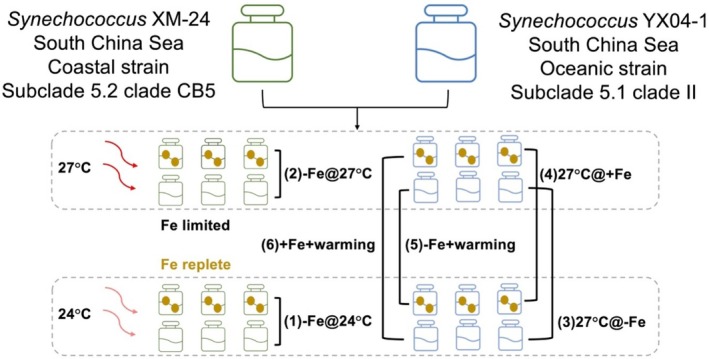 Figure 4
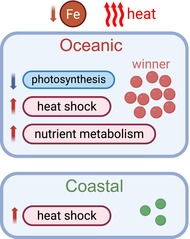 Figure 5
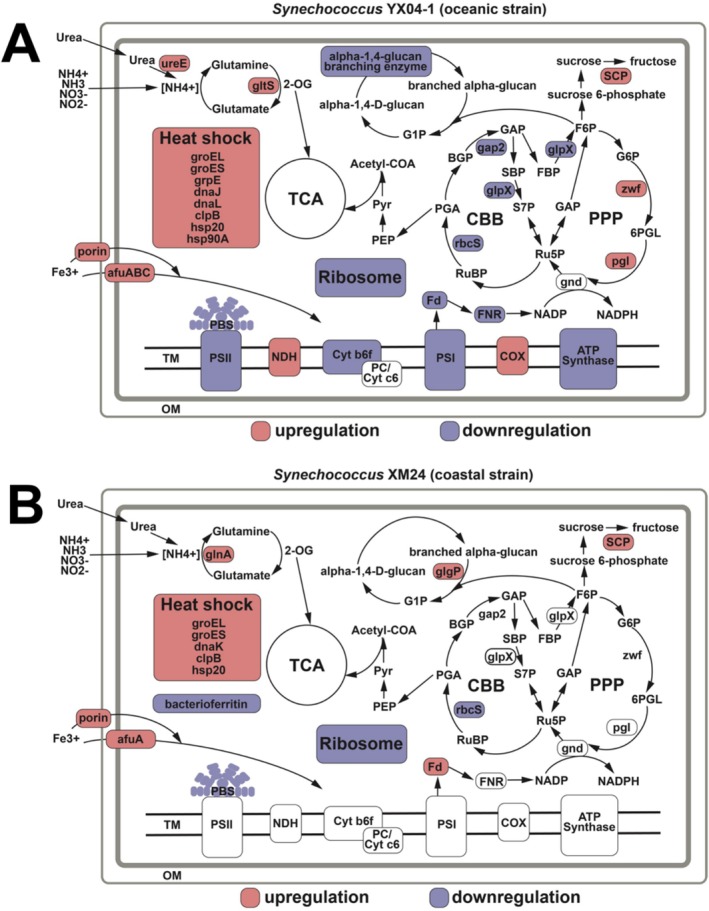 Figure 6
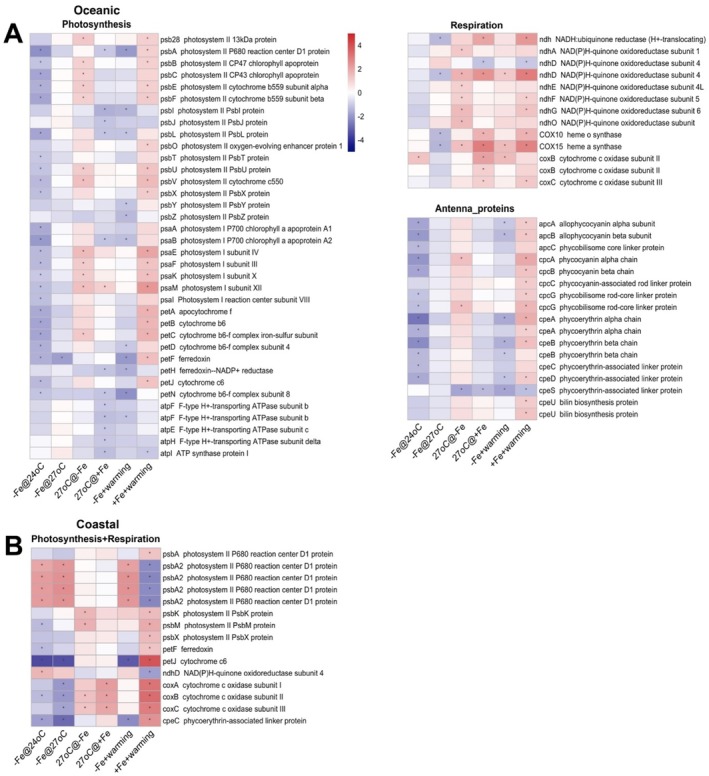 Figure 7
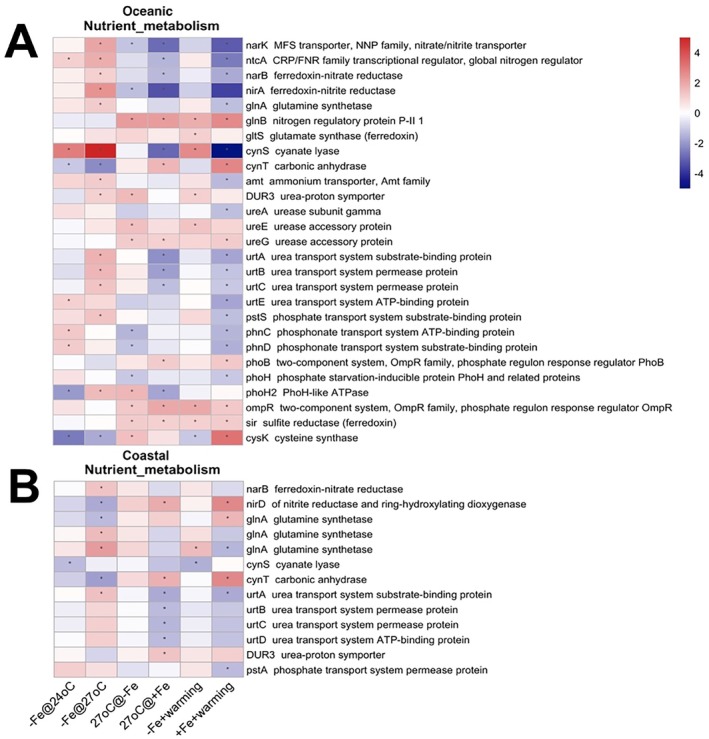 Figure 8
Peer Reviews
No public reviews on file for this paper yet. If you reviewed it on a platform where reviews are public (OpenReview, ICLR, NeurIPS, ICML), you can paste yours below so the community can read it here.
Videos
No videos yet. Explain this paper in a talk, walkthrough, or lecture? Add one.
Taxonomy
TopicsMicrobial Community Ecology and Physiology · Microbial Fuel Cells and Bioremediation · Protist diversity and phylogeny