Multi-component reactions via copper(I) difluorocarbene as carbonyl source for constructing α—aminoamide derivatives
Jiuling Li, Baofan Wang, Taichen Liu, Qinghong Wen, Tongfei Jing, Xiang Fu, Yingming Pan, Kai Wei, Xiaoyu Zhou, Wenhao Hu, Zhenghui Kang

TL;DR
This paper introduces a copper-catalyzed method to create α-aminoamide compounds using a difluorocarbene intermediate, offering a safer and more versatile alternative to traditional methods.
Contribution
A novel copper-mediated multicomponent reaction using difluorocarbene as a carbonyl source for α-aminoamide synthesis is presented.
Findings
The copper-difluorocarbene intermediate is formed from BrCF2CO2K and facilitates the reaction pathway.
The method works with a wide range of substrates, including aromatic and alkyl aldehydes.
The approach avoids toxic cyanide salts and unstable isonitriles used in traditional reactions.
Abstract
Difluorocarbene, an important reactive intermediate in organic synthesis, exhibits intriguing properties and synthetic versatility. However, great challenges in modulating reaction pathways limit its widespread application in synthetic chemistry. While metal-catalyzed difluorocarbene transfer offers a promising strategy but remains a formidable challenge. Herein, we disclose a copper-mediated multicomponent reaction of amine, aldehyde and BrCF2CO2K for synthesis of α- aminoamide derivatives, wherein copper-difluorocarbene serve as carbonyl source. Control experiments and DFT calculations support the pathway initiated by formation of a copper-difluorocarbene from BrCF2CO2K, followed by nucleophilic attack of the amine to produce an ammonium ylide, interception of the ylide with imine, and defluorination via carbonyl migration. This transformation demonstrates broad substrate scope,…
Genes, proteins, chemicals, diseases, species, mutations and cell lines named across the full text — each resolved to its canonical identifier and authoritative record.
Click any figure to enlarge with its caption.
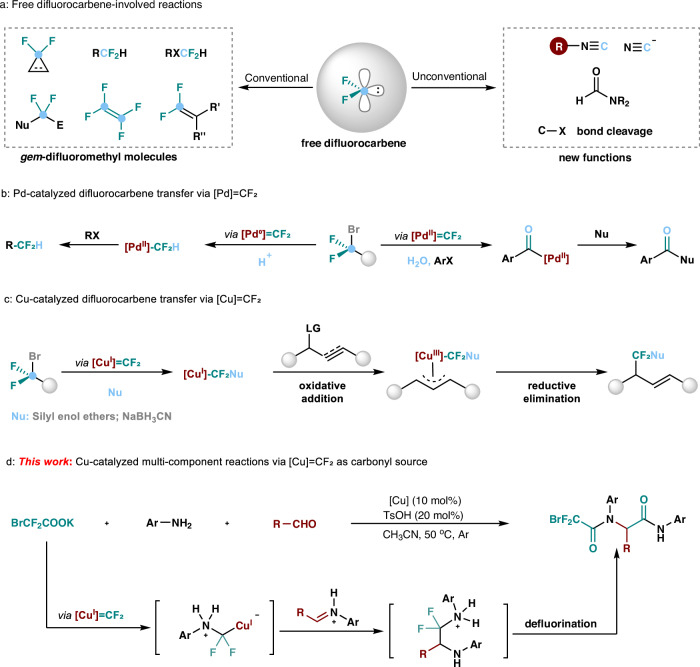 Figure 1
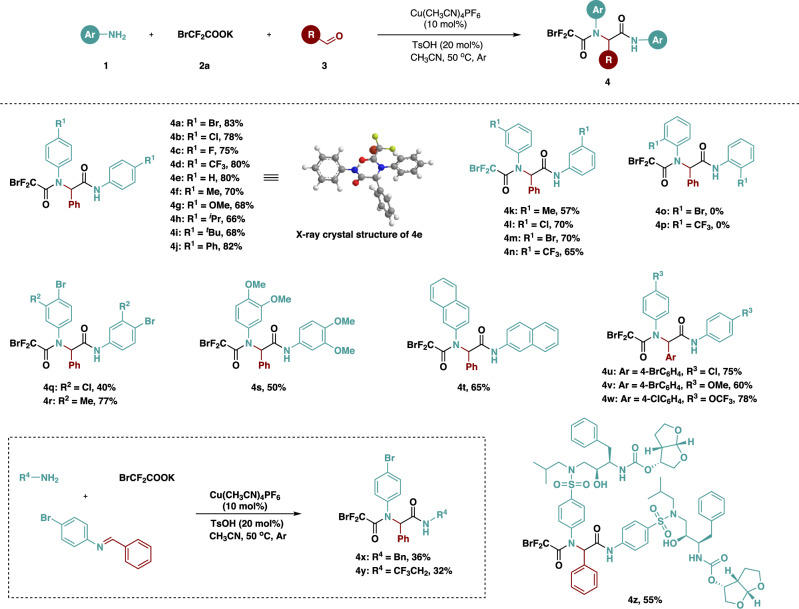 Figure 2
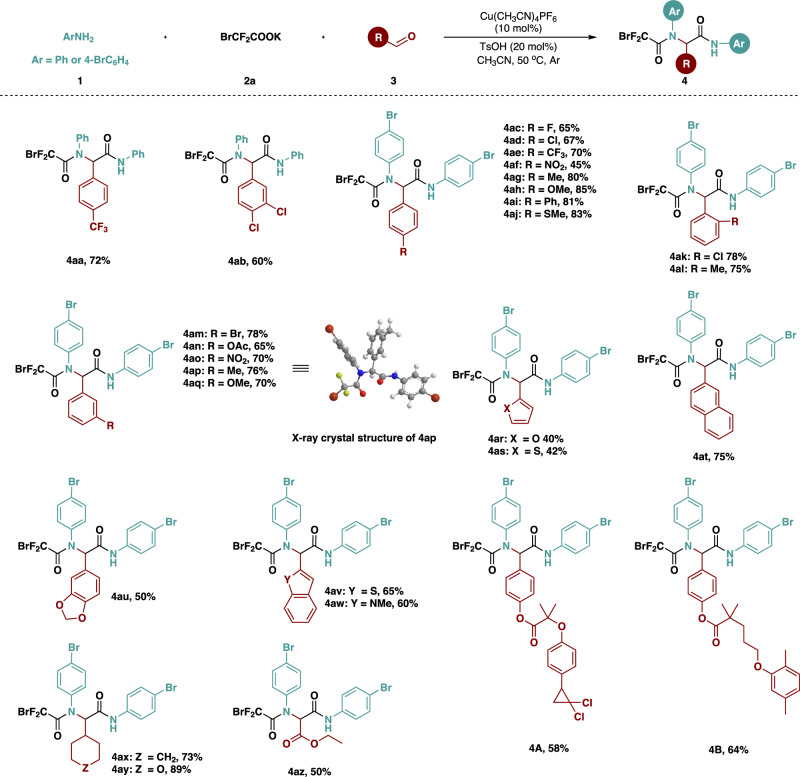 Figure 3
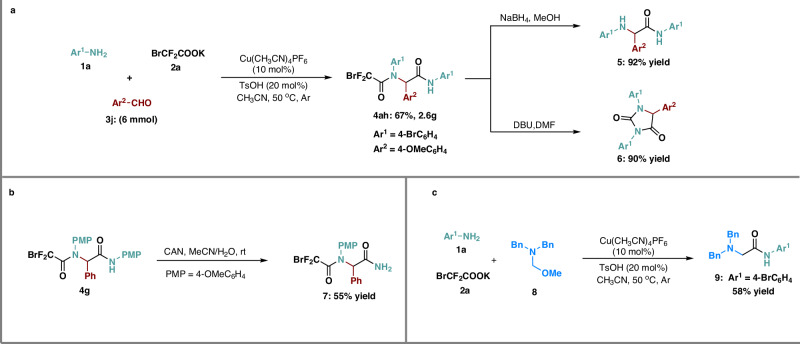 Figure 4
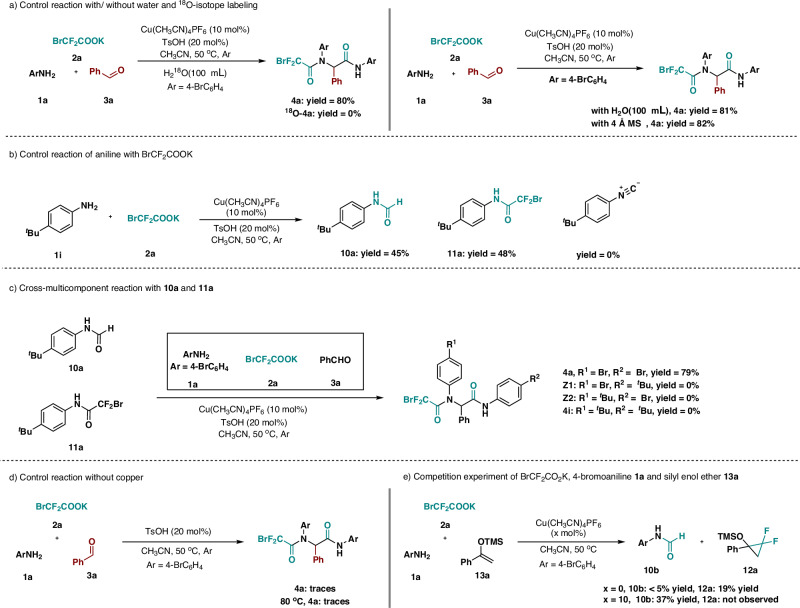 Figure 5
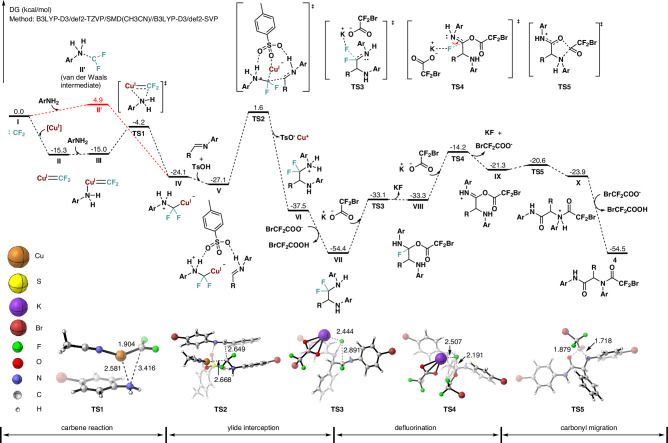 Figure 6
Peer Reviews
No public reviews on file for this paper yet. If you reviewed it on a platform where reviews are public (OpenReview, ICLR, NeurIPS, ICML), you can paste yours below so the community can read it here.
Videos
No videos yet. Explain this paper in a talk, walkthrough, or lecture? Add one.
Taxonomy
TopicsFluorine in Organic Chemistry · Cyclopropane Reaction Mechanisms · Catalytic C–H Functionalization Methods