SMARCA5 is required for the development of granule cell neuron precursors and Sonic Hedgehog Medulloblastoma growth
Foteini Tsiami, Layla Drwesh, Surender Surender, Julia Fitzgerald, Jens Schittenhelm, David J. Picketts, Rosalind A. Segal, Ghazaleh Tabatabai, Daniel J. Merk

TL;DR
This study shows that the SMARCA5 gene is essential for the development of certain brain cells and for the growth of a specific type of brain tumor called Sonic Hedgehog Medulloblastoma.
Contribution
The study identifies SMARCA5 as a novel genetic dependency in Sonic Hedgehog Medulloblastoma using CRISPR-Cas9 screening and mouse models.
Findings
SMARCA5 knockout inhibits SHH pathway activation and tumor cell proliferation in SHH-MB.
Conditional deletion of SMARCA5 in granule cell neuron precursors reduces their proliferative capacity and causes cerebellar hypoplasia.
Loss of SMARCA5 in a mouse model of SHH-MB leads to prolonged survival of tumor-bearing mice.
Abstract
Medulloblastoma constitutes a molecularly diverse group of malignant embryonal brain tumors. Sonic hedgehog molecular group of medulloblastoma (SHH-MB) is a highly heterogeneous tumor entity, characterized by constitutive activation of the SHH signaling pathway. Due to lack of suitable cell line models, little is known about genetic dependencies in SHH-MB outside of the SHH pathway. By performing a CRISPR-Cas9 dropout screen in SMB21 cells derived from SHH-MB in Ptch+/− mice, we aimed to identify genetic vulnerabilities in SHH-MB. Among the top scored gene hits, members of the SNF2-family of ATP-dependent chromatin remodelers including Smarca5 emerged as genetic dependencies in SHH-MB, and we validate that Smarca5 knockout inhibits SHH pathway activation and SHH-MB cell proliferation. Additional genetic ablation experiments in vivo revealed that conditional deletion of Smarca5 in…
Genes, proteins, chemicals, diseases, species, mutations and cell lines named across the full text — each resolved to its canonical identifier and authoritative record.
Click any figure to enlarge with its caption.
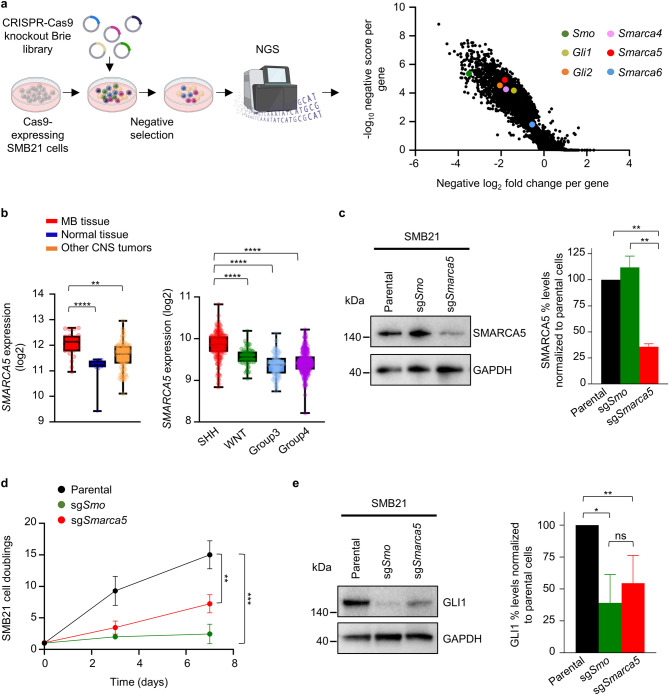 Figure 1
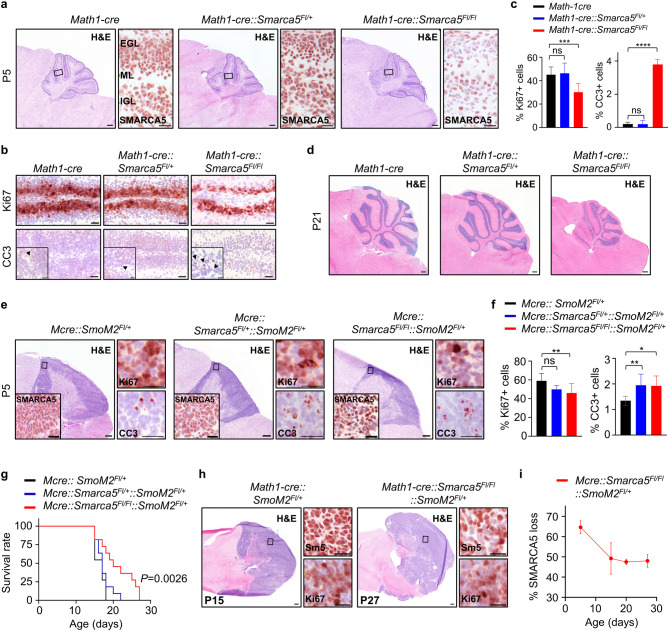 Figure 2
Peer Reviews
No public reviews on file for this paper yet. If you reviewed it on a platform where reviews are public (OpenReview, ICLR, NeurIPS, ICML), you can paste yours below so the community can read it here.
Videos
No videos yet. Explain this paper in a talk, walkthrough, or lecture? Add one.
Taxonomy
TopicsHedgehog Signaling Pathway Studies · Chromatin Remodeling and Cancer · Genomics and Chromatin Dynamics