Using the Timed Up and Go test to measure mobility in non-geriatric patients after pelvic ring injury
Simon Tiziani, Julian Scherer, Patrick Saurenmann, Sasha Halvachizadeh, Roman Pfeifer, Kai Sprengel, Hans-Christoph Pape, Georg Osterhoff

TL;DR
The study shows the Timed Up and Go (TUG) test is a quick and effective way to assess mobility in non-geriatric patients recovering from pelvic ring injuries.
Contribution
The study validates the TUG test as a functional mobility measure for non-geriatric pelvic ring injury patients, establishing a 10-second threshold for impaired mobility.
Findings
TUG time strongly correlated with the Majeed-Score (r = -0.633) and its mobility component (r = -0.524).
A TUG time above 10 seconds predicted an impaired Majeed score with 91% sensitivity and 82% specificity.
Abstract
Pelvic ring injuries are rare injuries that frequently are associated with prolonged recovery and low return-to-work rates. Since radiological outcome not always correlates with overall patient-reported outcome, the assessement of functional outcome has become a focus of follow up. The Timed-Up and Go test (TUG) would be a simple way to quantify patient mobility, but has not yet been adequately validated in a non-geriatric patient population. Consecutive patients younger than 70 years who underwent functional outcome testing as routine follow-up at 6 weeks, 12 weeks, or 6 months after pelvic ring injuries between 11/2017 and 10/2018 were included in this study. In addition to a TUG test, all patients completed a specific functional outcome score for pelvic ring injuries (Majeed-Score) and a general health score (Eq. 5D-3 L). Forty patients (mean age 40 years, range 18 to 68 years, 24…
Genes, proteins, chemicals, diseases, species, mutations and cell lines named across the full text — each resolved to its canonical identifier and authoritative record.
Click any figure to enlarge with its caption.
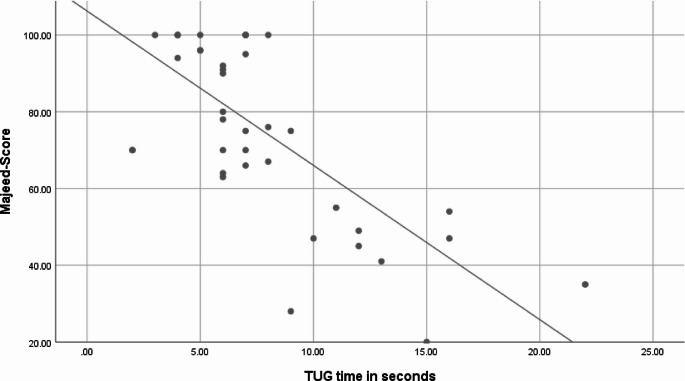 Figure 1
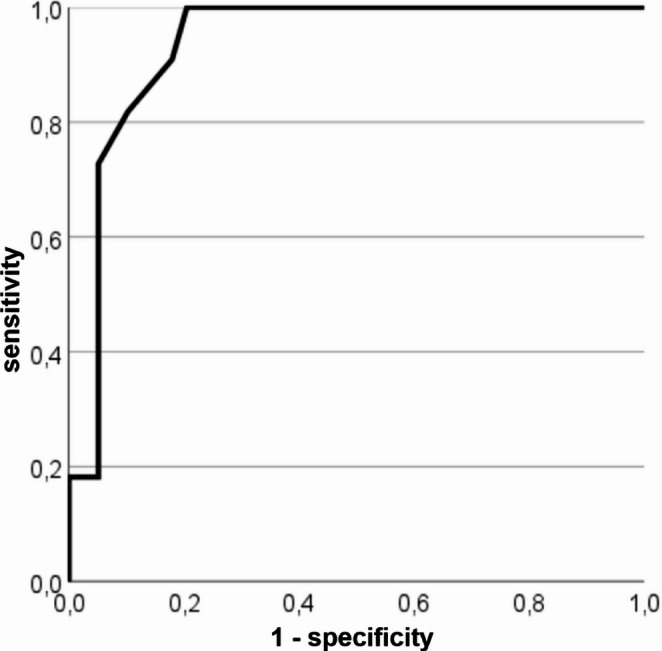 Figure 2
Peer Reviews
No public reviews on file for this paper yet. If you reviewed it on a platform where reviews are public (OpenReview, ICLR, NeurIPS, ICML), you can paste yours below so the community can read it here.
Videos
No videos yet. Explain this paper in a talk, walkthrough, or lecture? Add one.
Taxonomy
TopicsPelvic and Acetabular Injuries · Abdominal Trauma and Injuries · Hernia repair and management