Chokehold with ‘rear naked choke’ and delayed post-hypoxic leukoencephalopathy: a new form of assault in Mexico City
Carlos Castillo-Rangel, Cristofer Zarate-Calderon, Carlos Castillo-Soriano, Karla Aketzalli Hernández-Contreras, Gerardo Marín-Márquez

TL;DR
A man in Mexico City suffered brain damage after a strangulation attack, leading to a rare condition called delayed post-hypoxic leukoencephalopathy.
Contribution
This case presents a new form of assault-related injury linking strangulation to delayed post-hypoxic leukoencephalopathy.
Findings
Strangulation caused hypoxic-ischemic encephalopathy followed by delayed post-hypoxic leukoencephalopathy.
The patient developed aphasia, dysphagia, and progressive dementia after the attack.
Brain imaging and biopsy showed ischemic damage and reactive gliosis consistent with DPHL.
Abstract
In Mexico City, a 49-year-old man underwent strangulation, which led to hypoxic-ischemic encephalopathy (HIE) and subsequently to delayed post-hypoxic leukoencephalopathy (DPHL), a rare demyelinating condition. Following the attack, he exhibited aphasia, dysphagia, and other neuropsychiatric symptoms that progressed to dementia. Imaging and brain biopsy analyses disclosed extensive ischemic damage and reactive gliosis. This case underscores the link between strangulation, acute HIE, and the subsequent development of DPHL, as well as an interpretation of the physiological implications of DPHL due to strangulation.
Genes, proteins, chemicals, diseases, species, mutations and cell lines named across the full text — each resolved to its canonical identifier and authoritative record.
Click any figure to enlarge with its caption.
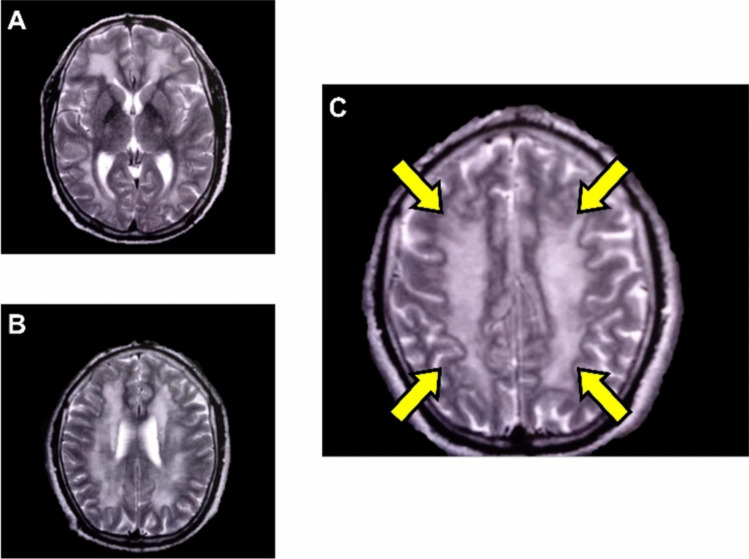 Figure 1
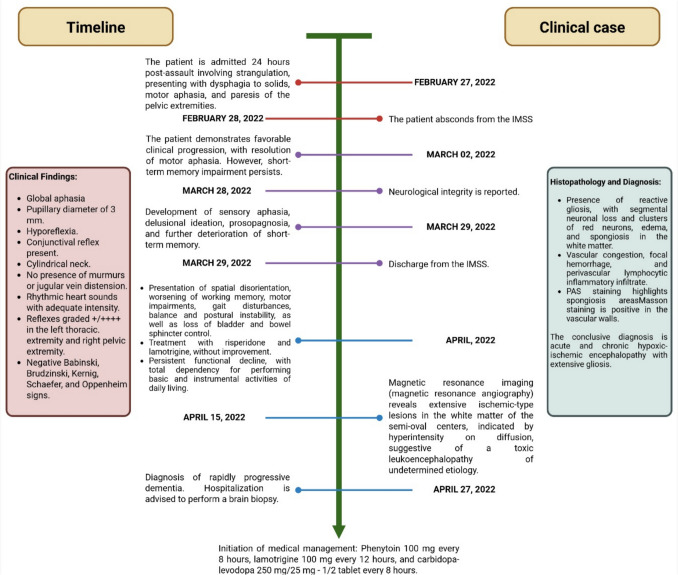 Figure 2
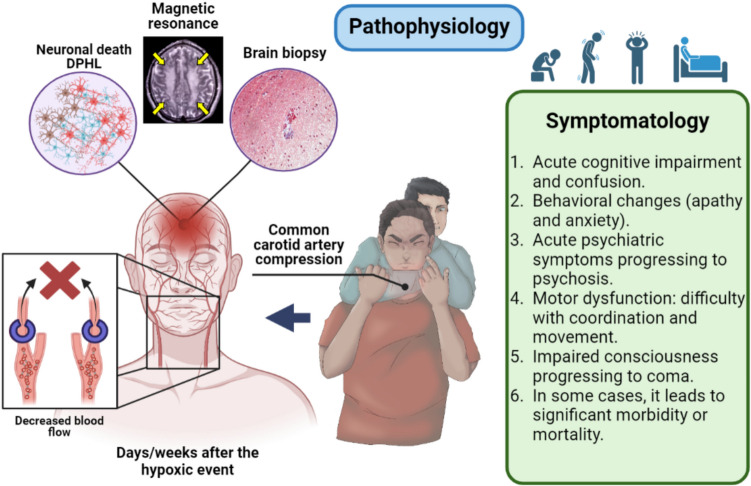 Figure 3
Peer Reviews
No public reviews on file for this paper yet. If you reviewed it on a platform where reviews are public (OpenReview, ICLR, NeurIPS, ICML), you can paste yours below so the community can read it here.
Videos
No videos yet. Explain this paper in a talk, walkthrough, or lecture? Add one.
Taxonomy
TopicsHeme Oxygenase-1 and Carbon Monoxide · Cardiac Arrest and Resuscitation · Neuroscience of respiration and sleep