A global survey of neurosurgeons’ awareness of neural tube defect prevalence, prevention strategies, and their clinical time allocation to spina bifida care
Anastasia Arynchyna-Smith, Vijaya Kancherla, Inmaculada Aban, Alexander Arynchyn, Pedram Maleknia, David Becker, Andrzej Kulczycki, Jeffrey P. Blount

TL;DR
This study surveyed neurosurgeons worldwide about their knowledge of neural tube defects and spina bifida care, finding gaps in awareness and significant differences in clinical time spent between high and non-high-income countries.
Contribution
The study provides the first global assessment of neurosurgeons' awareness and clinical time allocation related to spina bifida and neural tube defects.
Findings
Approximately 25-28% of neurosurgeons were unaware of NTD prevalence or folic acid fortification effectiveness.
Neurosurgeons in non-high-income countries were more likely to spend significant time on spina bifida care.
Supplementation pills and flour fortification were the most cited NTD prevention strategies.
Abstract
Assess the global neurosurgeon workforce’s awareness of neural tube defect (NTD) prevalence, prevention strategies, and clinical time spent on spina bifida (SB) care. An online survey was administered to neurosurgeons worldwide between 2021-2022. Categorical responses were analyzed using descriptive analysis. Adjusted and unadjusted logistic regression analyses were conducted to examine the association between the clinical time spent on SB care and NTD prevalence awareness, controlling for sex, income region, pediatric training, and practice years, estimating odds ratios (ORs) and 95% confidence intervals (CIs). Overall, 234 neurosurgeons (71% participation rate) responded from 64 countries. Respondents included 166 (77%) non-US residents practicing in non-high-income-country (non-HIC) (49%). Most were male (78%), 31-60 years old (80%), and urban-based (76%). Approximately quarter…
Genes, proteins, chemicals, diseases, species, mutations and cell lines named across the full text — each resolved to its canonical identifier and authoritative record.
Click any figure to enlarge with its caption.
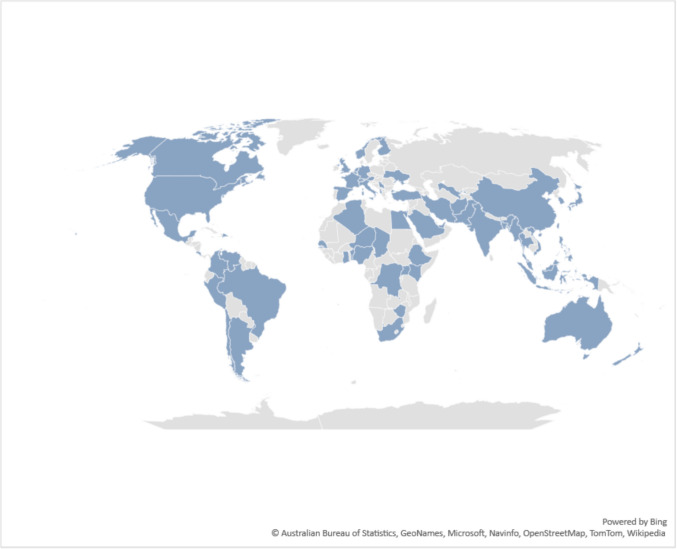 Figure 1
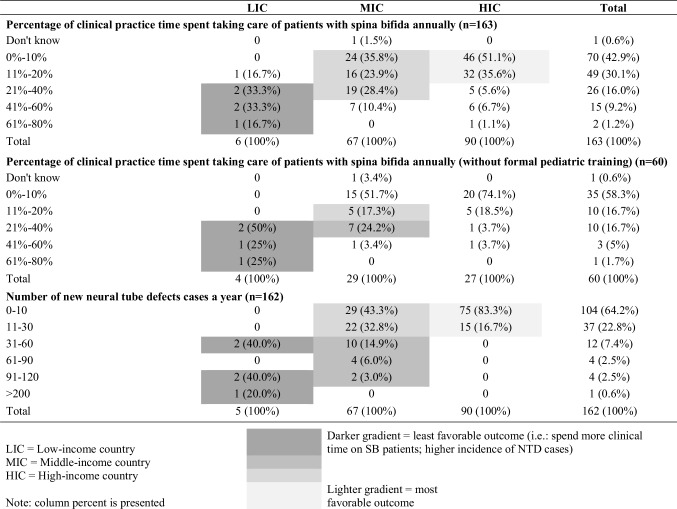 Figure 2
Peer Reviews
No public reviews on file for this paper yet. If you reviewed it on a platform where reviews are public (OpenReview, ICLR, NeurIPS, ICML), you can paste yours below so the community can read it here.
Videos
No videos yet. Explain this paper in a talk, walkthrough, or lecture? Add one.
Taxonomy
TopicsSpinal Dysraphism and Malformations · Cerebrospinal fluid and hydrocephalus · Assisted Reproductive Technology and Twin Pregnancy