PDK4 and nutrient responses explain muscle specific manifestation in mitochondrial disease
Swagat Pradhan, Takayuki Mito, Nahid A Khan, Sofiia Olander, Aleksandra Zhaivoron, Thomas G McWilliams, Anu Suomalainen

TL;DR
This study shows that different muscles in the same person respond differently to mitochondrial disease, with eye muscles atrophying due to abnormal nutrient responses involving PDK4.
Contribution
The study reveals that PDK4 activation in eye muscles leads to non-optimal lipid metabolism, explaining muscle atrophy in mitochondrial disease.
Findings
Large muscles upregulate glycolysis and anabolic metabolism, while eye muscles inhibit glucose oxidation via PDK4.
Eye muscles switch to fatty acid oxidation and lipid accumulation, which is detrimental in mitochondrial disease.
Mitophagy is stalled in both muscle types, contributing to disease progression.
Abstract
Mitochondria elicit various metabolic stress responses, the roles of which in diseases are poorly understood. Here, we explore how different muscles of one individual—extraocular muscles (EOMs) and quadriceps femoris (QFs) muscles—respond to mitochondrial disease. The aim is to explain why EOMs atrophy early in the disease, unlike other muscles. We used a mouse model for mitochondrial myopathy (“deletor”), which manifests progressive respiratory chain deficiency and human disease hallmarks in itsmuscles. Analyses included histology, ultrastructure, bulk and single‐nuclear RNA‐sequencing, metabolomics, and mitochondrial turnover assessed through in vivo mitophagy using transgenic mito‐QC marker mice crossed to deletors. In mitochondrial muscle disease, large QFs upregulate glucose uptake that drives anabolic glycolytic one‐carbon metabolism and mitochondrial integrated stress response.…
Genes, proteins, chemicals, diseases, species, mutations and cell lines named across the full text — each resolved to its canonical identifier and authoritative record.
Click any figure to enlarge with its caption.
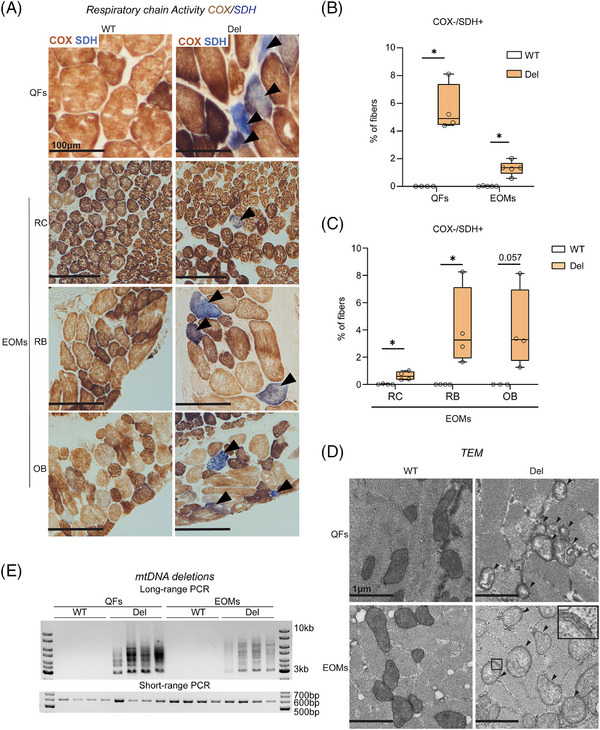 Figure 1
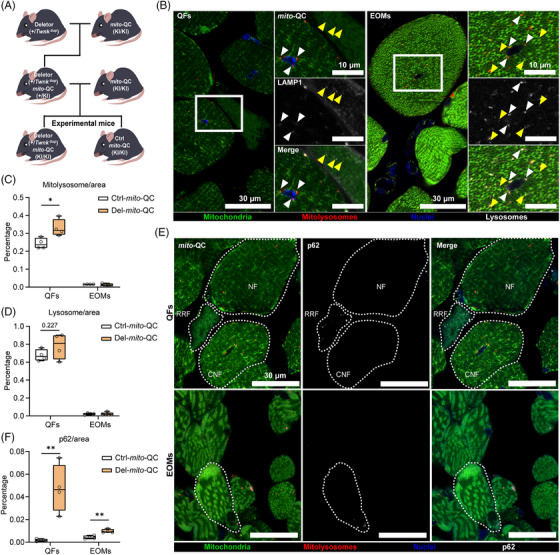 Figure 2
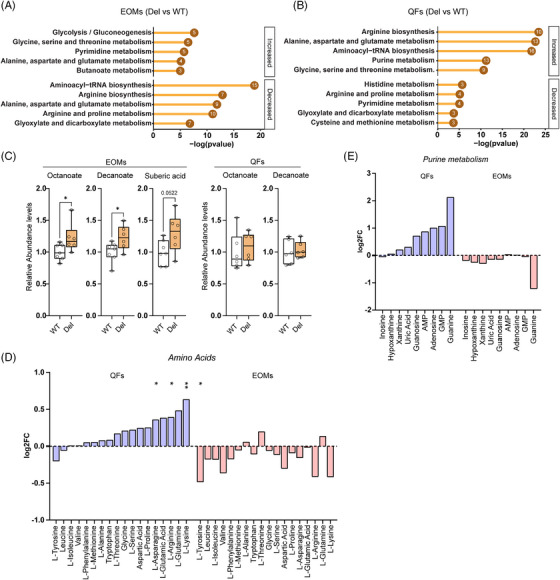 Figure 3
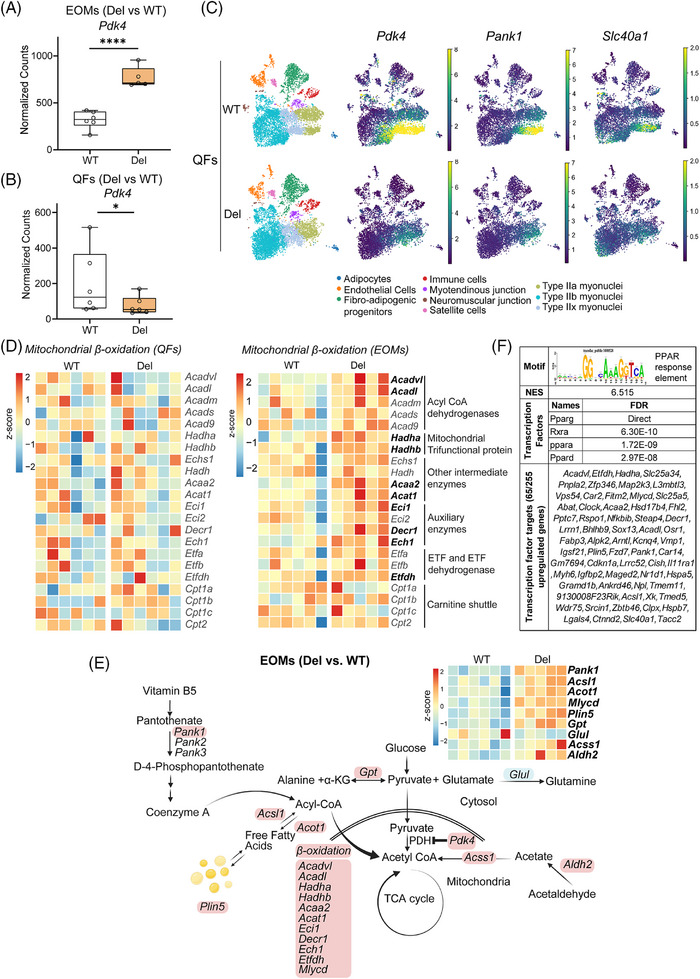 Figure 4
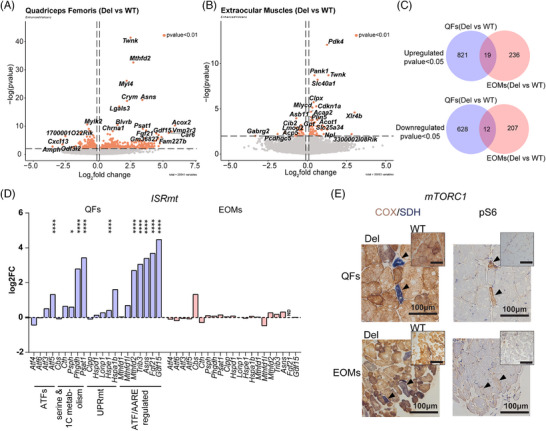 Figure 5
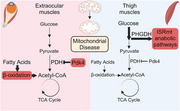 Figure 6
Peer Reviews
No public reviews on file for this paper yet. If you reviewed it on a platform where reviews are public (OpenReview, ICLR, NeurIPS, ICML), you can paste yours below so the community can read it here.
Videos
No videos yet. Explain this paper in a talk, walkthrough, or lecture? Add one.
Taxonomy
TopicsMitochondrial Function and Pathology · Metabolism and Genetic Disorders · Diet and metabolism studies