Anesthesia Management in a Crisponi Syndrome Patient Undergoing Tracheotomy Surgery
Enes Celik, Yusuf Ipek, Osman Oguzhan Kursun, Mehmet Nur Talay, Hakan Akelma

TL;DR
This paper discusses the challenges of managing anesthesia for a Crisponi syndrome patient during tracheotomy surgery.
Contribution
The paper presents a case study highlighting specific anesthesia challenges and risks in Crisponi syndrome patients.
Findings
Crisponi syndrome patients experience frequent convulsions and cyanosis during anesthesia.
Hyperthermia attacks can lead to rhabdomyolysis and coagulation issues.
Sudden deaths in these patients may be linked to autonomic dysfunction.
Abstract
Increased salivation and contractions of the oropharyngeal muscles are frequently observed in Crisponi syndrome. This causes frequent recurrent lung infections. Anesthesia management can be challenging due to the frequent convulsions that occur during the intubation and extubation of the patient and subsequent cyanosis and hyperthermia attacks. Cold-induced sweating attacks may also occur due to the low operating room temperature. Hyperthermia attacks can lead to rhabdomyolysis and disseminated intravascular coagulation. Sudden deaths may occur in children with Crisponi syndrome. Hyperthermia, paroxysmal muscular contractions and trismus due to autonomic dysfunction are held responsible for sudden deaths.
Genes, proteins, chemicals, diseases, species, mutations and cell lines named across the full text — each resolved to its canonical identifier and authoritative record.
Click any figure to enlarge with its caption.
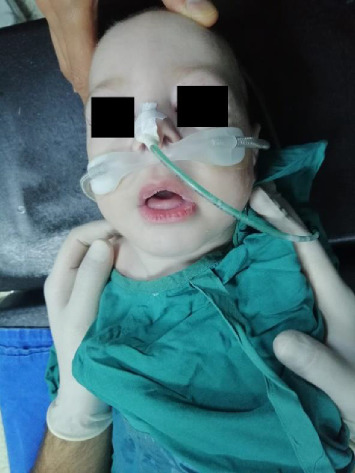 Figure 1
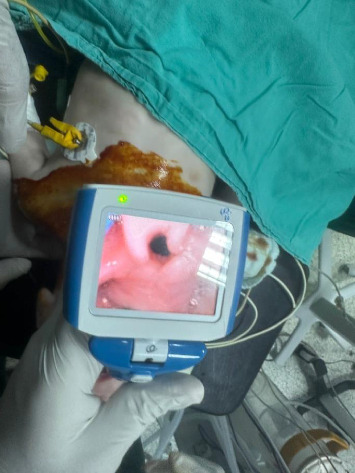 Figure 2
Peer Reviews
No public reviews on file for this paper yet. If you reviewed it on a platform where reviews are public (OpenReview, ICLR, NeurIPS, ICML), you can paste yours below so the community can read it here.
Videos
No videos yet. Explain this paper in a talk, walkthrough, or lecture? Add one.
Taxonomy
TopicsMedical and Biological Sciences