The role of albumin-corrected anion gap as a predictor of all-cause mortality in patients with Sepsis-AKI: A propensity score-matched cohort study
Jian Liao, Xiao Xiao, Dingyu Lu, Maojuan Wang, Wei Huang, Ahmet Murt, Ahmet Murt, Ahmet Murt, Ahmet Murt

TL;DR
This study shows that a higher albumin-corrected anion gap (ACAG) is linked to higher mortality in patients with sepsis-induced acute kidney injury (Sepsis-AKI), suggesting ACAG could be a useful clinical predictor.
Contribution
The study identifies ACAG as a novel independent predictor of mortality in Sepsis-AKI patients, offering a new clinical tool.
Findings
High ACAG (>20 mmol/L) is associated with increased hospital mortality in Sepsis-AKI patients.
ACAG outperformed albumin and anion gap in predicting mortality, with a higher AUC and net benefit.
Cox regression confirmed ACAG as an independent risk factor for mortality after propensity score matching.
Abstract
The potential association between albumin-corrected anion gap at admission and prognosis in patients with sepsis-induced AKI remains uncertain. The purpose of this study was to explore the prognostic value of ACAG on mortality in patients with Sepsis-AKI. Data for this retrospective study were obtained from the MIMIC IV2.2 database. We used propensity score matching (PSM) and Cox proportional hazards regression analysis to evaluate the correlation between the ACAG and clinical outcomes in patients with Sepsis-AKI. Propensity score matching (PSM) analysis was conducted to minimize bias. Receiver operating characteristic curves were generated for albumin, AG, and ACAG, and comparisons of the areas under the ROC curves were made. Decision curve analysis (DCA) was carried out to assess the net benefit of ACAG. According to the screening criteria, we identified a cohort of 2387 patients…
Genes, proteins, chemicals, diseases, species, mutations and cell lines named across the full text — each resolved to its canonical identifier and authoritative record.
Click any figure to enlarge with its caption.
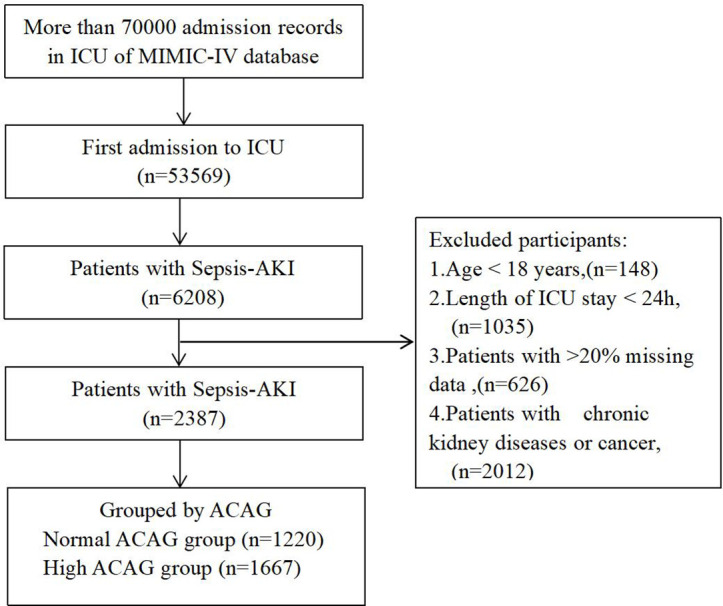 Figure 1
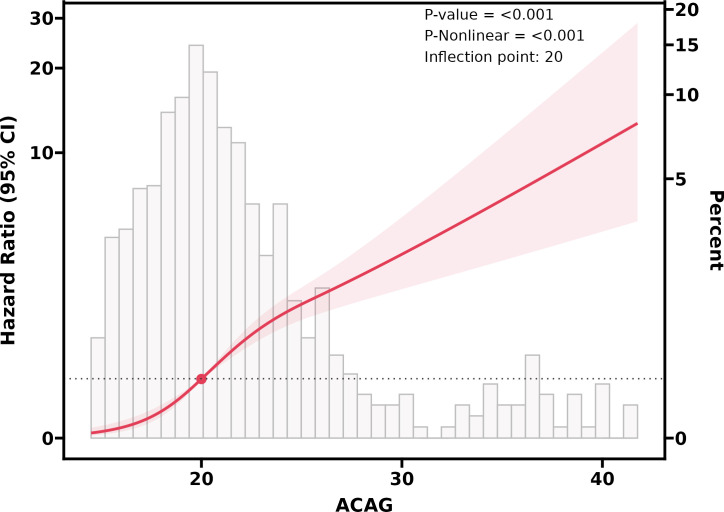 Figure 2
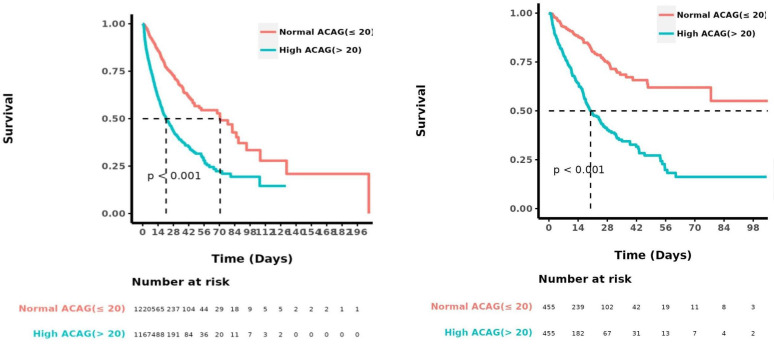 Figure 3
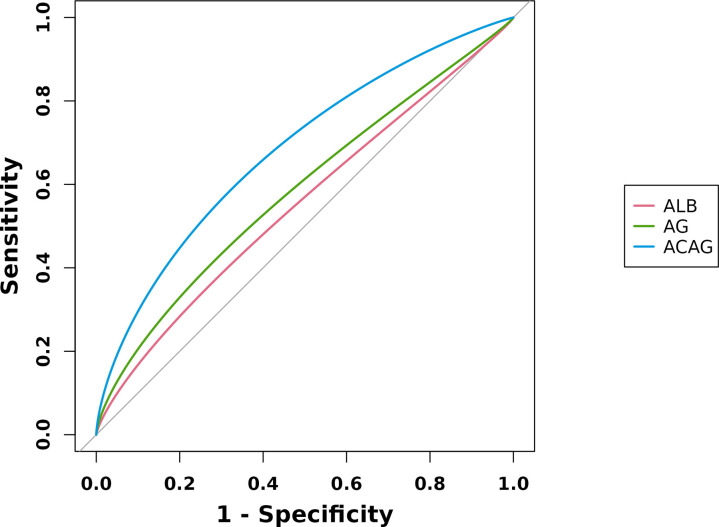 Figure 4
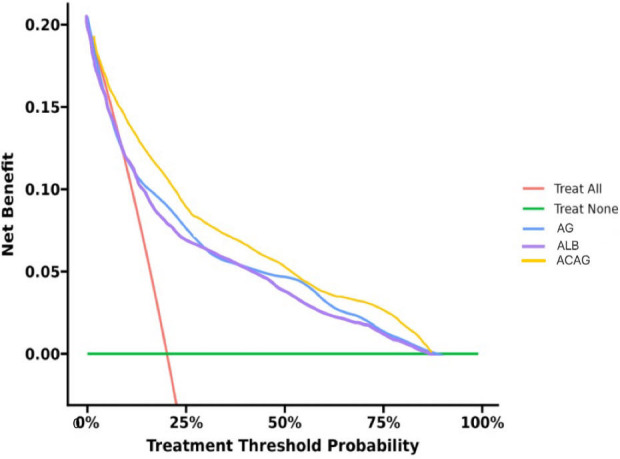 Figure 5
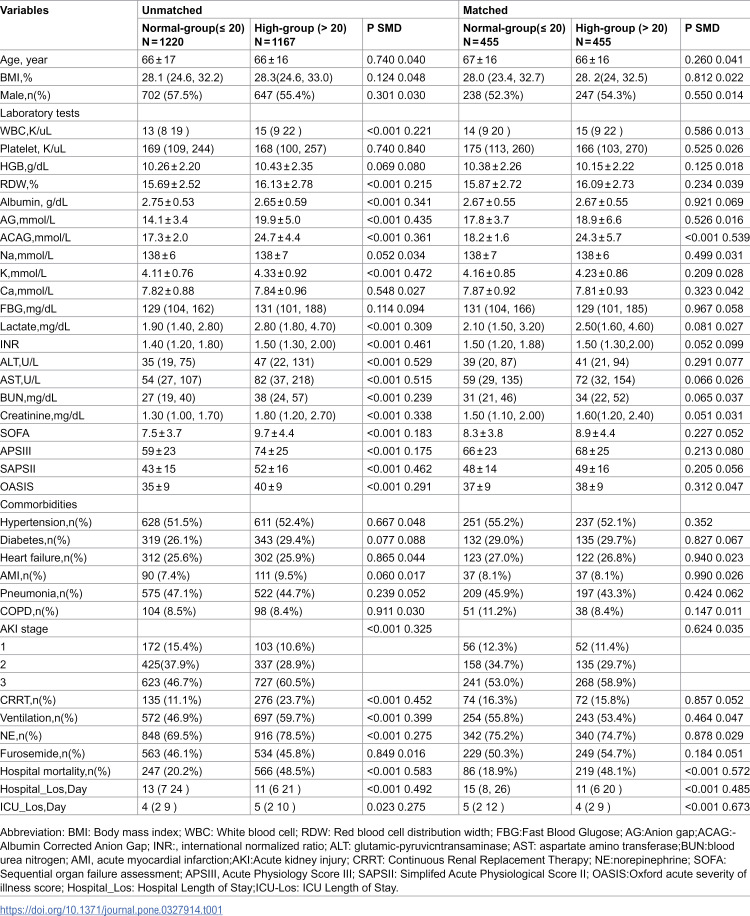 Figure 6
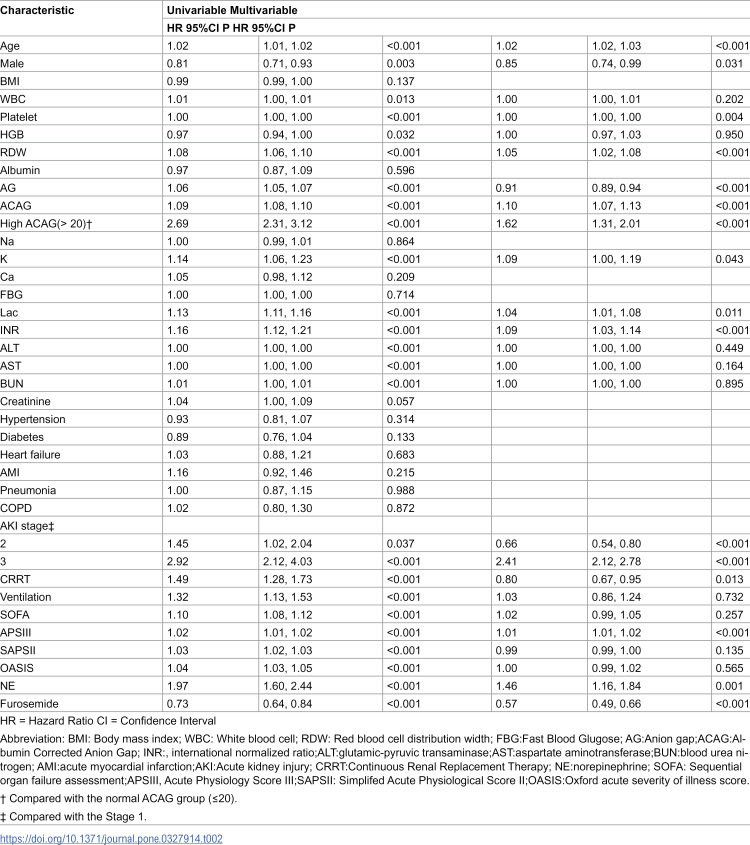 Figure 7
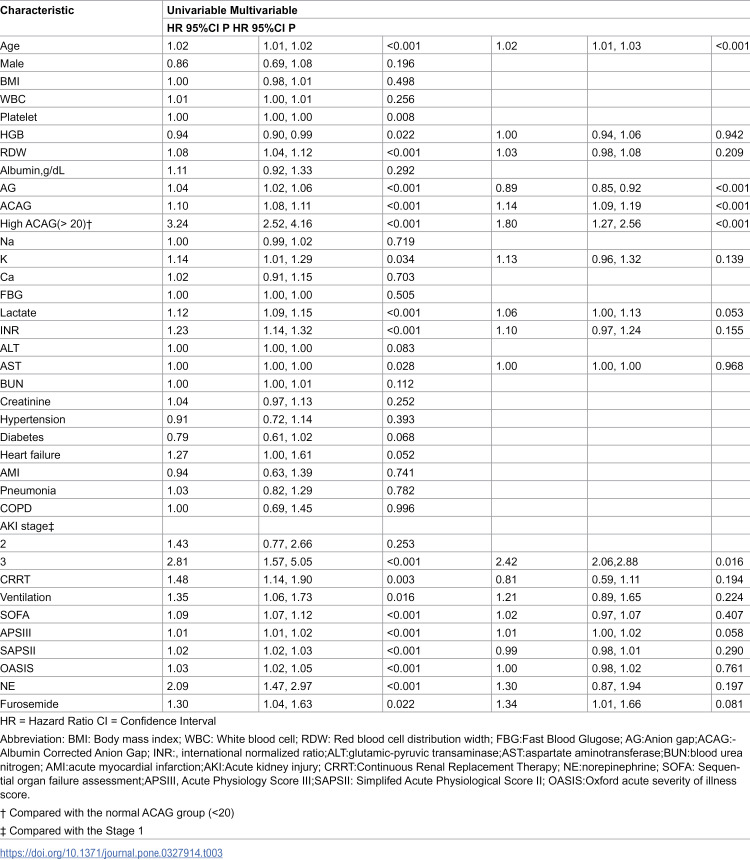 Figure 8
 Figure 9
Peer Reviews
No public reviews on file for this paper yet. If you reviewed it on a platform where reviews are public (OpenReview, ICLR, NeurIPS, ICML), you can paste yours below so the community can read it here.
Videos
No videos yet. Explain this paper in a talk, walkthrough, or lecture? Add one.
Taxonomy
TopicsSepsis Diagnosis and Treatment · Renal function and acid-base balance · Hemodynamic Monitoring and Therapy