How did the urban and rural resident basic medical insurance integration affect medical costs?—Evidence from China
Chen Liu, Qun Su, Meng Wang, Huaizhen Xing, Rinshu Dwivedi, Patrick Goymer, Patrick Goymer

TL;DR
This study examines how China's urban and rural medical insurance integration affected medical costs and healthcare usage, finding it increased costs through demand release and moral hazard.
Contribution
The study identifies distinct pathways (demand release and moral hazard) through which the URRBMI policy affects medical costs across income groups.
Findings
URRBMI integration increases outpatient and inpatient costs but also stimulates medical demand, especially in early policy stages.
Low- and middle-income groups experience higher medical costs mainly due to demand release, while high-income groups face increased costs from moral hazard.
The policy shifts healthcare resource use toward higher-level facilities and boosts preventive care utilization.
Abstract
The Urban and Rural Residents’ Basic Medical Insurance (URRBMI) aims to improve access to medical services, increase medical insurance benefits to reduce medical costs, and ultimately achieve medical equity. However, in the practice of the policy, the medical costs of Chinese residents have not been reduced. To assess the impact of URRBMI on Chinese residents’ healthcare resource utilization and medical costs, this study explores the fixed-effects DID methodology using CHARLS data for 2013, 2015, 2018, and 2020, explains the reasons for the rise in healthcare costs in terms of two paths, namely, demand release and moral hazard. The empirical results show that: (1) URRBMI integration increases outpatient OOP costs, inpatient OOP costs, and total medical consumption, but it also releases the population’s demand for medical care, which is meaningful at the initial stage of policy…
Genes, proteins, chemicals, diseases, species, mutations and cell lines named across the full text — each resolved to its canonical identifier and authoritative record.
Click any figure to enlarge with its caption.
 Figure 1
 Figure 2
 Figure 3
 Figure 4
 Figure 5
 Figure 6
 Figure 7
 Figure 8
 Figure 9
 Figure 10
 Figure 11
 Figure 12
 Figure 13
 Figure 14
 Figure 15
 Figure 16
 Figure 17
 Figure 18
 Figure 19
 Figure 20
 Figure 21
 Figure 22
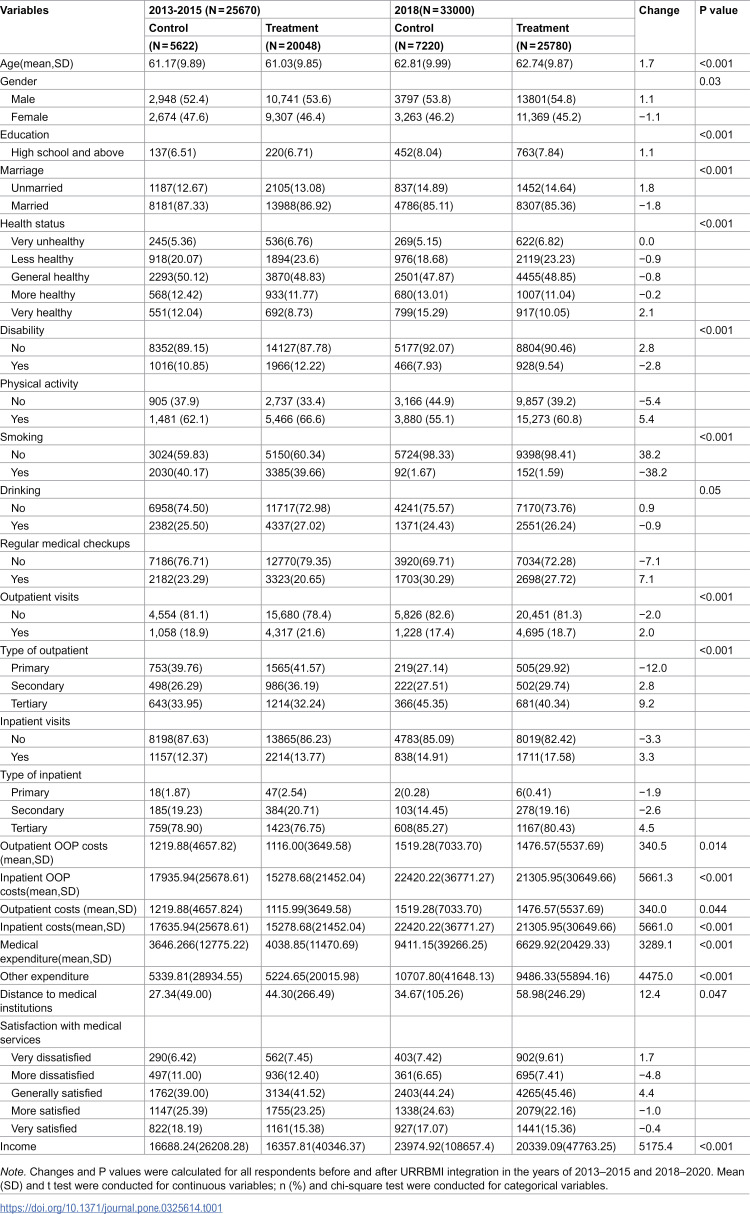 Figure 23
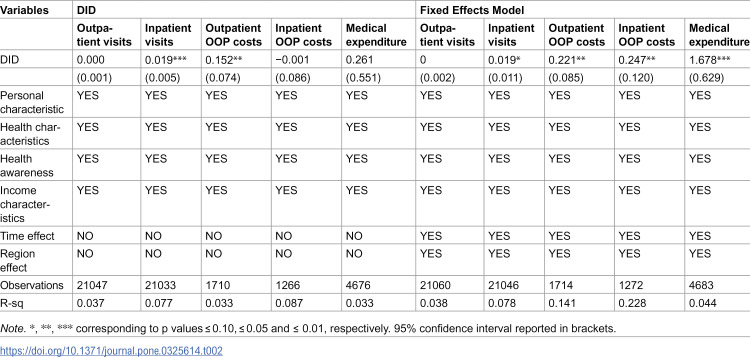 Figure 24
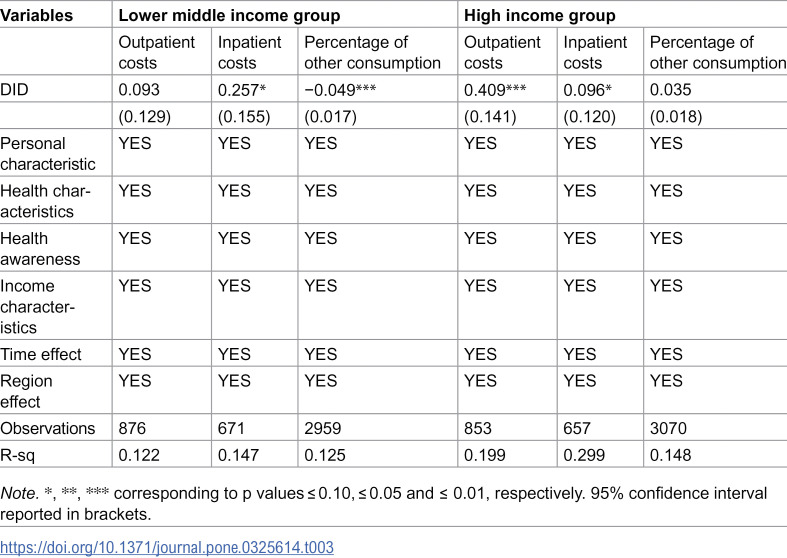 Figure 25
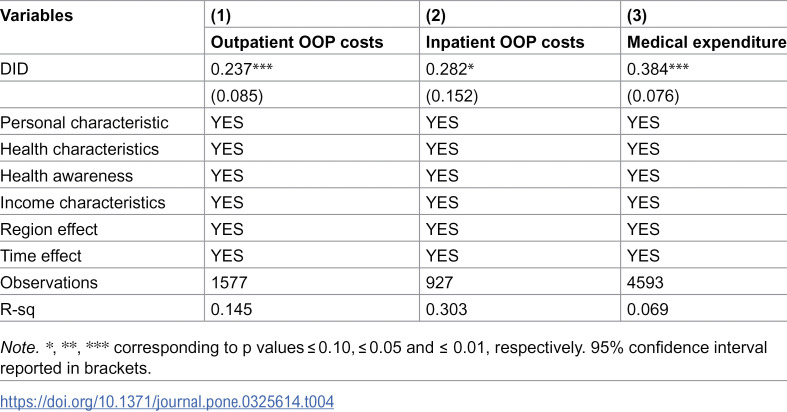 Figure 26
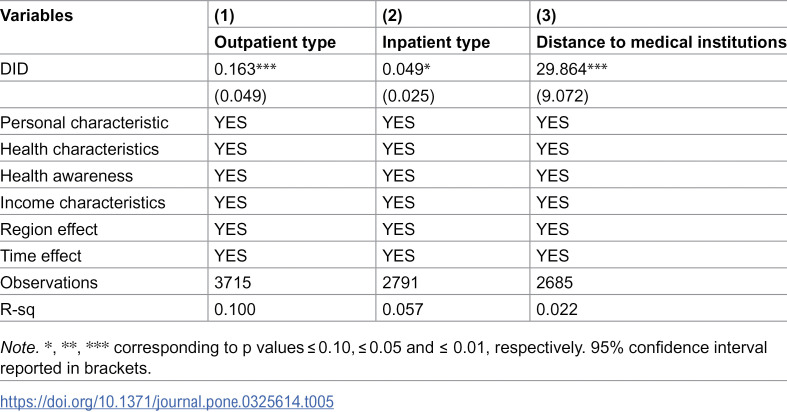 Figure 27
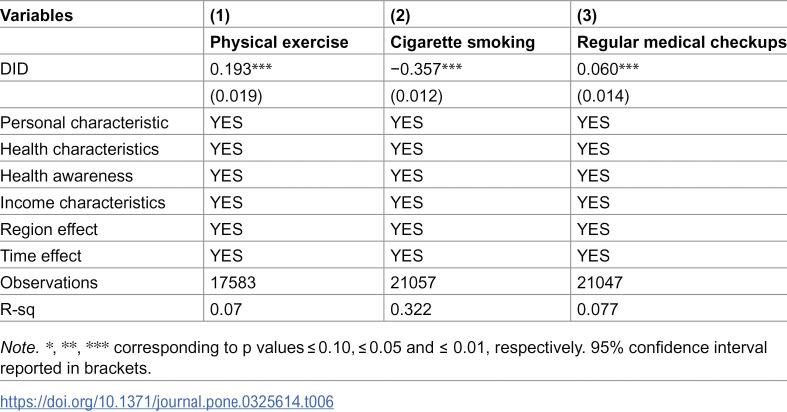 Figure 28
Peer Reviews
No public reviews on file for this paper yet. If you reviewed it on a platform where reviews are public (OpenReview, ICLR, NeurIPS, ICML), you can paste yours below so the community can read it here.
Videos
No videos yet. Explain this paper in a talk, walkthrough, or lecture? Add one.
Taxonomy
TopicsHealthcare Systems and Reforms · Global Health Care Issues · Healthcare Policy and Management