Multiple timescales of context influence perceptual sensitivity to common pairings of musical pitch and timbre
Christian E. Stilp, Isabel Adames, Anya E. Shorey

TL;DR
People are more accurate at identifying musical pitches when they match expected timbre patterns, and this sensitivity is influenced by context and musical training.
Contribution
The study reveals how multiple timescales of context modulate perceptual sensitivity to natural pitch-timbre covariation.
Findings
Participants showed higher accuracy for consistent pitch-timbre pairings than reversed ones.
Musical training improved accuracy more for reversed than consistent trials.
Contextual factors like block order and feedback influenced perceptual performance.
Abstract
Previous studies have established that musical pitch and timbre (specifically, spectral shape) perceptually covary: lower pitches are associated with darker timbres (less higher-frequency energy) and higher pitches are associated with brighter timbres (more higher-frequency energy). In four experiments, perceptual sensitivity to this relationship was assessed in pitch labeling tasks when instrument timbre varied in ways that respected or violated this pattern (Consistent or Reversed trials). Performance was influenced by context at multiple timescales: block-level (stimulus type), experimental session-level (block order or configuration), and longer-term experience (musical training background). Across experiments, participants performed near ceiling accuracy for Consistent stimuli, but were less accurate for Reversed stimuli. This pattern was moderated by which condition was tested…
Genes, proteins, chemicals, diseases, species, mutations and cell lines named across the full text — each resolved to its canonical identifier and authoritative record.
Click any figure to enlarge with its caption.
 Figure 1
 Figure 2
 Figure 3
 Figure 4
 Figure 5
 Figure 6
 Figure 7
 Figure 8
 Figure 9
 Figure 10
 Figure 11
 Figure 12
 Figure 13
 Figure 14
 Figure 15
 Figure 16
 Figure 17
 Figure 18
 Figure 19
 Figure 20
 Figure 21
 Figure 22
 Figure 23
 Figure 24
 Figure 25
 Figure 26
 Figure 27
 Figure 28
 Figure 29
 Figure 30
 Figure 31
 Figure 32
 Figure 33
 Figure 34
 Figure 35
 Figure 36
 Figure 37
 Figure 38
 Figure 39
 Figure 40
 Figure 41
 Figure 42
 Figure 43
 Figure 44
 Figure 45
 Figure 46
 Figure 47
 Figure 48
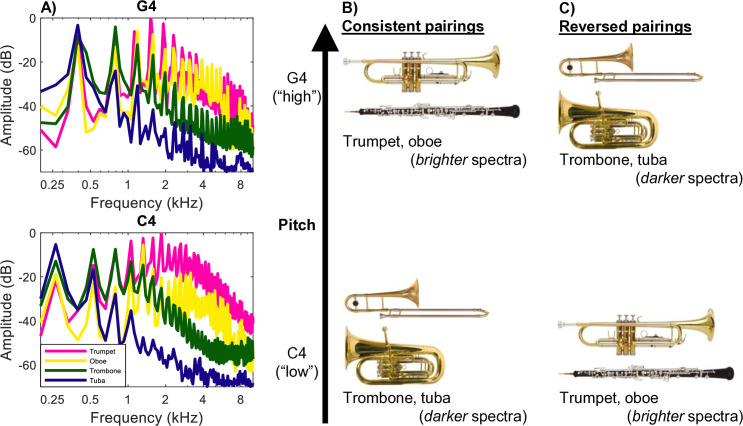 Figure 49
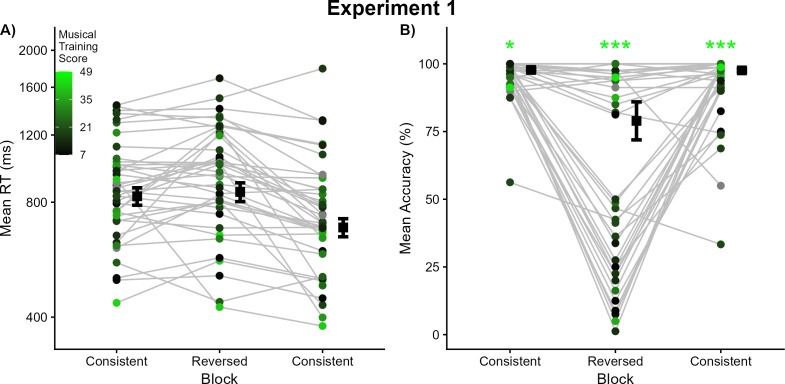 Figure 50
Peer Reviews
No public reviews on file for this paper yet. If you reviewed it on a platform where reviews are public (OpenReview, ICLR, NeurIPS, ICML), you can paste yours below so the community can read it here.
Videos
No videos yet. Explain this paper in a talk, walkthrough, or lecture? Add one.
Taxonomy
TopicsNeuroscience and Music Perception · Hearing Loss and Rehabilitation · Multisensory perception and integration