Genetic analysis of IFNG-AS1 implicates opposite effects to Leishmania guyanensis-cutaneous leishmaniasis: rs4913269 confers protection while rs7134599 enhances susceptibility and correlates with high plasma IL-4 and IL-10 levels
Marcus Vinitius de Farias Guerra, Josué Lacerda de Souza, Lener Santos da Silva, José do Espírito Santo Júnior, Tirza Gabrielle Ramos de Mesquita, Krys Layane Guimarães Duarte Queiroz, George Allan Villarouco da Silva, Mauricio Morishi Ogusku, Mara Lúcia Gomes de Souza

TL;DR
A genetic study found that two variants of the IFNG-AS1 gene have opposite effects on susceptibility to cutaneous leishmaniasis caused by Leishmania guyanensis.
Contribution
The study identifies specific genetic variants in IFNG-AS1 that confer protection or susceptibility to leishmaniasis and links them to immune response markers.
Findings
The rs4913269 G/G genotype is associated with a 46% reduced risk of developing Lg-CL.
The rs7134599 A/A genotype increases the risk of Lg-CL by 130% and correlates with higher IL-4 and IL-10 levels.
The rs4913269 and rs7134599 variants show opposing effects on disease risk and cytokine modulation.
Abstract
The long non-coding RNA interferon gamma antisense-1 (IFNGAS-1) is essential for Th1 lineage specific expression of IFNG. IFN-γ is a key component cytokine in host immune response against intracellular pathogens like Leishmania. We investigated the association of two genetic variants of IFNGAS-1, rs4913269 and rs7134599, with susceptibility or protection to Leishmania guyanensis- induced cutaneous leishmaniasis (Lg-CL). A case-control study involving 1,714 individuals (855 Lg-CL and 859 healthy controls) was conducted in the state of Amazonas, Brazil. Genotyping of rs4913269 and rs7134599 were performed using direct nucleotide sequencing and polymerase chain reaction-restriction fragment length polymorphism (PCR-RFLP), respectively. Plasma cytokines concentrations (IL-10, IL-12p70, IL-4, IL-1β and TNF-α) were quantified using multiplex Luminex platform. Logistic regression, linkage…
Genes, proteins, chemicals, diseases, species, mutations and cell lines named across the full text — each resolved to its canonical identifier and authoritative record.
Click any figure to enlarge with its caption.
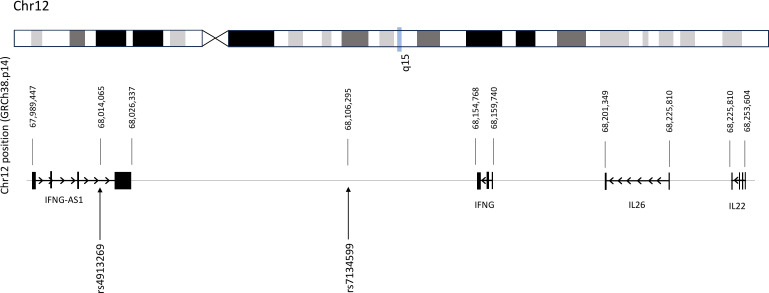 Figure 1
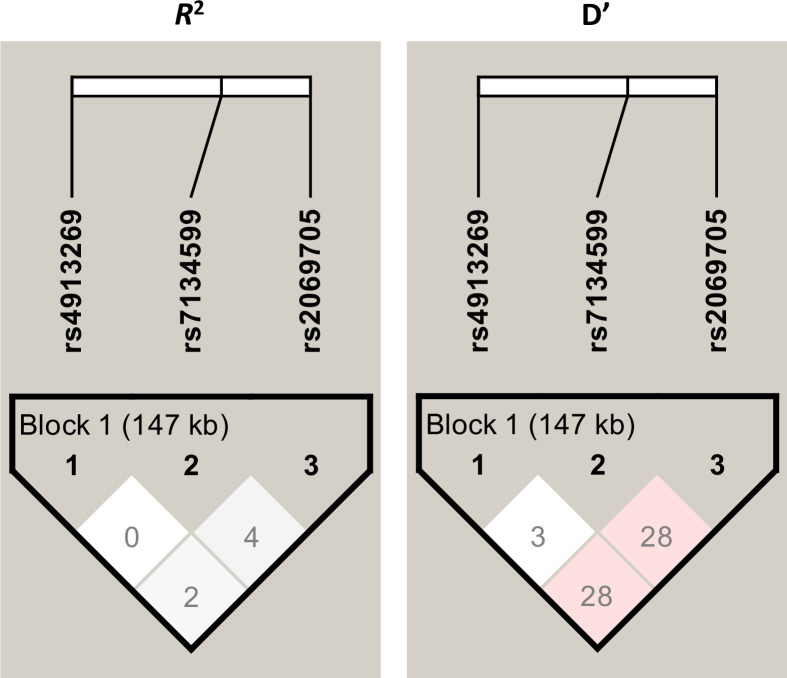 Figure 2
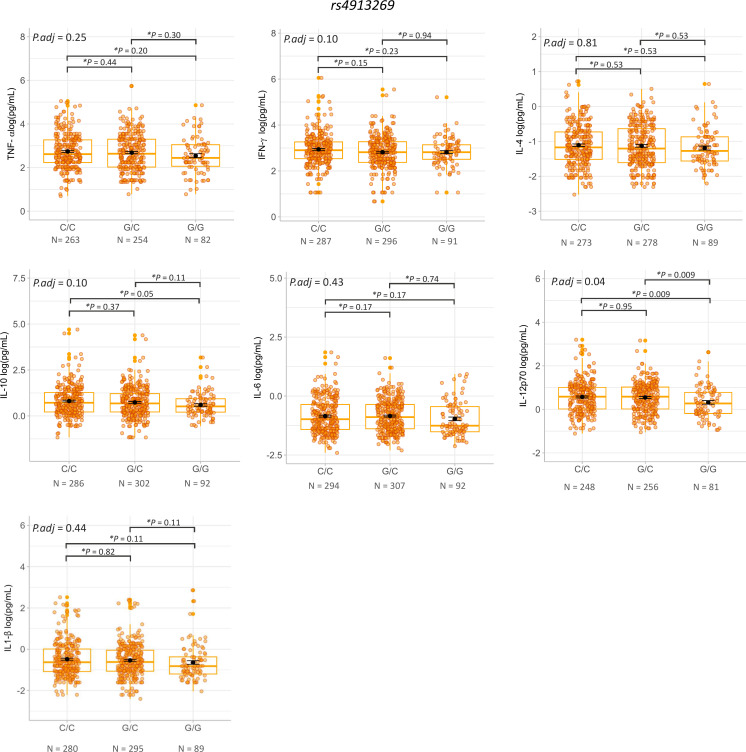 Figure 3
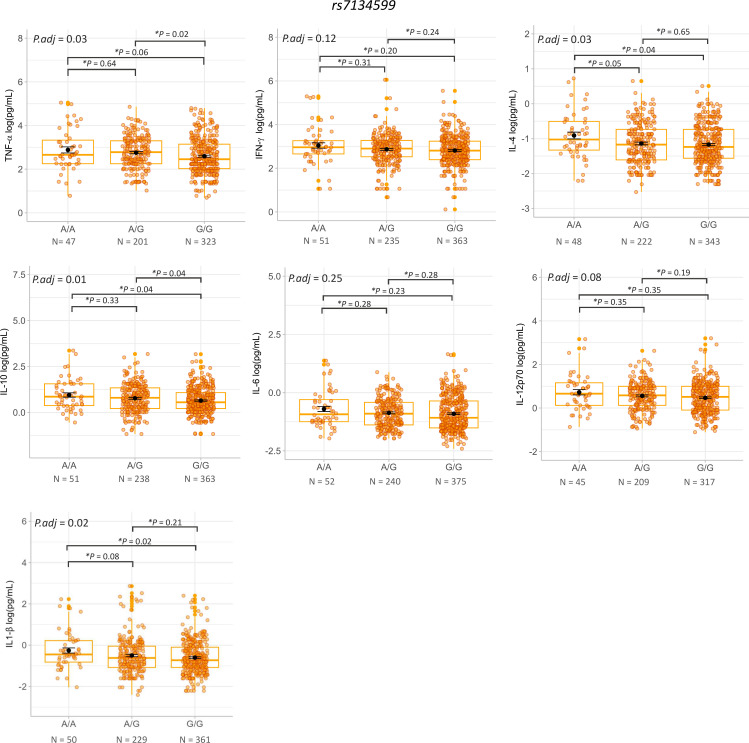 Figure 4
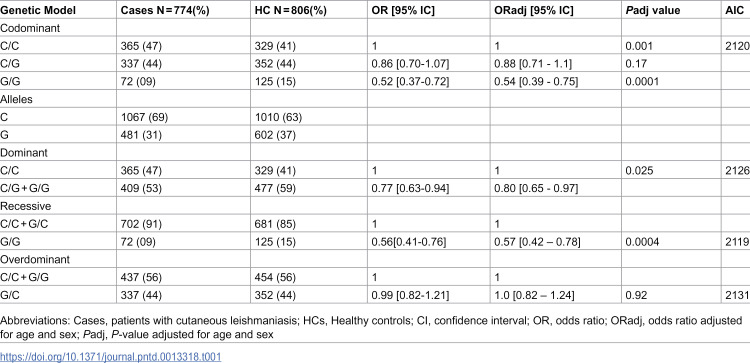 Figure 5
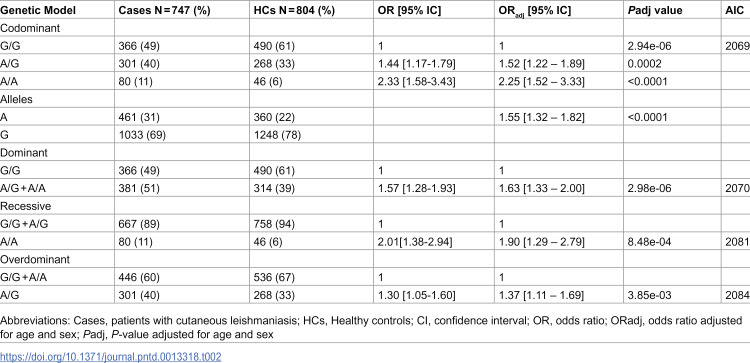 Figure 6
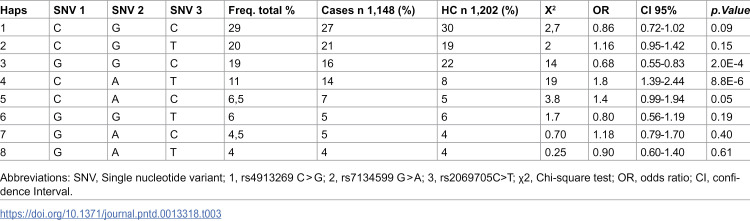 Figure 7
Peer Reviews
No public reviews on file for this paper yet. If you reviewed it on a platform where reviews are public (OpenReview, ICLR, NeurIPS, ICML), you can paste yours below so the community can read it here.
Videos
No videos yet. Explain this paper in a talk, walkthrough, or lecture? Add one.
Taxonomy
TopicsResearch on Leishmaniasis Studies · Trypanosoma species research and implications · Eosinophilic Disorders and Syndromes