Exploring how and why attributes of existing and emerging early cancer detection tests influence experiences and participation among individuals at risk of socioeconomic disadvantage: A qualitative interview study
Stefanie Bonfield, Evangelos Katsampouris, Suzanne E. Scott, Stephen W. Duffy, Fiona M. Walter, Samantha L. Quaife, Veincent Pepito, Veincent Pepito, Veincent Pepito

TL;DR
This study explores how different features of early cancer tests affect participation among people with socioeconomic disadvantages, finding that convenience and perceived accuracy are key factors.
Contribution
The study identifies specific test attributes that influence equitable access to early cancer detection among socioeconomically disadvantaged individuals.
Findings
Invasive tests perceived as higher risk led to preferences for accurate or quick results.
Conflicts with daily responsibilities and stigma hindered equitable access to cancer tests.
Perceived accuracy and convenience of tests could reduce barriers to participation.
Abstract
Emerging sample biomarker tests promise to improve early cancer detection, but also stand to influence socioeconomic inequalities in uptake of asymptomatic screening and symptomatic referrals. To explore how and why different attributes of early cancer detection tests influence experiences and participation across test modalities and contexts among individuals at risk of socioeconomic disadvantage. Qualitative semi-structured interviews with 30 individuals (aged ≥50 years) at risk of socioeconomic disadvantage explored how and why different attributes of early cancer detection tests affected their experiences and participation across test modalities and contexts. Vignette test scenarios and a think-aloud protocol were used to facilitate interviewees’ deliberation between a range of test attributes. Data were analysed using framework analysis. Select attributes of early cancer…
Genes, proteins, chemicals, diseases, species, mutations and cell lines named across the full text — each resolved to its canonical identifier and authoritative record.
Click any figure to enlarge with its caption.
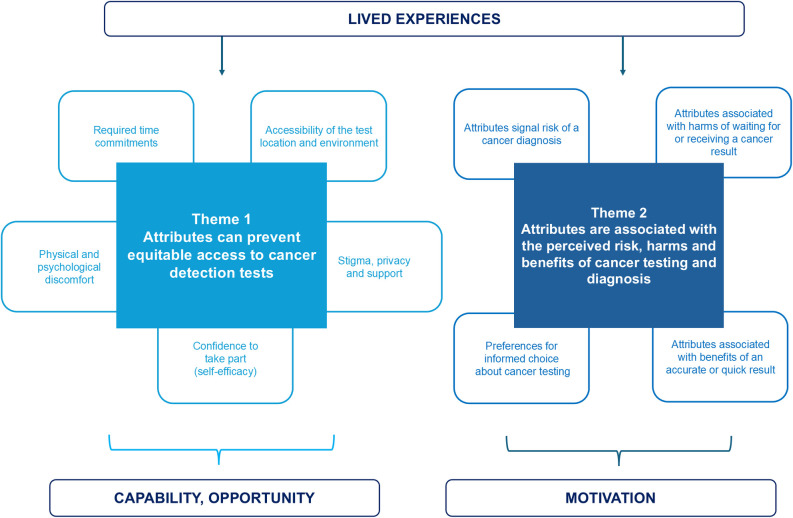 Figure 1
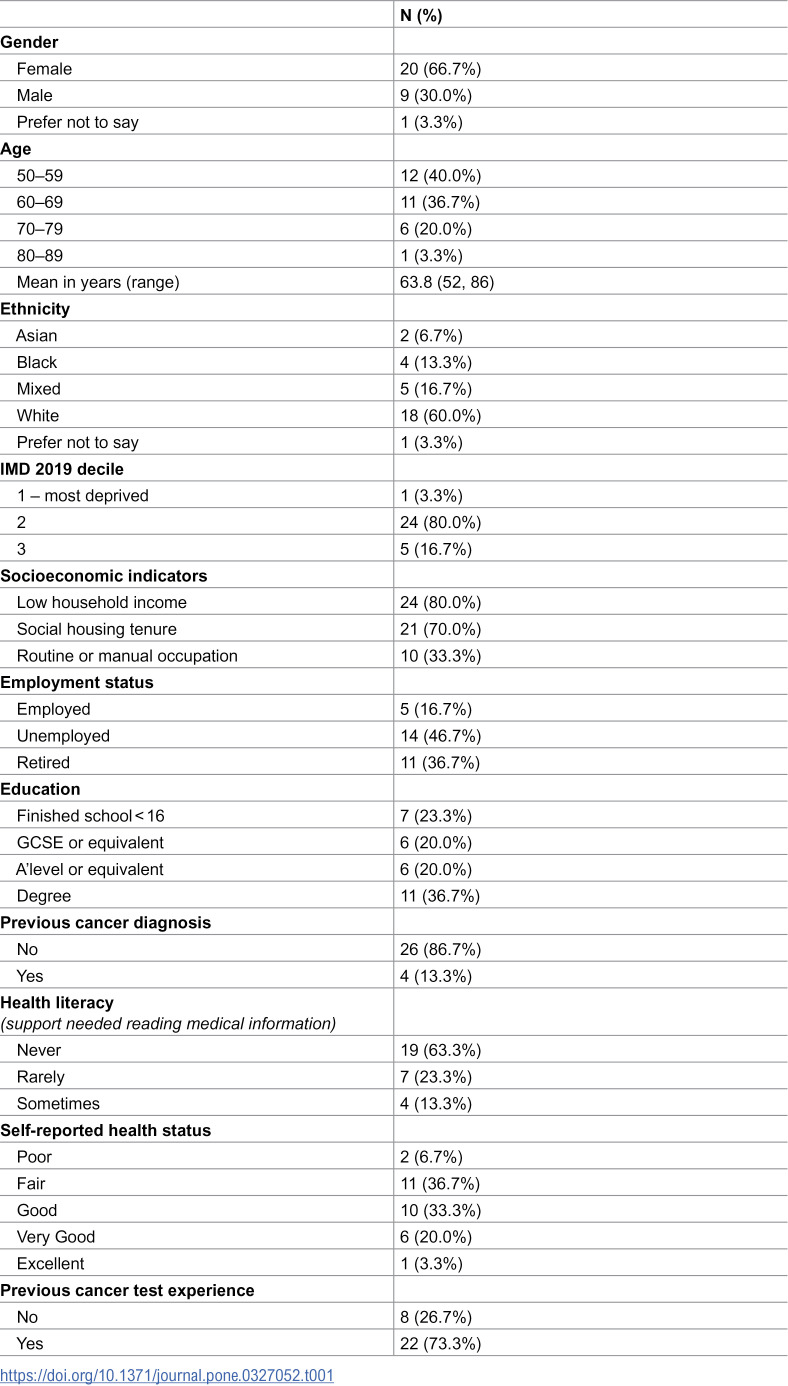 Figure 2
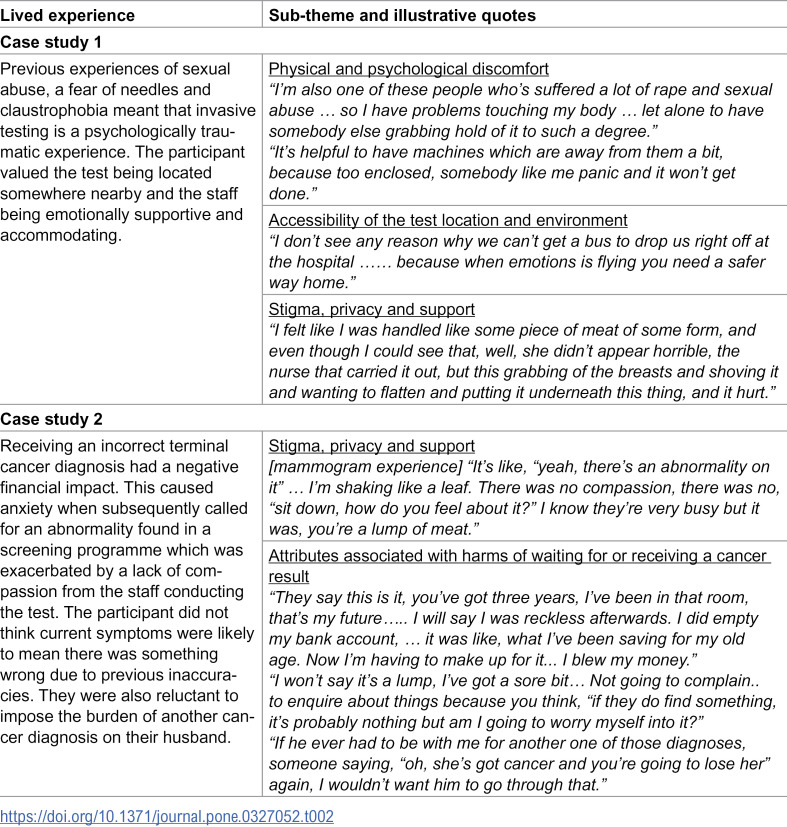 Figure 3
Peer Reviews
No public reviews on file for this paper yet. If you reviewed it on a platform where reviews are public (OpenReview, ICLR, NeurIPS, ICML), you can paste yours below so the community can read it here.
Videos
No videos yet. Explain this paper in a talk, walkthrough, or lecture? Add one.
Taxonomy
TopicsGlobal Cancer Incidence and Screening · Palliative Care and End-of-Life Issues · BRCA gene mutations in cancer