Efficient discovery of frequently co-occurring mutations in a sequence database with matrix factorization
Michael Robert Kolar, Valerie Kobzarenko, Debasis Mitra, Rob J De Boer, Jordan Douglas, Rob J De Boer, Jordan Douglas, Rob J De Boer, Jordan Douglas, Rob J De Boer, Jordan Douglas

TL;DR
This paper introduces a new method using matrix factorization to efficiently find co-occurring mutations in viral sequences, which could help understand virus evolution and vaccine design.
Contribution
The novel contribution is a matrix factorization-based approach for efficiently identifying co-occurring mutations in large sequence databases.
Findings
The method outperforms brute-force approaches in identifying co-mutational positions in SARS-CoV-2 Spike protein sequences.
Identified co-mutations align with biologically significant mutations in Delta and Omicron variants.
Tracking co-mutational patterns reveals insights into viral evolution and adaptability.
Abstract
We have developed a robust method for efficiently tracking multiple co-occurring mutations in a sequence database. Evolution often hinges on the interaction of several mutations to produce significant phenotypic changes that lead to the proliferation of a variant. However, identifying numerous simultaneous mutations across a vast database of sequences poses a significant computational challenge. Our approach leverages a matrix factorization technique to automatically and efficiently pinpoint subsets of positions where co-mutations occur, appearing in a substantial number of sequences within the database. We validated our method using SARS-CoV-2 receptor-binding domains, comprising approximately seven hundred thousand sequences of the Spike protein, demonstrating superior performance compared to a reasonably exhaustive brute-force method. Furthermore, we explore the biological…
Genes, proteins, chemicals, diseases, species, mutations and cell lines named across the full text — each resolved to its canonical identifier and authoritative record.
Click any figure to enlarge with its caption.
 Figure 1
 Figure 2
 Figure 3
 Figure 4
 Figure 5
 Figure 6
 Figure 7
 Figure 8
 Figure 9
 Figure 10
 Figure 11
 Figure 12
 Figure 13
 Figure 14
 Figure 15
 Figure 16
 Figure 17
 Figure 18
 Figure 19
 Figure 20
 Figure 21
 Figure 22
 Figure 23
 Figure 24
 Figure 25
 Figure 26
 Figure 27
 Figure 28
 Figure 29
 Figure 30
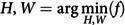 Figure 31
 Figure 32
 Figure 33
 Figure 34
 Figure 35
 Figure 36
 Figure 37
 Figure 38
 Figure 39
 Figure 40
 Figure 41
 Figure 42
 Figure 43
 Figure 44
 Figure 45
 Figure 46
 Figure 47
 Figure 48
 Figure 49
 Figure 50
Peer Reviews
No public reviews on file for this paper yet. If you reviewed it on a platform where reviews are public (OpenReview, ICLR, NeurIPS, ICML), you can paste yours below so the community can read it here.
Videos
No videos yet. Explain this paper in a talk, walkthrough, or lecture? Add one.
Taxonomy
TopicsGenomics and Phylogenetic Studies · vaccines and immunoinformatics approaches · Machine Learning in Bioinformatics