Delivery of a fibrin-binding hemostatic polymer ameliorates neurovascular damage and neural tissue loss after traumatic brain injury
Qinghua Han, David Brenes, Kevin W. Bishop, Trey J. Pichon, Melissa Ling, Garrett D. McPheron, Nathan J. White, Suzie H. Pun, Jonathan T. C. Liu, Drew L. Sellers

TL;DR
A fibrin-binding polymer called PolySTAT helps reduce brain damage and tissue loss after traumatic brain injury by acting as a molecular patch.
Contribution
The study introduces a 3D pathology workflow to evaluate PolySTAT's effects on neurovascular and neural tissue preservation after TBI.
Findings
PolySTAT preserves neurovascular density and function after TBI.
PolySTAT reduces hypoxia, blood leakage, and brain tissue loss.
PolySTAT attenuates inflammation and reactive gliosis biomarkers.
Abstract
Traumatic brain injury (TBI) often induces blood leakage into brain tissues, which causes further tissue loss after the initial injury. To mitigate this secondary injury, we hypothesized that delivery of a fibrin-binding hemostatic polymer, PolySTAT, would act as a molecular patch and ameliorate brain vessel damage following TBI. We developed a three-dimensional (3D) pathology and analysis workflow to quantify the effects of PolySTAT versus a control polymer, PolySCRM, on neurovascular networks and neural tissue in whole mouse brains. Using a panel of fluorescent probes, our 3D pathology pipeline revealed that PolySTAT treatment preserves neurovascular density and function, reduces hypoxia and blood extravasation, and reduces brain tissue loss after TBI. To further corroborate the 3D microscopy–based findings, gene expression analyses show that PolySTAT attenuates the expression of…
Genes, proteins, chemicals, diseases, species, mutations and cell lines named across the full text — each resolved to its canonical identifier and authoritative record.
Click any figure to enlarge with its caption.
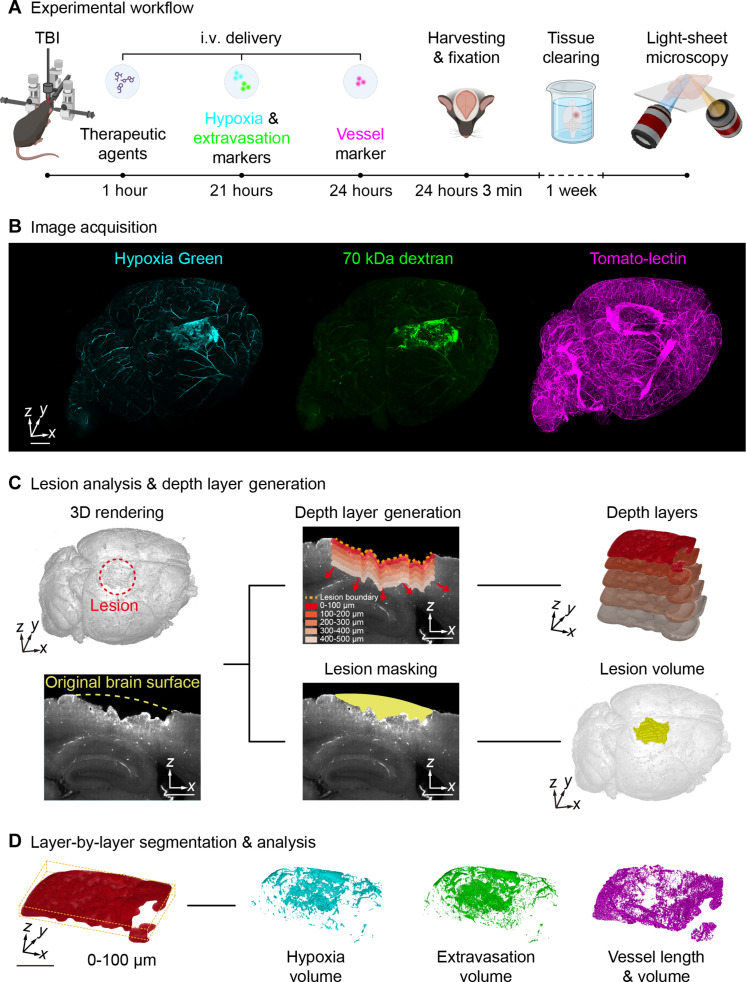 Figure 1
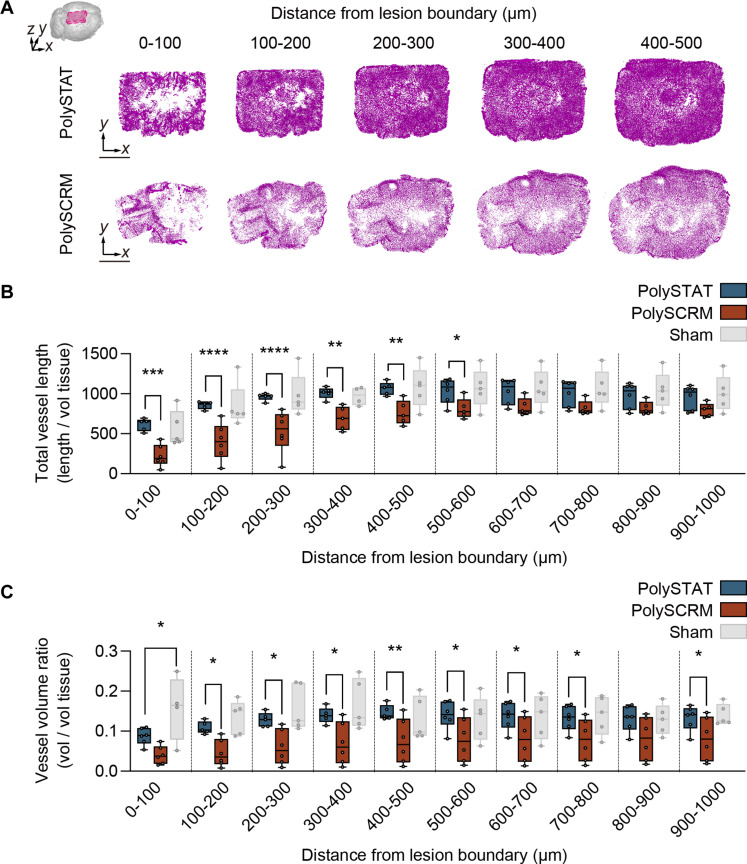 Figure 2
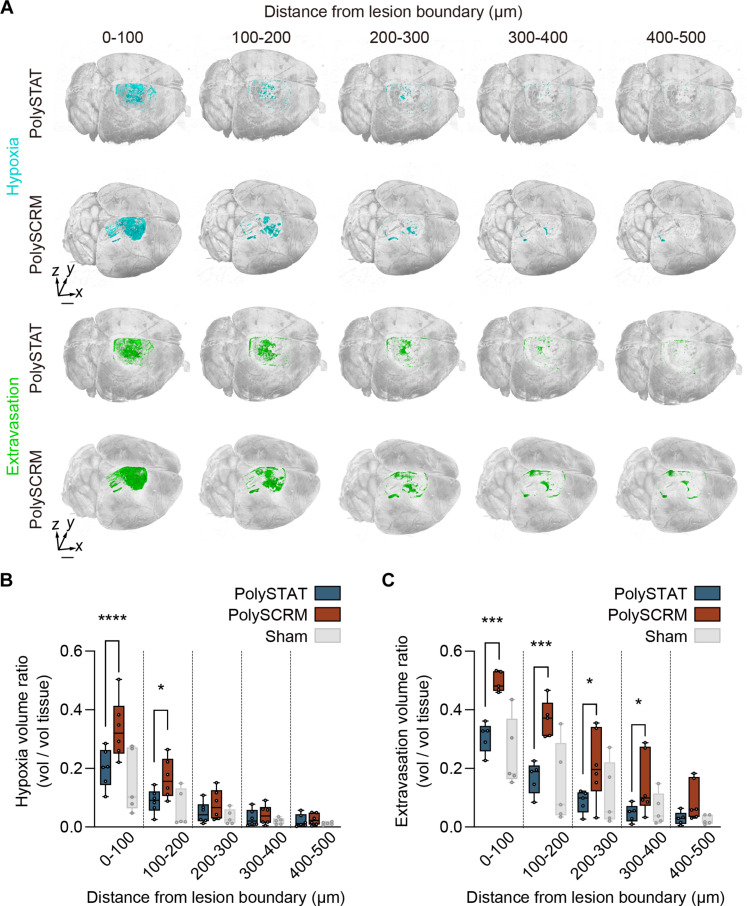 Figure 3
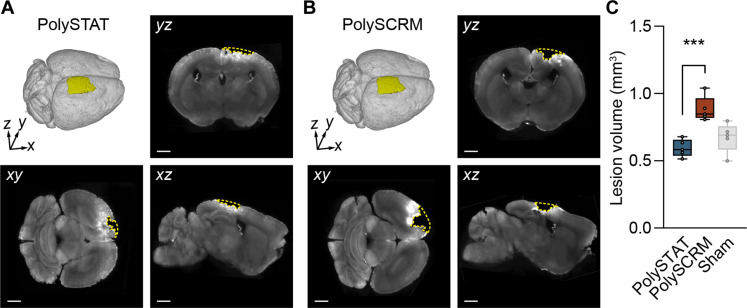 Figure 4
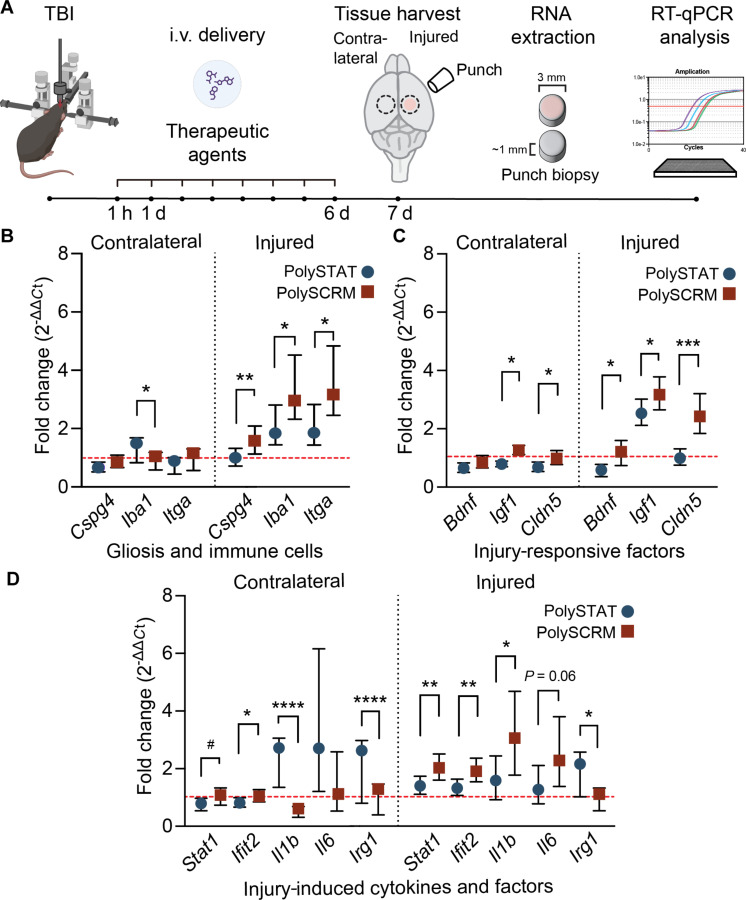 Figure 5
Peer Reviews
No public reviews on file for this paper yet. If you reviewed it on a platform where reviews are public (OpenReview, ICLR, NeurIPS, ICML), you can paste yours below so the community can read it here.
Videos
No videos yet. Explain this paper in a talk, walkthrough, or lecture? Add one.
Taxonomy
TopicsTraumatic Brain Injury and Neurovascular Disturbances · Hemoglobin structure and function · Intracranial Aneurysms: Treatment and Complications