Physiological Responses to High‐Intensity Interval Exercise in Hypoxia Among Lean Males and Those With Overweight or Obesity
Zhenhuan Wang, Jia Li, Muhammed M. Atakan, Metodija Kjertakov, Hansen Li, Jujiao Kuang, Michael J. McKenna, Wentao Lin, Yanchun Li, David J. Bishop, Olivier Girard, Xu Yan, Li Peng

TL;DR
This study shows how high-intensity interval exercise in low oxygen affects normal-weight and overweight males differently, with potential benefits for metabolic health.
Contribution
The study reveals BMI-specific physiological and metabolic responses to high-intensity interval exercise in hypoxia.
Findings
Normal-weight individuals had greater reductions in peak oxygen uptake under hypoxia compared to overweight/obese individuals.
Overweight individuals showed increased blood glucose after hypoxic exercise, suggesting potential metabolic benefits.
Both BMI groups had similar heart rate and oxygen consumption responses during high-intensity interval exercise in hypoxia and normoxia.
Abstract
This study aimed to compare physiological responses to high‐intensity interval exercise (HIIE) in hypoxia and normoxia across different body mass index (BMI) categories. Twenty‐one males, classified as normal‐weight (NW, n = 9 and BMI: 22.9 ± 2.3 kg · m−2) or overweight/obese (OW, n = 12 and BMI: 27.6 ± 2.0 kg · m−2), completed graded exercise tests (GXT) in normoxia (FiO2 = 20.9%) and hypoxia (FiO2 = 14.0%), followed by three randomised HIIE sessions: hypoxia (HY), normoxia matched to hypoxic relative intensity (NR) and normoxia matched to hypoxic absolute intensity (NA). Blood samples were collected at baseline, immediately post‐HIIE and at 3 and 24 h post‐exercise. Both NW and OW groups had significant reductions in peak heart rate and peak power output in hypoxic versus normoxic GXT (p < 0.05). The NW group showed a greater decline in peak oxygen uptake V˙O2peak under hypoxia…
Genes, proteins, chemicals, diseases, species, mutations and cell lines named across the full text — each resolved to its canonical identifier and authoritative record.
Click any figure to enlarge with its caption.
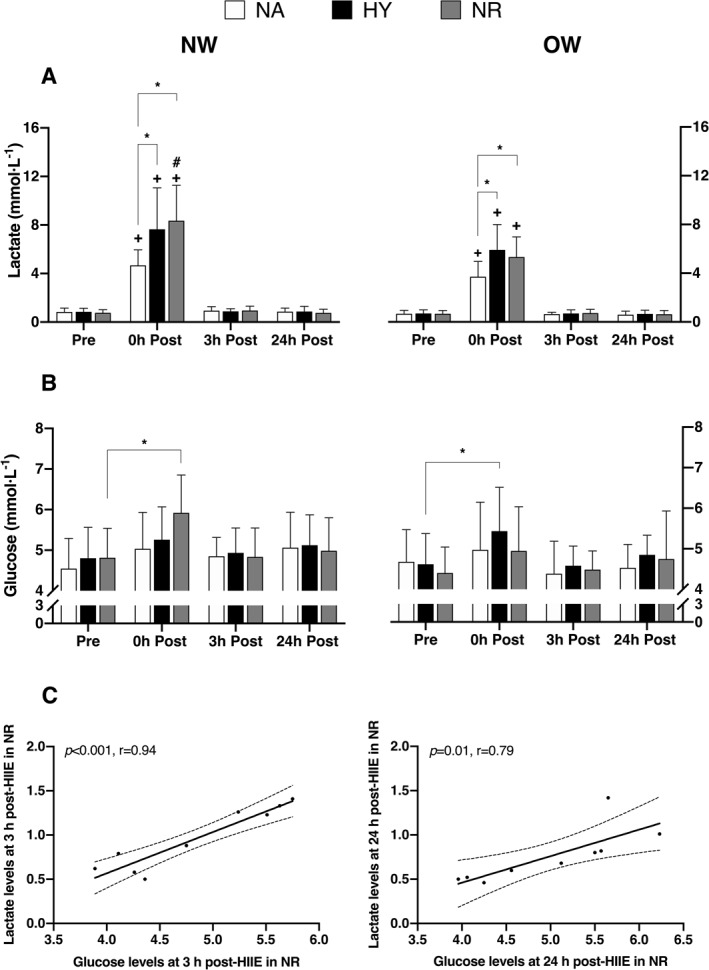 Figure 1
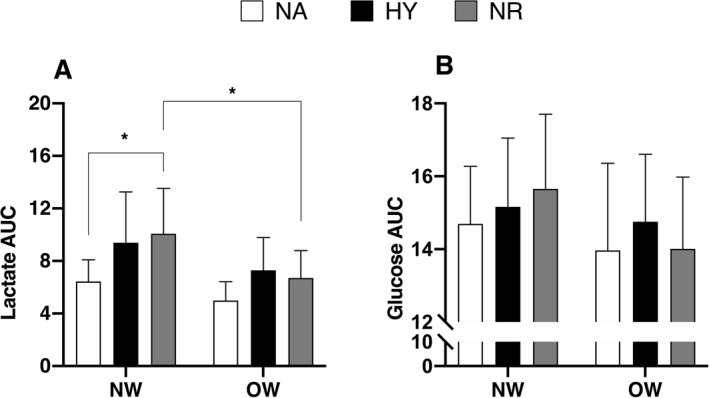 Figure 2
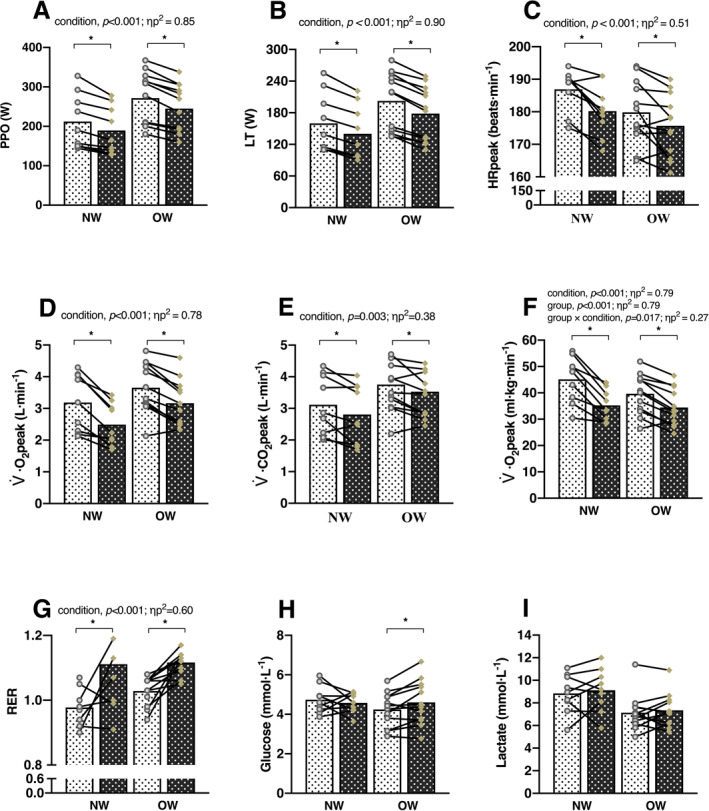 Figure 3
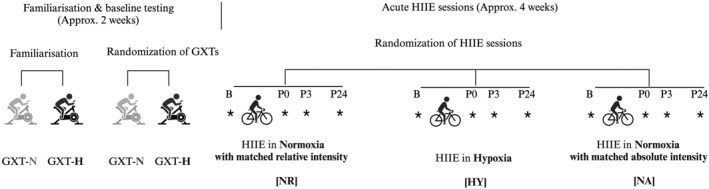 Figure 4
Peer Reviews
No public reviews on file for this paper yet. If you reviewed it on a platform where reviews are public (OpenReview, ICLR, NeurIPS, ICML), you can paste yours below so the community can read it here.
Videos
No videos yet. Explain this paper in a talk, walkthrough, or lecture? Add one.
Taxonomy
TopicsHigh Altitude and Hypoxia · Cardiovascular and exercise physiology · Adipose Tissue and Metabolism