Sex- and age-related morphological and functional differences in the skull of Eira barbara (Linnaeus, 1758) (Carnivora, Mustelidae)
Fernando Araujo Perini, Fernando L. Sicuro

TL;DR
This study explores how skull shape and function differ between male and female tayras as they grow, revealing distinct developmental paths and possible ecological roles.
Contribution
The study provides the first detailed analysis of sexual dimorphism and ontogenetic skull development in the Neotropical mustelid Eira barbara.
Findings
Male tayras surpass females in skull size and robustness by the subadult stage.
Males develop stronger bite forces due to enlarged temporal muscles, possibly linked to territorial or mating behaviors.
Females show narrower skull features, indicating different masticatory biomechanics and growth trajectories.
Abstract
Morphological differences related to age and sex have been extensively documented in Nearctic and Palearctic mustelids, largely due to the interest in the commercial management of species such as martens and fishers. However, sexual dimorphism and ontogenetic development in Neotropical species, such as the tayra (Eira barbara), remain poorly studied. We investigated the skull development and sexual differences in E. barbara through qualitative and morphometric analyses of 376 skull specimens from museum collections. Specimens were classified into four age classes based on tooth eruption, cranial suture closure, and skull morphology. Linear measurements were used to assess biomechanical parameters related to the masticatory function, including temporal and masseter muscle force indices. The results show that male and female tayras follow two distinct growth pathways. While juveniles…
Genes, proteins, chemicals, diseases, species, mutations and cell lines named across the full text — each resolved to its canonical identifier and authoritative record.
Click any figure to enlarge with its caption.
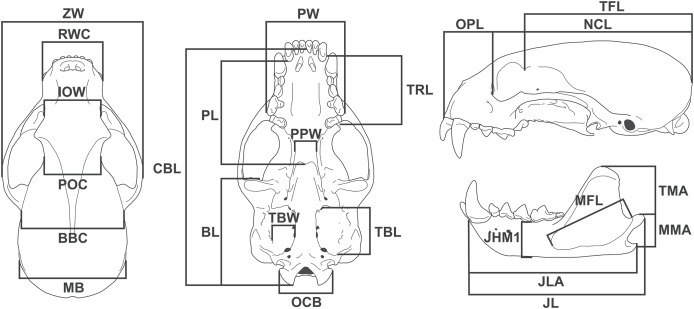 Figure 1
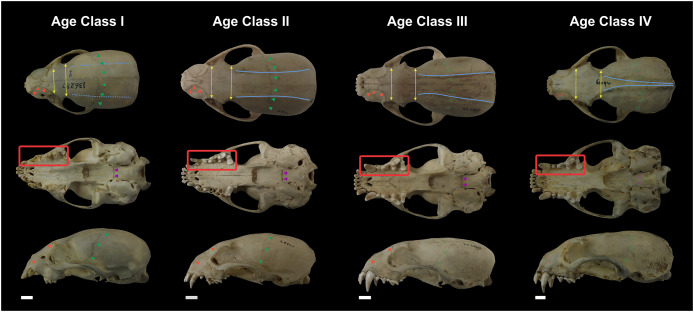 Figure 2
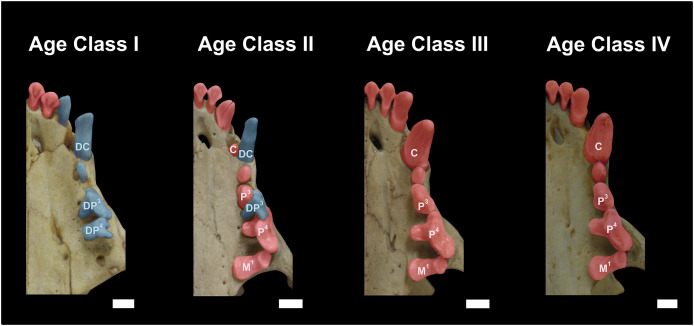 Figure 3
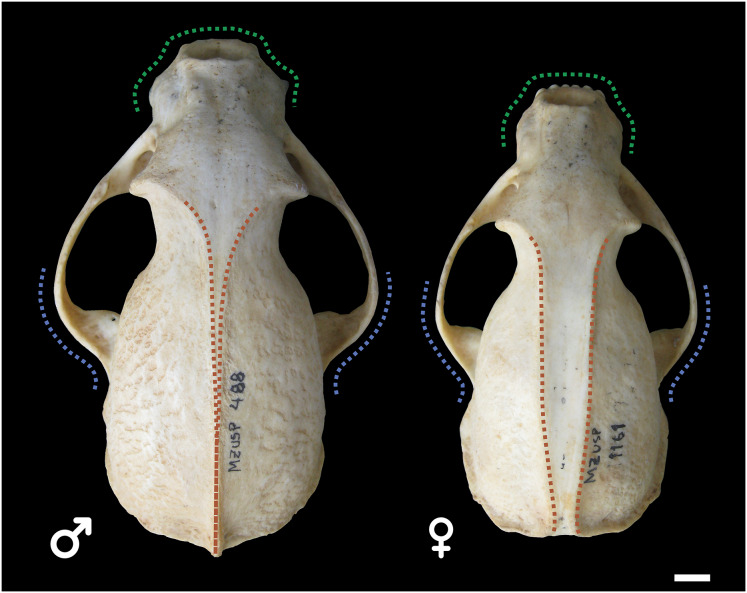 Figure 4
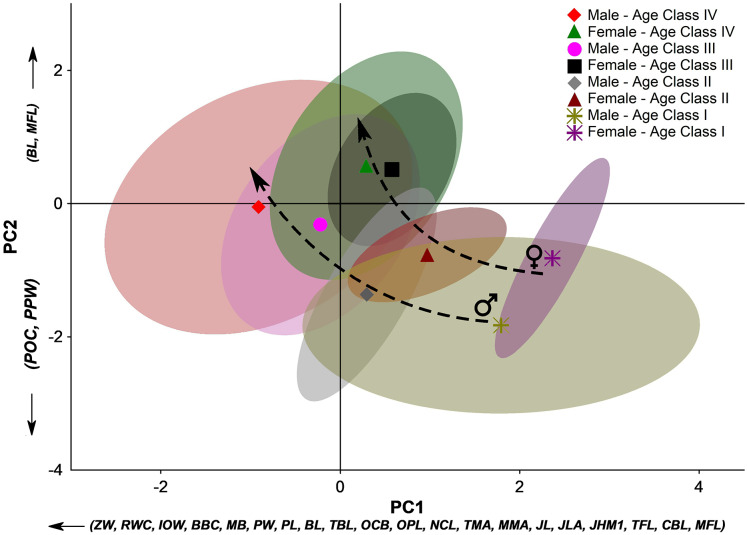 Figure 5
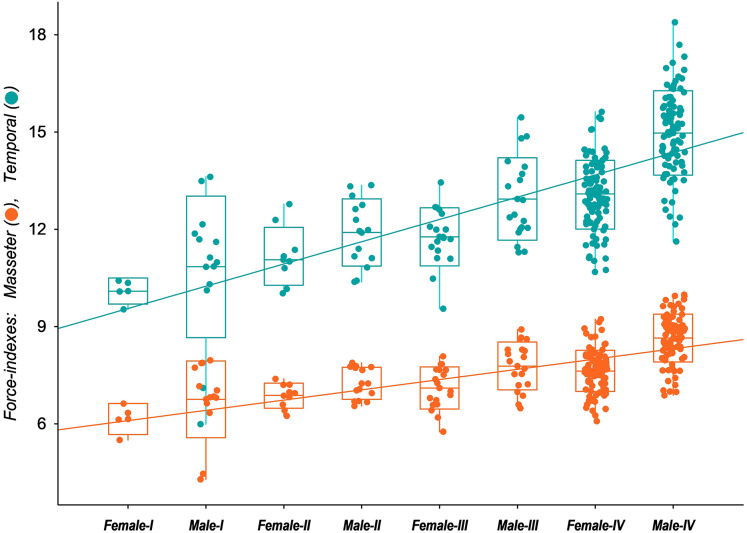 Figure 6
 Figure 7
 Figure 8
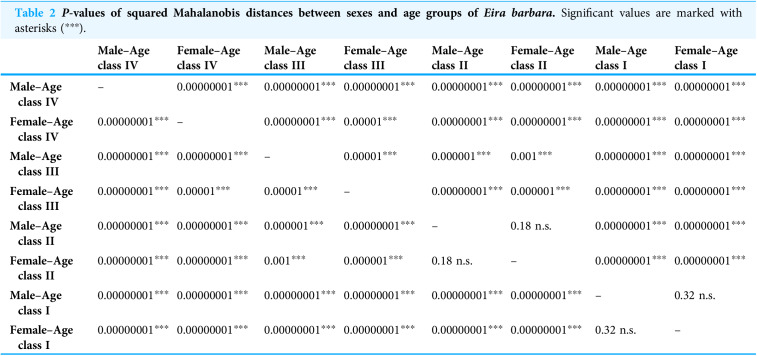 Figure 9
 Figure 10
 Figure 11
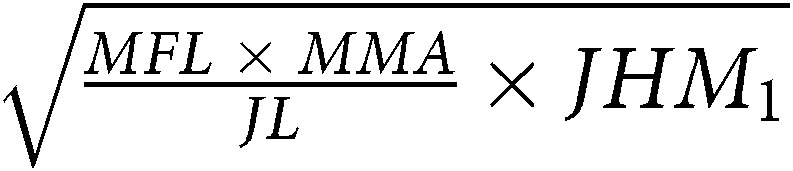 Figure 12
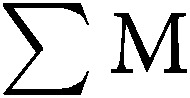 Figure 13
Peer Reviews
No public reviews on file for this paper yet. If you reviewed it on a platform where reviews are public (OpenReview, ICLR, NeurIPS, ICML), you can paste yours below so the community can read it here.
Videos
No videos yet. Explain this paper in a talk, walkthrough, or lecture? Add one.
Taxonomy
TopicsEvolution and Paleontology Studies · Wildlife Ecology and Conservation · Bat Biology and Ecology Studies