Urinary Sodium and Potassium Excretion in Bangladeshi Adults: Results from a Population-Based Survey with 24-Hour Urine Collections
Jubaida Akhtar, Mohammad A. Al-Mamun, Mohammad N.-N. Sayem, Mohammad J. Ahmed, Mahfuzur R. Bhuiyan, Shamim Jubayer, Mohammad R. Amin, R. Karim, Megan E. Henry, Matti Marklund, Laura Cobb, Dinesh Neupane, Lawrence J. Appel, Sohel R. Choudhury

TL;DR
This study measured sodium and potassium intake in Bangladeshi adults and found that salt intake is too high and potassium intake is too low, increasing cardiovascular disease risk.
Contribution
The study provides population-based data on urinary sodium and potassium excretion in rural and urban Bangladeshi adults.
Findings
Mean daily salt intake was 9.7 g/day, exceeding WHO's 5 g/day recommendation.
Mean potassium intake was 2.0 g/day, below the recommended 3.5 g/day.
Salt and potassium excretion were slightly higher in men and urban residents, but differences were not statistically significant.
Abstract
The high burden of blood pressure-related cardiovascular diseases in Bangladesh is potentially caused by excessive dietary sodium and insufficient potassium intake. Our objective is to estimate dietary salt and potassium intake among Bangladesh rural and urban adults from urinary excretion of sodium and potassium. We conducted a cross-sectional study between December 2017 and June 2018, including participants aged 30–59 years from three urban and three rural sites in Bangladesh. Data included urinary excretion of sodium and potassium estimated from one 24-hr urine collection and blood pressure measurements. Among 840 enrolled participants, complete data was available in 509 individuals. Mean age was 43.0 (SD ±7.9) years; 20.9% had hypertension, 50.9% were women, and 50.9% resided in urban areas. Mean systolic and diastolic blood pressure were 118.6 (SD ± 16.6) mmHg and 76.3 (SD ±…
Genes, proteins, chemicals, diseases, species, mutations and cell lines named across the full text — each resolved to its canonical identifier and authoritative record.
Click any figure to enlarge with its caption.
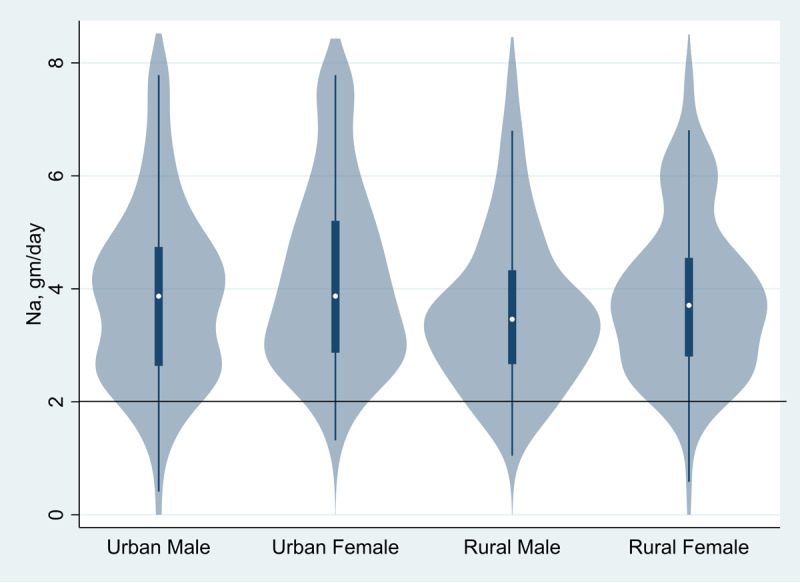 Figure 1
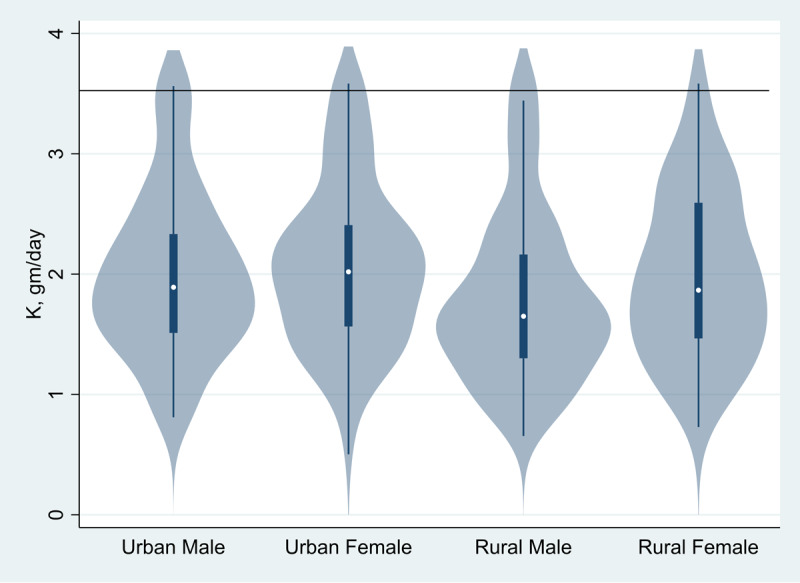 Figure 2
Peer Reviews
No public reviews on file for this paper yet. If you reviewed it on a platform where reviews are public (OpenReview, ICLR, NeurIPS, ICML), you can paste yours below so the community can read it here.
Videos
No videos yet. Explain this paper in a talk, walkthrough, or lecture? Add one.
Taxonomy
TopicsSodium Intake and Health · Nutritional Studies and Diet · Renal function and acid-base balance