Three new species of the wolf spider genus Sinartoria Wang, Framenau & Zhang, 2021 (Araneae, Lycosidae) from southern China

Abstract
Genes, proteins, chemicals, diseases, species, mutations and cell lines named across the full text — each resolved to its canonical identifier and authoritative record.
Click any figure to enlarge with its caption.
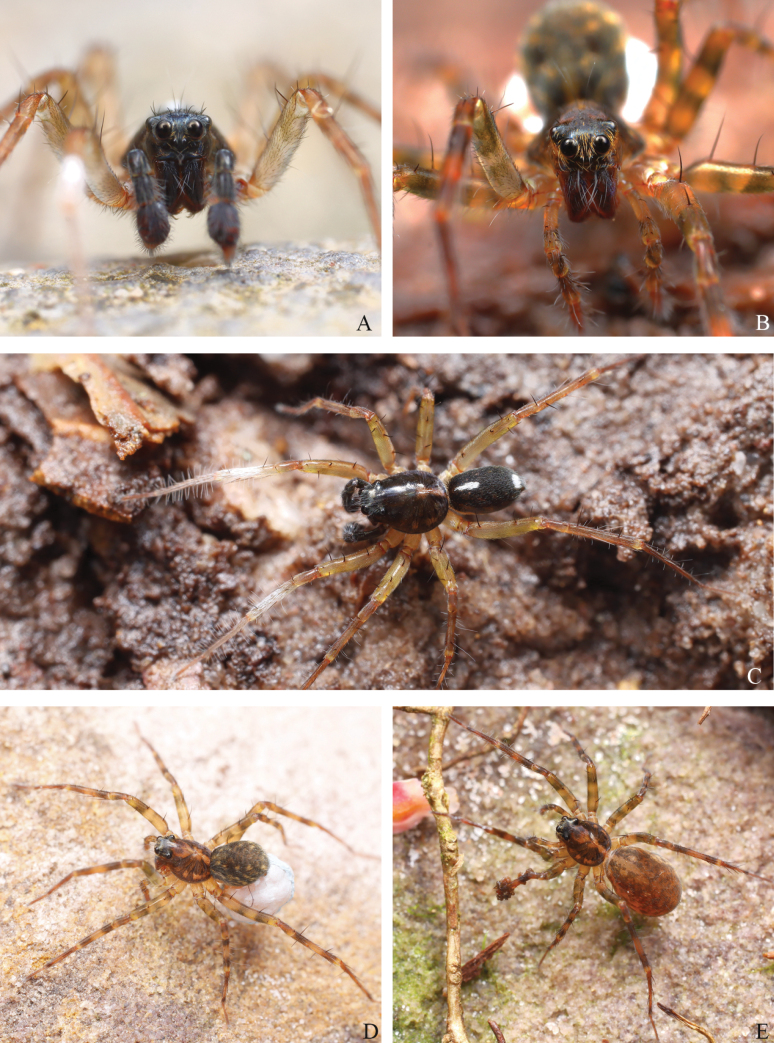 Figure 1
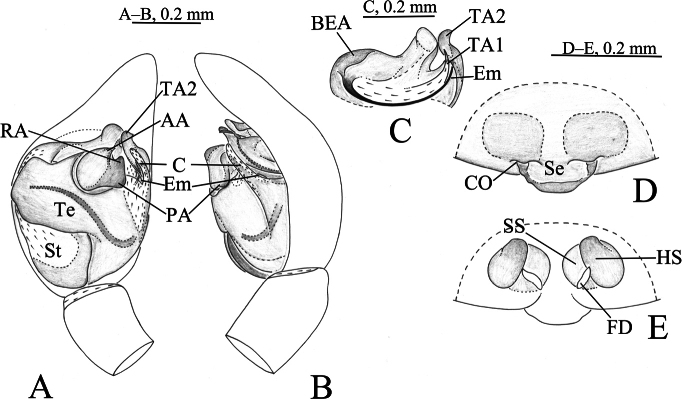 Figure 2
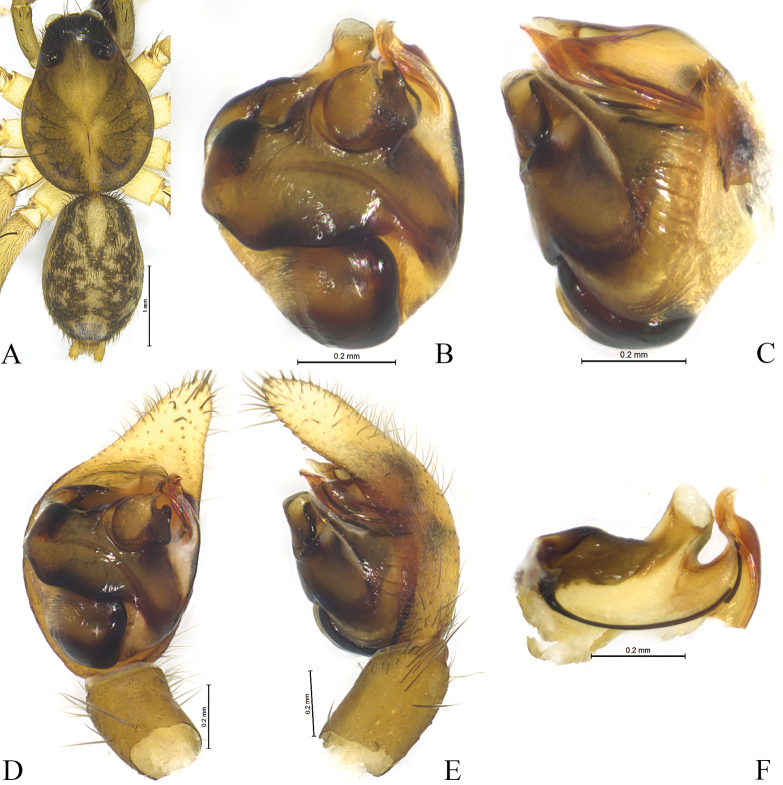 Figure 3
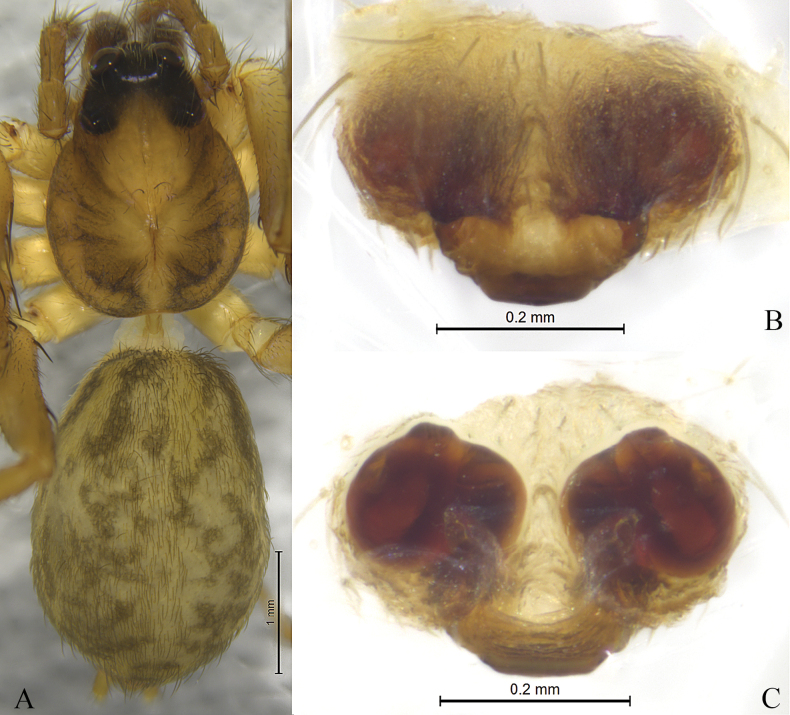 Figure 4
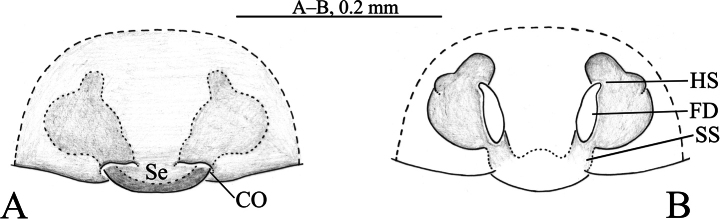 Figure 5
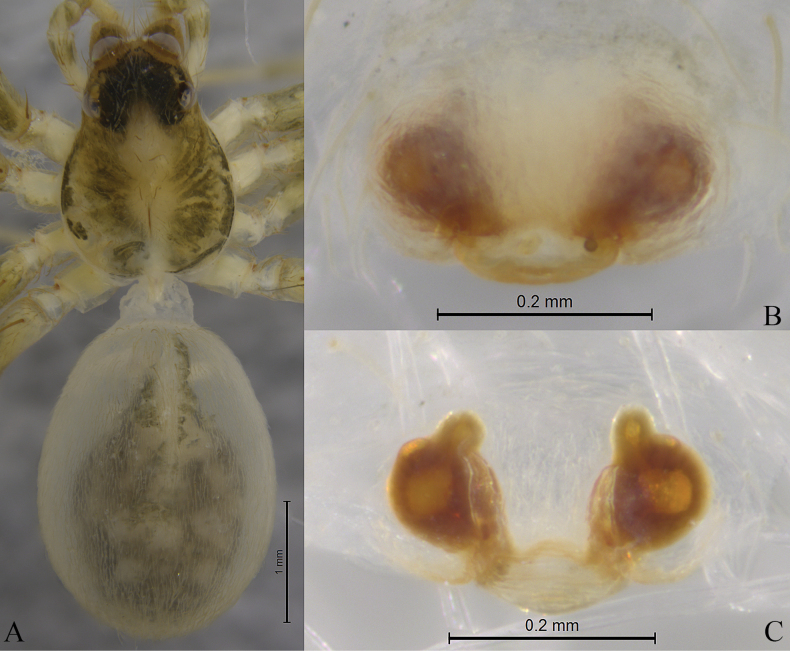 Figure 6
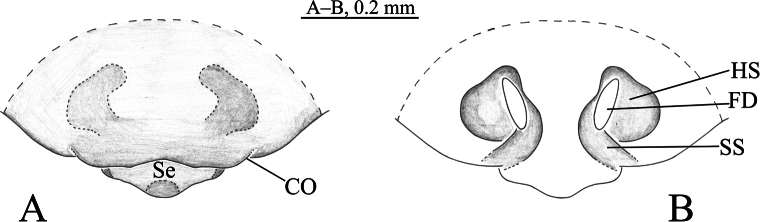 Figure 7
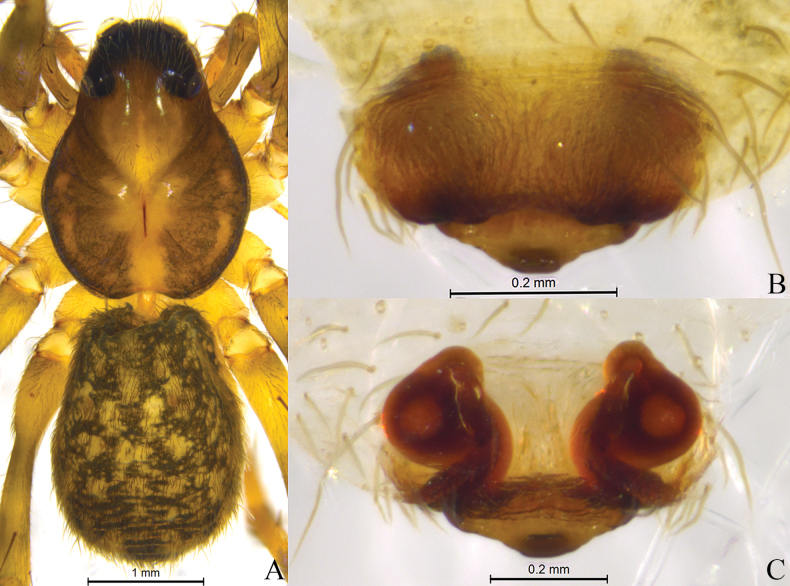 Figure 8
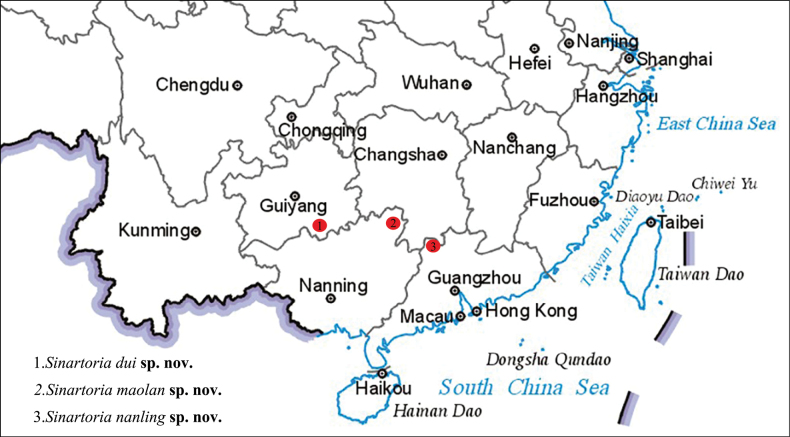 Figure 9
Peer Reviews
No public reviews on file for this paper yet. If you reviewed it on a platform where reviews are public (OpenReview, ICLR, NeurIPS, ICML), you can paste yours below so the community can read it here.
Videos
No videos yet. Explain this paper in a talk, walkthrough, or lecture? Add one.
Taxonomy
TopicsSpider Taxonomy and Behavior Studies · Lepidoptera: Biology and Taxonomy · Genetic diversity and population structure
Introduction
The subfamily Artoriinae Framenau, 2007 was proposed based on the presence of a basoembolic apophysis in the male pedipalp, which is unique within Lycosidae (Framenau 2007). Li et al. (2012) first documented Artoriaparvula Thorell, 1877 in China and transferred Hygrolycosaligulacea (Qu, Peng & Yin, 2009) to the genus Artoria Wang, Framenau & Zhang, 2021. Wang et al. (2019) first recorded the genus Artoria in Malaysia and described a new species: A.weiweii. Wang et al. (2021) further studied the species of the subfamily Artoriinae in China, described a new genus, Sinartoria, and three new species (S.damingshanensis, S.zhuangia, and A.hamata); Wang and colleagues subsequently described the new species A.subhamata (Wang and Zhang 2022). Wang et al. (2024) first recorded the species S.hamata of the subfamily Artoriinae in Vietnam. Fomichev et al. (2024) described a new genus Pamirosa, and a new species P.kudratbekovi, of the subfamily Artoriinae, distributed in the Pamir Plateau (Tajikistan). Recently, three new species of this genus were described: P.alaica, P.archalturica, and P.transalaica (Fomichev and Omelko 2025). Thus far, there are a total of 13 species in three genera of Artoriinae in Asia, distributed across China, Indonesia, Kyrgyzstan, Malaysia, New Guinea, Philippines, Tajikistan and Vietnam (WSC 2025).
The wolf spider genus Sinartoria Wang, Framenau & Zhang, 2021 is a small group comprising three species: Sinartoriadamingshanensis Wang, Framenau & Zhang, 2021 (China, Guangxi), Sinartoriahamata Wang & Li, 2024 (Vietnam, Cat Ba National Park) and Sinartoriazhuangia Wang, Framenau & Zhang, 2021 (China, Guangxi) (Wang et al. 2024; WSC 2025).
Here, we describe three new species of Sinartoria from southern China. Additionally, we provide photographs of live Sinartoria specimens for the first time.
Material and methods
All specimens are preserved in 75% ethanol. The specimens were examined, measured, and photographed using a Leica M205A stereomicroscope equipped with a Leica DFC450 camera and LAS software (ver. 4.6). The left male pedipalp was used for photography. Epigynes were cleared by immersion in pancreatin solution before examination and photography following Álvarez-Padilla and Hormiga (2007). Leg measurements are shown as total length (femur, patella and tibia, metatarsus, tarsus). All measurements are in millimeters. All specimens examined are deposited in the spider collection at the School of Life Sciences, Southwest University, Chongqing, China (SWUC). Terminology follows Wang et al. (2021).
Abbreviations used in the text and figures: AA–anterior arm of median apophysis; ALE–anterior lateral eye; AME–anterior median eye; BEA–basoembolic apophysis; C–conductor; CO–copulatory opening; Em–embolus; FD–fertilization duct; HS–head of spermatheca; MA–median apophysis; PLE–posterior lateral eye; PME–posterior median eye; PA–posterior arm of median apophysis; RA–retrolateral arm of median apophysis; Se–septum; SS–stalk of spermatheca; St–subtegulum; TA–terminal apophysis; Te–tegulum.
Taxonomy
Family Lycosidae Sundevall, 1833 (狼蛛科)
Subfamily Artoriinae Framenau, 2007 (阿狼蛛亚科)
Sinartoria
Taxon classificationAnimaliaAraneaeLycosidae
Genus
Wang, Framenau & Zhang, 2021
1569CB66-537B-53F0-AA38-A42030B0DF6D
Type species.
Sinartoriadamingshanensis Wang, Framenau & Zhang, 2021.
Diagnosis.
Males of this genus is similar to Lobizon Piacentini & Grismado, 2009 in having a long embolus resting in a groove of a broad terminal apophysis, but can be distinguished by several key characters: (1) a strongly sclerotized basoembolic apophysis (vs. weakly sclerotized and lamellar in Lobizon); (2) both membranous terminal apophysis 1 (TA1) and sclerotized, groove-like terminal apophysis 2 (TA2) are present (vs. TA2 only in Lobizon); and (3) a median apophysis with three arms (AA, RA, PA). Females can be recognized by a spermatheca with compact stalk and small protruding head (vs. stalk sinuous in Lobizon) (Wang et al. 2021; Wang et al. 2024).
Description.
Carapace yellowish brown. Eye region black with white setae. Chelicerae with 3 promarginal and 2 retromarginal teeth. Sternum yellow brown, heart-shaped. Legs with brown annulations. Opisthosoma oval, dorsum showing lanceolate cardiac mark anteriorly and black posterior patterning; males with white patch near anal tubercle. Ventral surface yellow with short spinnerets (Wang et al. 2021).
Composition.
Three new species: S.dui sp. nov., S.maolan sp. nov. and S.nanling sp. nov. Sinartoriadamingshanensis Wang, Framenau & Zhang, 2021, S.hamata Wang & Li, 2024 and S.zhuangia Wang, Framenau & Zhang, 2021.
Distribution.
China (Guangdong, Guangxi, Guizhou) and Vietnam.
Sinartoria
dui
sp. nov.
Taxon classificationAnimaliaAraneaeLycosidae
C7EAF53D-FFF8-50D3-9734-DBEAC45D7D04
https://zoobank.org/D63658EE-4A60-4B12-8EF3-03EB0BF34E16
Type material.
Holotype • ♂ (SWUC-T-LY-22-01), China, Guangxi, Laibin City, Jinxiu Co. 26 April 2023, W.Q. Zhao leg. (SWUC). Paratypes: • 4♂3♀ (SWUC-T-LY-22-02 to 08), same data as holotype (SWUC) • 3♂3♀ (SWUC-T-LY-22-09 to 14), China, Guangxi, Jinxiu Co., Silverwood Forest park, 24°10'9"N, 110°14'38"E, elev. 1144 m, 26 April 2024, Q.L. Lu, C.C. Du and X.Y. Feng leg.
Photos of living Sinartoriadui sp. nov. A, C. Male; B, D, E. Female (photos taken by Qian-Le Lu).
Etymology.
The specific name is derived from the family name of Dr Du Congcong of Guangxi Normal University, acknowledging his assistance in collecting specimens in Guangxi.
Diagnosis.
Sinartoriadui sp. nov. resembles S.damingshanensis Wang, Framenau & Zhang, 2021 in having a similar flamed-shaped terminal apophysis and three arms on the median apophysis in the male pedipalp and a large septum in the female epigyne (Figs 2A–D, 3B–F, 4B; Wang et al. 2021: 573, figs 1A–E, 2D–I). It can be differentiated from the latter by the lack of teeth on the anterior arm of median apophysis (Figs 2A, B, 3F; vs. with several teeth), a sheet-like retrolateral arm of median apophysis (Figs 2A, B, 3B–E; vs. knife-like); the trapezoid-shaped septum of the epigyne (Figs 2D, 4B; vs. somewhat triangular) and the proximally rod-like fertilization ducts (Figs 2E, 4C; vs. fertilization ducts crescent-shaped).
Sinartoriadui sp. nov. A–C. Holotype male; D, E. Paratype female; A. Left male palp, ventral view; B. Same, prolateral view; C. Embolic division, ventral view; D. Epigyne, ventral view; E. Vulva, dorsal view. Abbreviations: AA–anterior arm of median apophysis; BEA–basoembolic apophysis; C–conductor; CO–copulatory opening; Em–embolus; FD–fertilization duct; HS–head of spermatheca; PA–posterior arm of median apophysis; RA–retrolateral arm of median apophysis; Se–septum; SS–stalk of spermatheca; St–subtegulum; TA1–terminal apophysis 1; TA2–terminal apophysis 2;Te–tegulum.
Description.
Male (holotype, Figs 1A, C, 3A) total length 4.16. Carapace 2.26 long, 1.68 wide; opisthosoma 1.93 long, 1.28 wide. Eye sizes and interdistances: AME 0.08, ALE 0.07, PME0.29, PLE 0.24; AME–AME 0.08, AME–ALE 0.11, PME–PME 0.23, PME–PLE 0.27. Clypeus height 0.07. Chelicerae yellow brown. Labium yellowish brown. Endites yellowish brown. Sternum black coarse long setae. Legs yellow brown, with brown pigmentation. Tibia with white setae, metatarsus and tarsus with notably long laterally protruding setae. Leg measurements: I 6.33 (1.78, 2.04, 1.64, 0.87); II 5.73 (1.58, 1.80, 1.51, 0.84); III 5.54 (1.47, 1.68, 1.57, 0.82); IV 8.09 (2.15, 2.48, 2.41, 1.05). Leg formula: 4123. Opisthosoma oval, dark brown dorsally, white spots on the front and end of the back.
Pedipalp (Figs 2A–C, 3B–F). Median apophysis with three arms (AA, RA and PA) protruded, AA triangular, RA sheet-shaped, and PA finger-shaped. Embolus long and slender, anterior part rests in a long groove of a large and complex terminal apophysis. Terminal apophysis with two arms, one of them sclerotized and groove-like, the other one membranous.
Sinartoriadui sp. nov. A–F. Holotype male; A. Male habitus, dorsal view; B. Bulb, ventral view; C. Same, prolateral view; D. Left male palp, ventral view; E. Same, retrolateral view; F. Embolic division, ventral view.
Female (paratype, Figs 1B, D, E, 4A) total length 5.21. Carapace 2.19 long, 1.65 wide; opisthosoma 2.80 long, 1.93 wide. Eye sizes and interdistances: AME 0.09, ALE 0.08, PME 0.31, PLE 0.23; AME–AME 0.08, AME–ALE 0.10, PME–PME 0.24, PME–PLE 0.29. Clypeus height 0.07. Legs yellow brown, with brown pigmentation. Leg measurements: I 6.81 (1.97, 2.44, 1.45, 0.95); II 6.12 (1.77, 2.05, 1.46, 0.84); III 6.06 (1.71, 1.88, 1.62, 0.85); IV 8.76 (2.24, 2.83, 2.54, 1.15). Leg formula: 4123. Opisthosoma yellow brown dorsally, with black pattern. Ventral yellow brown.
Sinartoriadui sp. nov. A–C. Paratype female; A. Female habitus, dorsal view; B. Epigyne, ventral view; C. Vulva, dorsal view.
Epigyne (Figs 2D, E, 4B, C). Copulatory openings arc-shaped. Septum broad, trapezoid, narrow posteriorly. Spermathecal stalks slightly sclerotized, O-shaped. Spermathecal heads small with round end. Fertilization ducts small, with their length approximating the width of the spermathecal heads.
Habitat.
Beneath the humus stratum in deciduous broadleaf forests.
Distribution.
Known only from the type locality, Guangxi, China (Fig. 9).
Sinartoria
maolan
sp. nov.
Taxon classificationAnimaliaAraneaeLycosidae
87C8A93C-8D5F-5A34-B147-0406A41C38D6
https://zoobank.org/4732AAC4-0EAF-4399-B980-030CF8B7EA46
Type material.
Holotype • ♀ (SWUC-T-LY-23-01), China, Guizhou, Libo Co. Maolan National Nature Reserve, Bizuo Town, 25°16'59"N, 108°03'18"E, elev. 587 m, 28 April 2017, R.X. Jiang leg.
Etymology.
The specific name is derived from the type locality; a noun in apposition.
Diagnosis.
Female of Sinartoriamaolan sp. nov. resembles S.nanling sp. nov. in having the small septum and spermathecal head subglobular (Figs 5A, B, 6B, C; Figs 7A, B, 8B, C), but can be differentiated from the latter by short spermathecal stalks, connected at the base (Figs 5B, 6C; vs. long, unconnected at the base) and proximally eggplant-shaped fertilization ducts (Figs 5B, 6C; vs. elliptical).
Sinartoriamaolan sp. nov. A, B. Holotype female; A. Epigyne, ventral view; B. Vulva, dorsal view. Abbreviations: CO–copulatory opening; FD–fertilization duct; HS–head of spermatheca; Se–septum; SS–stalk of spermatheca.
Sinartoriamaolan sp. nov. A–C. Holotype female; A. Female habitus, dorsal view; B. Epigyne, ventral view; C. Vulva, dorsal view.
Description.
Female (holotype, Fig. 6A) total length 4.88. Carapace 1.92 long, 1.40 wide; opisthosoma 2.66 long, 1.96 wide. Eye sizes and interdistances: AME 0.07, ALE 0.08, PME 0.30, PLE 0.22; AME–AME 0.07, AME–ALE 0.10, PME–PME 0.21, PME–PLE 0.25. Clypeus height 0.04. Chelicerae yellow brown. Labium and endites yellow brown, longer than wide. Sternum yellow brown, shield-shaped, with long brown setae. Leg measurements: I 5.39 (1.56, 1.89, 1.19, 0.75); II 4.93 (1.39, 1.69, 1.09, 0.75); III 4.72 (1.33, 1.45, 1.19, 0.75); IV 6.78 (1.93, 2.19, 1.77, 0.89). Leg formula: 4123. Opisthosoma yellow brown dorsally, ventral side yellowish brown.
Epigyne (Figs 5, 6B, C). Septum extends posteriorly. Spermathecal stalks short, connected at the base. Fertilization ducts large, proximally eggplant-shaped.
Male. Unknown.
Habitat.
Beneath the humus stratum in deciduous broadleaf forests.
Distribution.
Known only from the type locality, Guizhou, China (Fig. 9).
Sinartoria
nanling
sp. nov.
Taxon classificationAnimaliaAraneaeLycosidae
E9DA09EF-4BBA-52D6-9EAD-B97BAC3430FE
https://zoobank.org/2F65B577-B9E5-45B9-AD9E-C4FCB67A5785
Type material.
Holotype • ♀ (SWUC-T-LY-24-01), China, Guangdong, Shaoguan City, Nanling Forest Park, July 2016, G.C. Zhou leg.
Etymology.
The specific name is derived from the type locality; a noun in apposition.
Diagnosis.
Female of Sinartoriananling sp. nov. resembles S.maolan sp. nov. in having the small septum and spermathecal head subglobular (Figs 7A, B, 8B, C; Figs 5A, B, 6B, C), but can be differentiated from the latter by long spermathecal stalks, unconnected at the base (Figs 7B, 8C; vs. short, connected at the base) and elliptical fertilization ducts (Figs 7B, 8C; vs. proximally eggplant-shaped).
Sinartoriananling sp. nov. A, B. Holotype female; A. Epigyne, ventral view; B. Vulva, dorsal view. Abbreviations: CO–copulatory opening; FD–fertilization duct; HS–head of spermatheca; Se–septum; SS–stalk of spermatheca.
Sinartoriananling sp. nov. A–C. Holotype female; A. Female habitus, dorsal view; B. Epigyne, ventral view; C. Vulva, dorsal view.
Description.
Female holotype (Fig. 8A) total length 4.78. Carapace 2.45 long, 1.80 wide; opisthosoma 2.18 long, 1.73 wide. Eye sizes and interdistances: AME 0.08, ALE 0.06, PME 0.32, PLE 0.25; AME–AME 0.10, AME–ALE 0.09, PME–PME 0.23, PME–PLE 0.26. Clypeus height 0.09. Chelicerae yellow brown. Leg measurements: I 6.97 (1.97, 2.52, 1.59, 0.89); II 6.29 (1.78, 2.16, 1.55, 0.80); III 5.99 (1.65, 1.92, 1.62, 0.80); IV 8.80 (2.31, 2.77, 2.62, 1.10). Leg formula: 4123. Opisthosoma oval.
Epigyne (Figs 7, 8B, C). Septum extends posteriorly. Spermathecal stalks long, unconnected at the base. Spermathecal subglobular. Fertilization ducts large, elliptical.
Male. Unknown.
Habitat.
Beneath the humus stratum in deciduous broadleaf forests.
Distribution.
Known only from the type locality, Guangdong, China (Fig. 9).
Distribution records of Sinartoriadui sp. nov., Sinartoriamaolan sp. nov. and Sinartoriamaolan sp. nov. in this study.
Discussion
Sinartoria belongs to the subfamily Artoriinae, being very similar to the genus Lobizon Piacentini & Grismado, 2009. Lobizon consists of five species, all of which are found in Argentina. Considering the distribution of Sinartoria species, we speculate that Artoriinae may have originated from the ancient supercontinent of Gondwana (Piacentini and Grismado 2009; Li et al. 2012).
Supplementary Material
XML Treatment for Sinartoria
XML Treatment for Sinartoria dui
XML Treatment for Sinartoria maolan
XML Treatment for Sinartoria nanling
The reference list from the paper itself. Each links out to its DOI / PubMed record.
- 1Álvarez-Padilla F Hormiga G (2007) A protocol for digesting internal soft tissues and mounting spiders for scanning electron microscopy.The Journal of Arachnology 35(3): 538–542. 10.1636/Sh 06-55.1 · doi ↗
- 2Fomichev AA Omelko MM (2025) Three new species of Pamirosa Fomichev, Omelko & Marusik, 2024 (Araneae: Lycosidae) from Kyrgyzstan, extending the known range of Artoriinae in Central Asia.Zootaxa 5618(2): 249–266. 10.11646/zootaxa.5618.2.440173463 · doi ↗ · pubmed ↗
- 3Fomichev AA Omelko MM Marusik YM (2024) Pamirosa gen. nov., unexpected record of Artoriinae (Araneae, Lycosidae) from the rooftop of Pamir, Central Asia.Zoosystematics and Evolution 100(3): 1005–1015. 10.3897/zse.100.123331 · doi ↗
- 4Framenau VW (2007) Revision of the new Australian genus Artoriopsis in a new subfamily of wolf spiders, Artoriinae (Araneae: Lycosidae).Zootaxa 1391(1): 1–34. 10.11646/zootaxa.1391.1.1 · doi ↗
- 5Li ZX Framenau VW Zhang ZS (2012) First record of the wolf spider subfamily Artoriinae and the genus Artoria from China (Araneae: Lycosidae).Zootaxa 3235(1): 35–44. 10.11646/zootaxa.3235.1.3 · doi ↗
- 6Piacentini LN Grismado CJ (2009) Lobizon and Navira, two new genera of wolf spiders from Argentina (Araneae: Lycosidae).Zootaxa 2195(1): 1–33. 10.11646/zootaxa.2195.1.1 · doi ↗
- 7Piacentini LN Ramírez MJ (2019) Hunting the wolf: A molecular phylogeny of the wolf spiders (Araneae, Lycosidae).Molecular Phylogenetics and Evolution 136: 227–240. 10.1016/j.ympev.2019.04.00430953780 · doi ↗ · pubmed ↗
- 8Wang LY Zhang ZS (2022) A new species of genus Artoria Thorell, 1877 from Sichuan, China (Araneae: Lycosidae).Acta Arachnologica Sinica 31(2): 109–112. 10.3969/j.issn.1005-9628.2022.02.008 · doi ↗