Genital self-mutilation in a schizophrenic patient: A case report
Salim Ouskri, Adam El Aboudi, Idriss Ziani, Imad Boualaoui, Hachem El Sayegh, Yassine Nouini

TL;DR
A 38-year-old man with schizophrenia self-amputated his penile glans during a psychotic episode and required emergency surgery and psychiatric care.
Contribution
This case report highlights the rare occurrence of genital self-mutilation in schizophrenia and the challenges of its multidisciplinary management.
Findings
Genital self-mutilation in schizophrenia is rare and requires urgent urological and psychiatric intervention.
Microsurgical reimplantation failed due to postoperative glans necrosis, necessitating revision surgery.
Psychiatric stabilization is critical to prevent recurrence of self-harm behaviors.
Abstract
Genital self-mutilation is a rare but severe form of self-inflicted injury, most commonly associated with psychiatric disorders, particularly schizophrenia. It poses significant challenges due to the need for urgent urological intervention and psychiatric stabilization. While self-harming behaviors are frequent in psychiatric populations, complete genital mutilation remains an exceptionally rare event [1, 2]. A 38-year-old schizophrenic male, previously well-managed under antipsychotic treatment, presented to the emergency department 1 h after a self-inflicted complete amputation of the penile glans during an acute psychotic episode. On examination, he was hemodynamically stable, with a clean transection, minor hesitation lacerations, and a cold but non-necrotic amputated glans. After emergency psychiatric evaluation and stabilization, he underwent microsurgical reimplantation…
Genes, proteins, chemicals, diseases, species, mutations and cell lines named across the full text — each resolved to its canonical identifier and authoritative record.
Click any figure to enlarge with its caption.
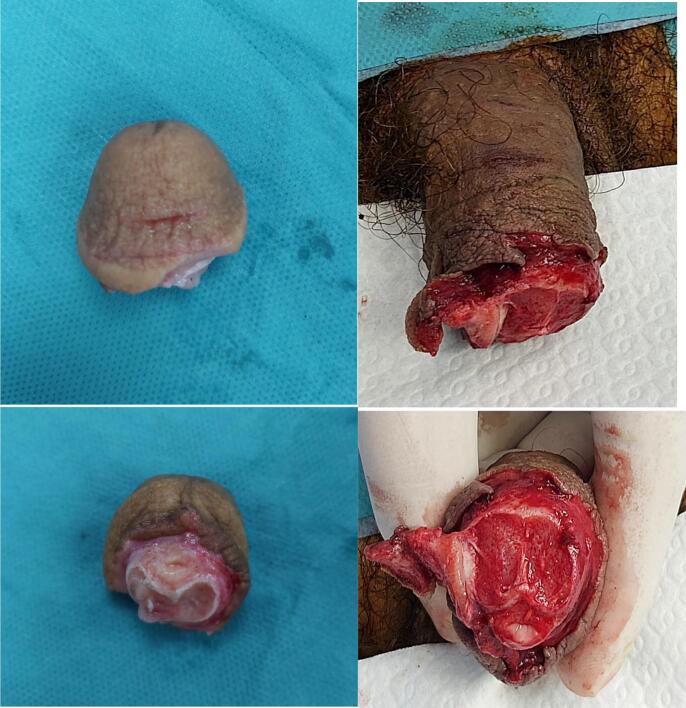 Figure 1
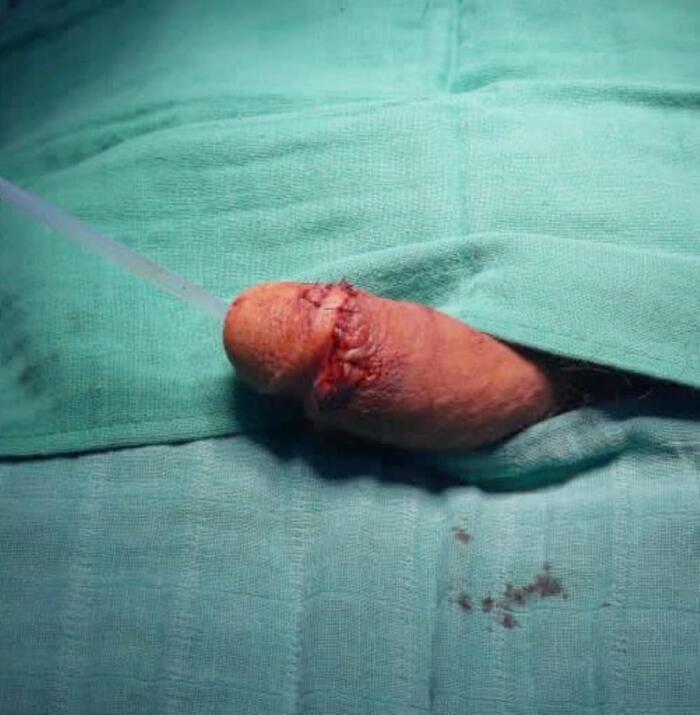 Figure 2
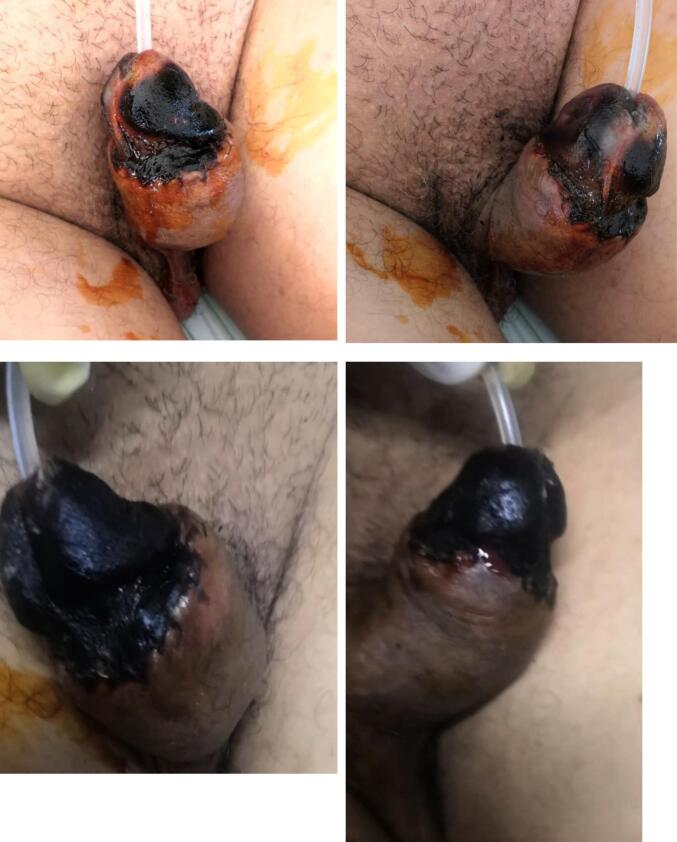 Figure 3
Peer Reviews
No public reviews on file for this paper yet. If you reviewed it on a platform where reviews are public (OpenReview, ICLR, NeurIPS, ICML), you can paste yours below so the community can read it here.
Videos
No videos yet. Explain this paper in a talk, walkthrough, or lecture? Add one.
Taxonomy
TopicsReproductive tract infections research · Suicide and Self-Harm Studies · Pediatric health and respiratory diseases
Introduction
1
Genital self-mutilation is a rare but serious self-inflicted injury, most often associated with severe psychiatric disorders, particularly schizophrenia. These cases present complex challenges, requiring both urgent urological intervention and comprehensive psychiatric management. The act is typically driven by acute psychotic episodes, often involving delusions or hallucinations. While self-harming behaviors are not uncommon in psychiatric populations, complete genital mutilation remains an exceptionally rare occurrence. Large trauma series have reported only a handful of cases among thousands of admissions, highlighting its infrequency [1,2]. This article presents a case of genital self-mutilation in a schizophrenic patient, discussing its prevalence, underlying psychiatric and medical factors, diagnostic considerations, and the importance of a multidisciplinary treatment approach, including potential surgical reimplantation strategies.
This work has been reported in line with the SCARE criteria.
Kerwan A, Al-Jabir A, Mathew G, Sohrabi C, Rashid R, Franchi T, Nicola M, Agha M, Agha RA. Revised Surgical CAse REport (SCARE) guideline: An update for the age of Artificial Intelligence. Premier Journal of Science 2025:10;100079.
Case presentation
2
A 38-year-old male patient, diagnosed with schizophrenia four years prior, presented to the emergency department following a self-inflicted complete amputation of the penile glans. He had been managed effectively with a standard antipsychotic regimen, including risperidone 4 mg daily and aripiprazole 10 mg daily under regular psychiatric follow-up. The incident occurred during an acute manic-depressive episode (BDA), during which the patient used a sharp knife to sever the glans penis completely. He was brought to the hospital within 1 h of the injury (H1).
Upon arrival, the patient was hemodynamically stable, with mild sheet-like bleeding from the erectile bodies noted at the injury site. Physical examination revealed a clean transection of the glans with minor signs of hesitation, evidenced by irregular, clumsy lacerations adjacent to the primary cut. The amputated glans was pale and cold but showed no signs of necrosis, consistent with the short ischemic time (Fig. 1). The severed segment was preserved in saline-soaked gauze and placed in an ice slush bath by emergency personnel.Fig. 1. Sequence of images showing a case of self-inflicted penile amputation with Detached glans and clean transection.Fig. 1
Following an urgent psychiatric evaluation confirming acute psychosis, the patient was sedated with intramuscular haloperidol 5 mg and lorazepam 2 mg to stabilize his mental state. Consent for surgical intervention was obtained from the family due to the patient's impaired capacity. He was immediately transferred to the operating theater for replantation. The procedure involved microsurgical anastomosis of the dorsal penile artery and deep dorsal vein to restore vascular supply. A termino-terminal anastomosis of the penile urethra was performed over an 18 Fr urinary catheter, followed by reapproximation of the tunica albuginea of the corpora cavernosa using interrupted sutures. Subcutaneous tissues and skin were closed with simple sutures (Fig. 2).Fig. 2. Postoperative view showing successful microsurgical replantation of the penile glans.Fig. 2
The initial postoperative course showed promising recovery of the glans within the first 24 h. However, by postoperative day 4, progressive ischemic changes emerged, marked by darkening of the glans tissue, indicative of necrosis. The patient subsequently underwent a revision surgery for debridement of the necrotic tissue, regularizing the penile stump. Further management included psychiatric stabilization and wound care (Fig. 3).Fig. 3. Sequential images showing the progression of ischemic necrosis after penile glans reimplantation.Fig. 3
Discussion
3
Genital self-mutilation is significantly less common than other forms of aggression or violence among psychiatric patients. While outward aggression affects up to 20–30 % of patients with schizophrenia during acute episodes, extreme self-inflicted injuries like penile amputation remain exceptionally rare. Morrison et al. reported that among 106 penile amputation cases, 55.8 % were self-inflicted, predominantly in psychotic contexts, yet still represented a small subset of self-harm behaviors [3]. Similarly, in the penile garroting series by Koushik et al., only one of three cases had a psychiatric background (depression), and none involved schizophrenia or complete amputation [4]. These findings reinforce the idea that genital self-mutilation is a unique and extreme manifestation of psychopathology, diverging from more common self-harming patterns.
Schizophrenia remains the principal underlying condition associated with genital self-mutilation. Greilsheimer and Groves, cited by Jezior et al., identified schizophrenia in 51 % of such cases, often linked to delusional ideation or command hallucinations [1]. Koushik et al. also cited cases from Jandou et al. implicating schizophrenia in severe genital trauma [4]. Other psychiatric comorbidities, including major depression (19 %) and personality disorders, play a secondary role [1]. These acts often occur in response to internally driven distortions, such as beliefs in bodily purification or response to divine command, as illustrated in the case of Raheem et al., where methamphetamine-induced psychosis triggered penile amputation [2].
The diagnostic process requires simultaneous somatic and psychiatric assessment. Urologically, the extent of vascular and urethral injury must be evaluated urgently to determine the feasibility of reimplantation. Grading systems such as that of Bhat et al. (cited in Koushik et al.) may guide initial classification [4]. Psychiatrically, structured clinical evaluations, including MMSE and full psychiatric assessment, are necessary to identify psychosis, delirium, or substance-induced episodes. Differentiation from traumatic or criminal injury remains critical, as the implications for management and long-term surveillance differ significantly.
Therapeutic management is based on an urgent multidisciplinary approach. When technically feasible, microsurgical reimplantation is the preferred option. In the series by Morrison et al., microsurgical techniques were used in 67 % of cases, with favorable urinary (97.4 %) and erectile (77.5 %) functional outcomes [3]. Raheem et al. describe similar reconstructive steps, including anastomosis of dorsal vessels and nerves, with acceptable sensory and erectile recovery [2]. Our approach followed these principles, with revascularization, urethral repair, and anastomosis of dorsal penile structures. Early evolution was initially favorable, yet the patient developed progressive ischemia and total necrosis of the glans by the fourth postoperative day, requiring revision surgery with debridement.
This unfavorable outcome highlights the persisting risk of early vascular compromise despite optimal ischemic conditions and successful anastomosis. Known complications of penile reimplantation include skin necrosis (54.8 %), venous congestion (20.2 %), urethral stricture (11 %), and urethrocutaneous fistula (6.6 %) [3]. Several hypotheses may explain such ischemic evolution, including unrecognized microthrombosis, vasospasm, or localized hypercoagulable states associated with acute psychosis. Current techniques do not always allow intraoperative prediction of these events. Adjunct tools such as indocyanine green angiography or intraoperative Doppler assessment may help evaluate perfusion more accurately, but their routine use in emergency penile replantation remains to be clarified.
Psychiatric stabilization is essential both for acute care and long-term prevention. In this case, initial sedation with haloperidol and lorazepam was followed by reintroduction of antipsychotic therapy under supervised psychiatric care. Previous studies have emphasized the importance of early and ongoing psychiatric support to limit the risk of recurrence [1,2,4]. Structured psychiatric follow-up, patient and family education, and therapeutic alliance are critical components in managing patients with high-risk psychotic disorders. In addition to pharmacological management, integration into psychosocial rehabilitation programs and systematic monitoring may reduce the likelihood of future self-injurious behavior.
Microsurgical replantation remains technically feasible up to 15–16 hour post-injury, particularly with optimal hypothermic preservation [1,3]. Favorable outcomes are associated with clean-cut injuries, early intervention, and successful vascular anastomosis. Morrison et al. report 68.4 % of patients achieving full sensation, 77.5 % erectile function, and 91.6 % satisfaction [3]. However, the variability of outcomes and the incidence of complications emphasize the need for careful intraoperative and postoperative surveillance. Jezior et al. noted improved long-term function with microsurgical techniques compared to non-microsurgical approaches, with better rates of normal erections (79 %) and preserved sensation (82 %) [1]. Despite these advancements, complications such as early ischemia remain a significant challenge, particularly in complex cases with psychiatric comorbidity.
Conclusion
4
Genital self-mutilation in schizophrenic patients, though rare compared to aggression, represents a critical intersection of urological emergency and psychiatric crisis, predominantly driven by acute psychosis. Effective management hinges on rapid diagnosis and a coordinated approach involving microsurgical replantation—yielding high success rates in sensation, urinary, and erectile function when criteria like short ischemia time and vessel integrity are met—and aggressive psychiatric stabilization to address underlying schizophrenia and prevent recurrence. Complications such as skin necrosis and urethral strictures remain challenges, yet outcomes are generally positive with modern techniques. Further research is warranted to standardize surgical protocols and enhance long-term psychiatric interventions for these complex cases.
Consent
Written informed consent was obtained from the patient for publication and any accompanying images. A copy of the written consent is available for review by the Editor-in-Chief of this journal on request.
Ethical approval
Ethical approval for this study was provided by the Ethical Committee of IBN SINA University Hospitals, Rabat, Morocco on 10/02/2025. Number of the decision is not delivered yet.
Guarantor
Salim Ouskri
Funding
No source of funding.
Methods
This work has been reported in line with the SCARE criteria.
Author contribution
Salim Ouskri - Urology Resident, IBN SINA HOSPITAL (Corresponding author)
Email: [email protected]
ADAM EL ABOUDI- Urology Resident, IBN SINA HOSPITAL
Email: [email protected]
IDRISS Ziani - Urologist, IBN SINA HOSPITAL
Email: [email protected]
Imad Boualaoui - Urology Assistant Professor, IBN SINA HOSPITAL
Email: [email protected]
Hachem El Sayegh - Urology Professor, IBN SINA HOSPITAL
Email: [email protected]
Yassine Nouini - Urology Professor, IBN SINA HOSPITAL
Email: [email protected]
Conflict of interest statement
I declare no conflict of interest.
The reference list from the paper itself. Each links out to its DOI / PubMed record.
- 1Jezior J.R.Brady J.D.Schlossberg S.M.Management of penile amputation injuries World J. Surg.251220011602160910.1007/s 00268-001-0157-611775199 · doi ↗ · pubmed ↗
- 2Raheem O.A.Mirheydar H.S.Patel N.D.Patel S.H.Suliman A.Buckley J.C.Surgical management of traumatic penile amputation: a case report and review of the world literature*Sex Med*.312015495310.1002/sm 2.5425844175 PMC 4380914 · doi ↗ · pubmed ↗
- 3Morrison S.D.Shakir A.Vyas K.S.Penile replantation: a retrospective analysis of outcomes and complications J. Reconstr. Microsurg.201610.1055/s-0036-159756728002849 · doi ↗ · pubmed ↗
- 4Koushik P.Daniel B.Meyyappan V.Sekar H.Krishnamoorthy S.A case series on penile garroting: causes, considerations, and consequences*Cureus*1692024 e 7019010.7759/cureus.70190 PMC 1150803739463593 · doi ↗ · pubmed ↗