The Neo-MILK Web App as a Health Technology to Support Mothers of Preterm and Sick Neonates During Lactation: Usability Study
Isabella Schwab, Tim Ohnhaeuser, Roxane Lee Rothe, Till Dresbach, Katharina Schmitz, Natalie Tutzer, Nicola Gabriela Dymek, Juliane Köberlein-Neu, Nadine Scholten

TL;DR
The Neo-MILK web app provides useful, evidence-based support for mothers of preterm or sick infants to manage lactation, with high usability and satisfaction ratings.
Contribution
Introduces Neo-MILK, a web app combining evidence-based lactation information and documentation tools tailored for mothers of preterm/sick infants.
Findings
The Neo-MILK web app received high usability scores (mean SUS 76.4) and high overall satisfaction (84%).
Most mothers found the evidence-based information more helpful and detailed than hospital-provided information.
Approximately 71% of mothers used the documentation tool several times per week to track milk volumes.
Abstract
Mothers of sick and preterm infants need support to establish and maintain lactation. Although many health technologies on breastfeeding are available, most lack in evidence-based information and are therefore not appropriate for educating mothers. Furthermore, they do not focus on the special challenges of mother-infant separation during lactation in mothers of sick or preterm infants. The aim of this study is to examine the usability and perceived usefulness of the evidence-based information about lactation and documentation tools contained in the Neo-MILK web app. A cross-sectional online survey was conducted among mothers of sick and preterm infants admitted to a neonatal intensive care unit in Germany. Descriptive statistics were calculated for the System Usability Scale (SUS) and for self-developed items pertaining to overall satisfaction and perceived usefulness of the app.…
Genes, proteins, chemicals, diseases, species, mutations and cell lines named across the full text — each resolved to its canonical identifier and authoritative record.
Click any figure to enlarge with its caption.
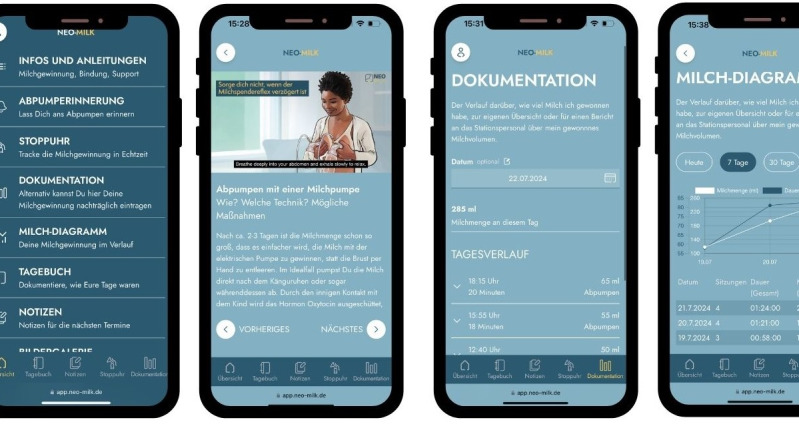 Figure 1
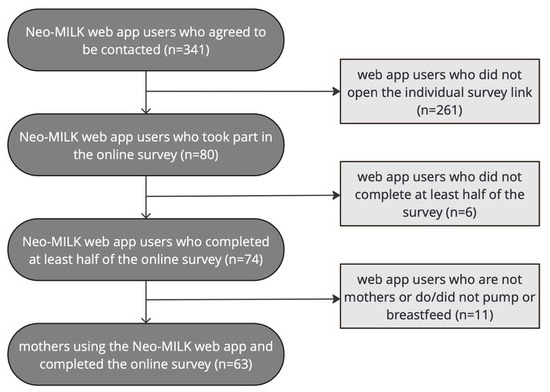 Figure 2
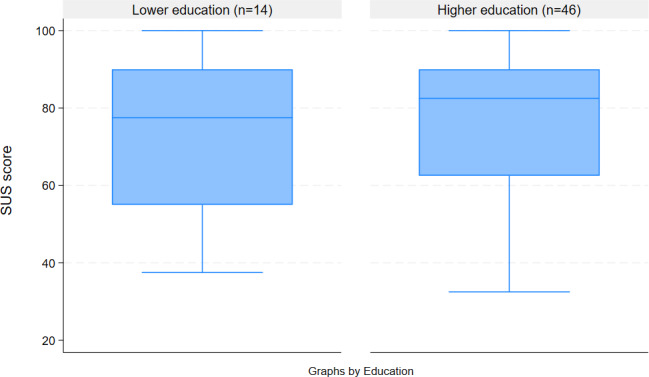 Figure 3
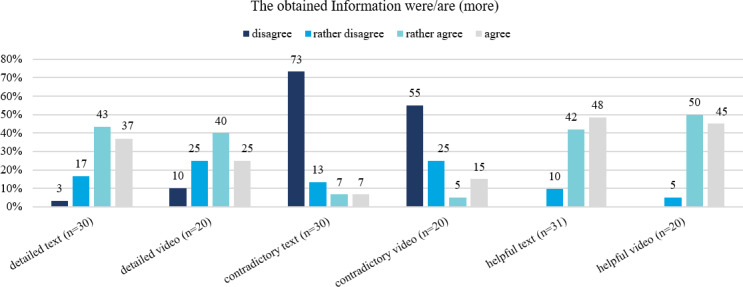 Figure 4
| Sociodemographic variables | Participants (n=63) |
|---|---|
| Agea (years), mean (SD) | 33.5 (4.6) |
| Education, n (%) | |
| Lower secondary/secondary school | 14 (22) |
| Higher education entrance qualification/university degree | 48 (76) |
| Missing data | 1 (2) |
| Native language, n (%) | |
| Other | 4 (6) |
| German | 57 (91) |
| Missing data | 2 (3) |
| Parity, n (%) | |
| Singleton | 61 (97) |
| Multiple | 2 (3) |
| Missing data | 0 (0) |
| Infant’s hospitalization (past or currently), n (%) | |
| No | 12 (19) |
| Yes | 51 (81) |
| Missing data | 0 (0) |
| Infant’s ageb (weeks), mean (SD) | 8.6 (3.7) |
| Birth weight (grams), n (%) | |
| <500 | 3 (5) |
| 500‐999 | 15 (24) |
| 1000g-1499 | 6 (10) |
| 1500-1999 | 4 (6) |
| 2000‐2500 | 6 (10) |
| >2500 | 4 (6) |
| Missing data | 25 (40) |
| Reasons for pumping, n (%) | |
| Maternal-related factors | 8 (13) |
| Child-related factors | 49 (78) |
| Preterm birth | 32 (65) |
| Congenital condition | 10 (20) |
| Birth complications | 5 (10) |
| Others | 2 (5) |
| Missing data | 6 (10) |
Peer Reviews
No public reviews on file for this paper yet. If you reviewed it on a platform where reviews are public (OpenReview, ICLR, NeurIPS, ICML), you can paste yours below so the community can read it here.
Videos
No videos yet. Explain this paper in a talk, walkthrough, or lecture? Add one.
Taxonomy
TopicsBreastfeeding Practices and Influences · Mobile Health and mHealth Applications · Infant Development and Preterm Care
Introduction
For all infants, mother’s own milk (MOM) should be the first choice of nutrition and is, therefore, recommended by the World Health Organization [12]. Its health-promoting effects are evident and sick and preterm infants, in particular, benefit from the nutrition with MOM due to their high vulnerability [3]. However, achieving a sufficient milk volume has shown to be challenging for mothers of infants admitted to a neonatal intensive care unit (NICU) [4]. As many of these mothers are pump-dependent and cannot directly breastfeed, they require structured lactation support to facilitate MOM feeding in their sick and preterm infants [45]. This support enables timely communication about the importance of MOM, early initiation of lactation, and frequent pumping to establish a sufficient milk supply, thus ensuring the infants nutrition with MOM [46]. When providing lactation support to mothers, sensitive communication without distressing mothers should be facilitated, as stress may negatively affect lactation [7-9]. Indeed, perceived pressure to provide breast milk has been commonly reported among mothers, which may be associated with other mental health issues [10-12].
Mobile health (mHealth) apps and web app technologies are used in various settings such as disease management, medication reminders, and rehabilitation to promote and support a healthy lifestyle [13]. Several mHealth apps focused on breastfeeding already exist, which have shown to improve breastfeeding knowledge, attitudes, and self-efficacy [14-16]. However, mothers with infants admitted to a NICU require special tools and approaches from an app during lactation due to their unique situation. In general, NICU parents report a high demand for information and a willingness to use electronic devices for information and support [1718]. This potential is further supported by studies which evaluated evidence-based education and information-sharing apps may promote parental mental health, parent-infant relationship, and family-centred care [19-21]. However, while many apps are already available for this target group, a systematic review showed that only a few of them are of good quality [22]. There is a notable lack of evidence-based and scientifically evaluated mHealth technologies focusing on combining evidence-based information sharing with valuable tools for NICU parents throughout the lactation process. The Neo-MILK web app aims to fill this gap for mothers with infants admitted in the NICU, by including both tools such as milk volume tracking and multimedia evidence-based information on several topics (eg, pumping, breastfeeding, or skin-to-skin contact). It was developed as part of the Neo-MILK project, which supports lactating mothers of infants admitted to a NICU [23]. Therefore, the intention of this web app was to complement rather than replace essential personal and direct lactation support provided within NICUs.
To measure the overall usability of mHealth technologies, the system usability scale (SUS) is a widely used instrument, which showed robust results in previous studies [24]. In addition, usability studies often report on ease of use, user experience, and user engagement, depending on the focus of the study [25]. Therefore, the objective of this study was to examine the usability and perceived usefulness of the evidence-based information about lactation and documentation tools contained in the Neo-MILK web app.
Methods
Research Design
A quantitative, prospective, and cross-sectional questionnaire was developed to evaluate the usability and perceived usefulness of the Neo-MILK web app.
Setting and Relevant Context
Participants in this study were mothers of preterm and sick infants admitted to a NICU. In Germany, initiation of lactation is often suboptimal [26]. This may be attributed to the often not implemented structured lactation support and lack of consistent information and personal support during lactation [27]. Mobile health technology may serve as a beneficial tool to help provide additional support to pump-dependent mothers.
Web App Development
In a participatory process involving mothers of very low birth weight (VLBW, <1500g) infants, features and content for the Neo-MILK web app were developed by a multidisciplinary team consisting of psychologists, economists, sociologists, neonatologists, neonatal nurses, and a web app developer. To determine the tools and features desired by mothers of VLBW infants, open questions were posted on Instagram. These questions were then ranked in an anonymous online survey completed by 138 mothers. Individual issues, such as the preferred type of communication, were also subject to direct voting via Instagram. Following this participatory process, the final design excluded photographs and instead featured animated parent-infant dyads and drawings. The illustrations were intentionally inclusive to reach a target group which is as diverse as possible. Therefore, the design includes people from different races and ethnicities. The illustrations and texts were developed through a process of various feedback rounds with the multidisciplinary team. As the Neo-MILK web app was part of the Neo-MILK project, the wording and presentation of the web app were aligned to the other materials developed within the project [23]. Finally, tools for recording the time, frequency, and volume of milk during expression, as well as a reminder for milk expression were included. Furthermore, evidence-based information on important topics related to lactation (eg skin-to-skin contact, bonding, milk expression, and hygienic handling of breast milk), along with answers to frequently asked questions regarding breastfeeding and pumping in the form of texts and videos are included in the web app to increase maternal knowledge. To reduce barriers to evidence-based information on pumping and breastfeeding, the videos were featured with subtitles in other languages. These were translated by native speakers working in the Neo-MILK team. Additionally, features such as a diary to document individual milestones of the child and the NICU-related reflections including the mother’s mood and feelings were also provided. In cooperation with a media company (TAKEPART Media + Science GmbH), the app was designed as a browser-based web app (Figure 1).
Web app design (left to right: landing page after registration, informational videos, documentation tool, milk diagram).
Measurements
The overall usability was measured using the SUS, which is a widely accepted tool to indicate usability, operability, and suitability for the use of digital health technologies [28]. Four slightly different translations of this scale are available in German. They were reviewed in a recent publication and revealed that the version by Rummel [29] described the developmental process and methodology most clearly. It was shown to be the best balance between methodologically clean development and wording and, therefore, was utilized in this study [2930].
To measure the perceived usefulness of the information, videos and the documentation tools, self-developed items were assessed. Overall satisfaction was measured using a question: “How satisfied are you with the web app in general?” with a 4-point Likert scale (“very satisfied”, “satisfied”, “not satisfied”, “not at all satisfied”). Moreover, participants were asked if they would recommend the web app to other parents with the following answering options: “yes”, “rather yes”, “rather no”, and “no”. Perceived usefulness of the information of videos was measured through a 4-point Likert scale of agreement (“agree”, “rather agree”, “rather disagree”, “disagree”) to three statements each for texts and videos which were as follows: (1) “The information I obtained from the texts (videos) were/are helpful for pumping and breastfeeding”, (2) “The information I obtained from the texts (videos) were/are contradictory to those in the hospital,” and (3) “The information I obtained from the texts (videos) were/are more detailed than those in the hospital.”
To assess whether and how frequent mothers used the documentation tool for assessing their pumped milk volume using the following question “How frequently do you use the documentation tool?” which could be rated as: “several times a day”, “daily”, “several times a week”, “several times a month”, “less frequent”, or “never.” Moreover, they were asked whether they found the documentation tools easy to use in a 4-point Likert scale (“difficult”, “rather difficult”, “rather easy”, or “easy”). Furthermore, to analyze whether the Neo-MILK web app caused negative feelings in mothers in terms of pressure to provide breast milk, the following statement was posed: “I felt pressured to provide breast milk by the Neo-MILK web-app” and could be rated on a six-point Likert scale (“totally disagree”, “mostly disagree”, “rather disagree”, “rather agree”, “mostly agree”, “totally agree”). Data on feeding methods as well as previous experience with pumping or breastfeeding, and sociodemographic variables (eg, education, maternal age, infant’s age) were collected. Due to small group sizes, the education level was dichotomized into lower education (lower secondary or secondary school) and higher education (higher education entrance qualification or university degree).
Data Collection
Data collection took place from September 2023 to May 2024 through the anonymous online survey tool Lime Survey (LimeSurvey GmbH). Data were collected and analyzed by researchers at the University of Cologne, who were also the principal investigators of the Neo-MILK project.
Data Analysis
Descriptive statistics including mean (SD), depending on the data distribution were calculated. Group comparisons between educational groups concerning the system usability were performed. Figures were used to visualize the data. Missing values were indicated in the description of the baseline characteristics and, in case of figures, in the figure legends. Data were analyzed using STATA (version 18; StataCorp).
Ethical Considerations
Ethical approval for this study was obtained from the ethics committee of the University of Wuppertal (SK/AE 230329). All methods were performed in accordance with this approval. Before being permitted to complete the questionnaire, the participants were required to consent to the data protection regulations to realize informed consent. The resulting data was anonymous, as no personal data was collected. To compensate the time and effort of the participants, they were offered the opportunity to receive a €10b (US $11.60) voucher for a nationally represented drugstore.
Results
Sample
Four to eight weeks after registering in the web app, mothers of sick or VLBW infants were invited to participate in the survey. The requirement for registration was explicit consent to be contacted for scientific studies during the registration process. Therefore, 341 mothers received an email with individual tokens to participate in the survey and were reminded once via email if the questionnaire was not submitted within a two-week period. To further ensure correct sampling, all respondents were asked to indicate whether they were currently engaged in pumping or breastfeeding. Of the 341 mothers who were contacted, 80 responded, representing a response rate of 23.4%. Finally, data from 63 mothers were used for statistical analysis (Figure 2).
Flowchart of recruitment, inclusion, and exclusion of cases.
Sample Characteristics
Maternal sociodemographic characteristics (eg, age, educational level, native language), and whether reasons for expressing milk stem from maternal or child-related factors, as well as information about their infants (ie, past or current hospitalization, age, birth weight) are presented in Table 1.
Usability and Perceived Usefulness
The SUS score showed good usability of the Neo-MILK web app, with a mean score of 76.4 (n=61). The score only slightly differed between the lower and higher educational groups (Figure 3).
Boxplot of SUS score between the two educational groups. SUS: system usability scale.
Overall, 62 participants reported high satisfaction with the web app, with 53 (84%) participants being satisfied or very satisfied. Moreover, 52 (82%) would recommend the web app to other parents. The information provided in the web app via texts were accessed by 31 (49%) and videos by 20 (32%) of the participants. Most participants agreed that the information were more detailed than those provided in the hospital and that they were helpful for pumping and breastfeeding. The majority of participants disagreed that the content was contradictory (Figure 4).
Of the 63 participants, 45 (71%) used the pumping documentation tool of the web app (ie pumping timer or manual documentation of pumping) at least several times a week. Of the 54 participants who rated its ease of use, 46 (85%) found it “rather easy” or “easy to use.”
Of 62 mothers, 56 (89%) indicated that they did not feel pressured by the Neo-MILK web app to provide breast milk, while only 6 (11%) reported experiencing such pressure.
Distribution of agreement whether information in the web app (texts/videos) were more detailed than or contradictory to those in the hospital, or helpful for pumping/breastfeeding.
Discussion
Principal Findings
This study showed that the Neo-MILK web app provides a suitable tool for mothers of VLBW and sick infants during lactation and pumping. The usability is good, as indicated by SUS scores being clearly over the widely accepted benchmark of 68 [24]. This is further supported by the positively rated overall satisfaction with the web app and the high number of participants who would recommend the app to other parents.
One main feature of the Neo-MILK web app is the provision of evidence-based information about central issues when pumping breast milk for a sick or preterm infant. These include bonding, breast milk expression, and solutions for problems with lactation. Recent studies showed that infant feeding applications are often of poor quality, with incomplete information and lacking in evidence-based content [1322]. The information provided in the Neo-MILK web app was developed with a multidisciplinary expert team to ensure evidence-based content. Indeed, the results demonstrate that, on average, the information provided was helpful for mothers in their experience of pumping and breastfeeding. Furthermore, the information was more detailed than that provided in the hospital and not contradictory. It can therefore be assumed that the Neo-MILK web app is a suitable tool for informing mothers with an infant admitted to a NICU. However, it remains unknown, whether the mothers in our study received any personal lactation support or if the Neo-MILK web app was the only source of information and support available to them. It is important to emphasize that this web app should provide additional features and information for mothers. Personal and direct lactation support in the NICU, as part of a MOM-friendly hospital policy is crucial for ensuring nutrition with MOM [3132].
Another central tool is the option to document the expressed milk volume. A recent study showed that tracking features lead to higher ratings of breastfeeding applications in general [33]. This indicates its importance for mothers and may be even more notable for pump-dependent mothers who are not able to feed their infant on demand. In our study, this assumption is strengthened, as most participants used the documentation tools to track their milk volume. In addition, the ranking of the ease of use indicates good usability of these features. This is particularly relevant, as usability has shown to be a crucial factor for the adoption of health technologies [34].
As elaborated before, stress and lactation are assumed to be associated [78]. This association is further assumed to be bidirectional, with stress leading to negative breastfeeding outcomes and impaired lactation increasing stress [35]. Due to the high levels of stress NICU mothers perceive, it is of paramount importance to minimize stress rather than triggering further distress [9]. Recent studies showed that mothers feel specific pressure to breastfeed or provide breast milk, which can stem from internal or external factors, for example, from their social environment or health care providers [111236]. However, even though the Neo-MILK web app contains a lot of information about the importance of MOM, as well as tracking options for milk supply, users do not perceive these features as triggering such feelings.
Limitations
This study has some limitations. The SUS is available in four German translations, all of which have different deficiencies, for example, in methodology or wording. Although there is a validated version available, it lacks in terms of translation, leading to unnatural wording. In this analysis, we used the recommended translation, which is regarded as the best compromise between methodologically rigour and comprehensibility [30]. This might have had an impact on the validity of the measurement and therefore influenced the results. The response rate of this study is low. It may be the case that the users were no longer using the web app at the time of the survey. This may particularly apply to mothers who have transitioned from pumping to breastfeeding after a few weeks, and therefore no longer require the tools of the Neo-MILK web app. Another reason for the low response rate could be that registered web app users who were unsatisfied or were not frequent users did not respond due to their dissatisfaction. Furthermore, it can be suggested that the utilization of mHealth technologies is determined by the educational level and age of users, which may indicate a healthy bias among its users [37]. This is reflected by the broad number of participants with a high educational level in this sample. However, the Neo-MILK web app utilization and its ratings might not be biased by educational level, as indicated by only slight differences in the SUS score between these groups. Nevertheless, the information should be accessible for all groups to reduce communication difficulties, including those due to language barriers, which are a common problem in health services [38]. To reduce these barriers, the videos in the Neo-MILK web app are available with subtitles in other languages, including Russian, French, English, and Turkish. In addition, the videos are composed of easily understandable images and keywords. However, the provision of a translated version of the entire web app when necessary would further facilitate the accessibility of the web app to all relevant target groups.
Conclusions
The combination of evidence-based information about lactation and useful tools for tracking was identified as being of particular importance for this special group of mothers, with both elements rated highly in terms of usability and usefulness. Therefore, it can be concluded, that in our study, the Neo-MILK web app serves as a useful tool to complement personal support for pump-dependent mothers during lactation.
The reference list from the paper itself. Each links out to its DOI / PubMed record.
- 1Infant and young child feeding Word Health Organization 2023 UR Lhttps://www.who.int/news-room/fact-sheets/detail/infant-and-young-child-feeding Accessed 28-01-2025
- 2Victora CG Bahl R Barros AJD et al Breastfeeding in the 21st century: epidemiology, mechanisms, and lifelong effect Lancet 0130201638710017475490 doi 10.1016/S 0140-6736(15)01024-7Medline 26869575 · doi ↗ · pubmed ↗
- 3WHO recomendations for care of the preterm or low-birth-weight infant World Health Organization 2022 UR Lhttps://iris.who.int/bitstream/handle/10665/363697/9789240058262-eng.pdf?sequence=1Accessed 28-01-202536449655 · pubmed ↗
- 4Parker MG Stellwagen LM Noble L et al Promoting human milk and breastfeeding for the very low birth weight infant Pediatrics Nov 20211485 e 2021054272 doi 10.1542/peds.2021-054272 Medline 34635582 · doi ↗ · pubmed ↗
- 5Ward LP Tonnis R Otuneye AT Clemens N Akinbi H Morrow AL Impact of institutional breastfeeding support in very low-birth weight infants Breastfeed Med Mar 2021163238244 doi 10.1089/bfm.2020.0137 Medline 33211538 · doi ↗ · pubmed ↗
- 6Mago-Shah DD Athavale K Fisher K Heyward E Tanaka D Cotten CM Early pumping frequency and coming to volume for mother’s own milk feeding in hospitalized infants J Perinatol 052023435629634 doi 10.1038/s 41372-023-01662-z Medline 37037987 · doi ↗ · pubmed ↗
- 7Lau C The effect of stress on lactation--its significance for the preterm infant Adv Exp Med Biol 20025039197 doi 10.1007/978-1-4615-0559-4_10Medline 12026032 · doi ↗ · pubmed ↗
- 8Zanardo V Gambina I Begley C et al Psychological distress and early lactation performance in mothers of late preterm infants Early Hum Dev Apr 2011874321323 doi 10.1016/j.earlhumdev.2011.01.035Medline 21316877 · doi ↗ · pubmed ↗