Dissecting cell-free DNA fragmentation variation in tumors using cell line-derived xenograft mouse
Ruiqing Fu, He Amy Su, Yi Zhao, Yafei Tian, Hongyan Chen, Daru Lu

TL;DR
This study explores how cell-free DNA fragmentation patterns differ in tumors using a mouse model to separate tumor DNA from non-tumor DNA.
Contribution
The study introduces a novel approach using CDX mouse models to isolate and analyze pure ctDNA fragmentation patterns.
Findings
Short cfDNA fragments are enriched in both CDX-cfDNA and ctDNA compared to normal plasma cfDNA.
CDX-cfDNA fragmentation features distinguish different tumor cell lines, while ctDNA features distinguish anatomical sites.
Both non-tumor cfDNA and ctDNA contribute to increased fragmentation variation in tumors.
Abstract
Cell-free DNA (cfDNA) is increasingly studied for its diverse applications in non-invasive detection. Non-randomly cleaved by nucleases and released into the bloodstream, cfDNA exhibits a variety of intrinsic fragmentation patterns indicative of cell status. Particularly, these fragmentation patterns have recently been demonstrated to be effective in predicting cancer and its tissue-of-origin, owing to increased variation of fragmentation features observed in tumor patients. However, there remains a lack of detailed exploration of altered cfDNA fragmentation profiles in tumors, which consist of a mixture of both non-tumor cfDNA and circulating tumor DNA (ctDNA). Hence, we leveraged the human tumor cell line-derived xenograft (CDX) mouse model, where different tumor cell lines were implanted into different anatomical sites, to isolate pure ctDNA and separately investigate the fragment…
Genes, proteins, chemicals, diseases, species, mutations and cell lines named across the full text — each resolved to its canonical identifier and authoritative record.
Click any figure to enlarge with its caption.
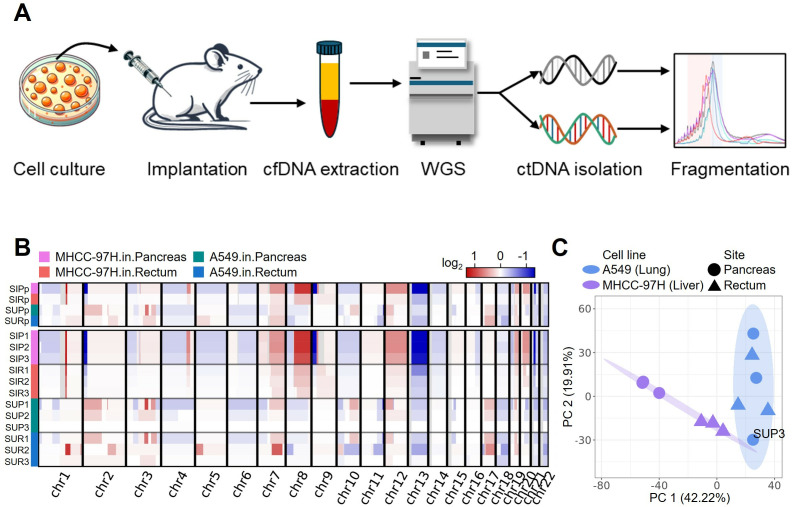 Figure 1
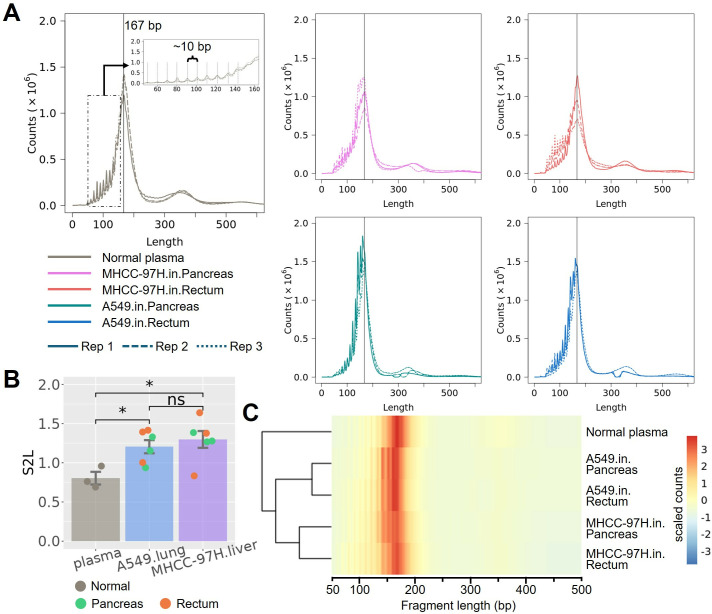 Figure 2
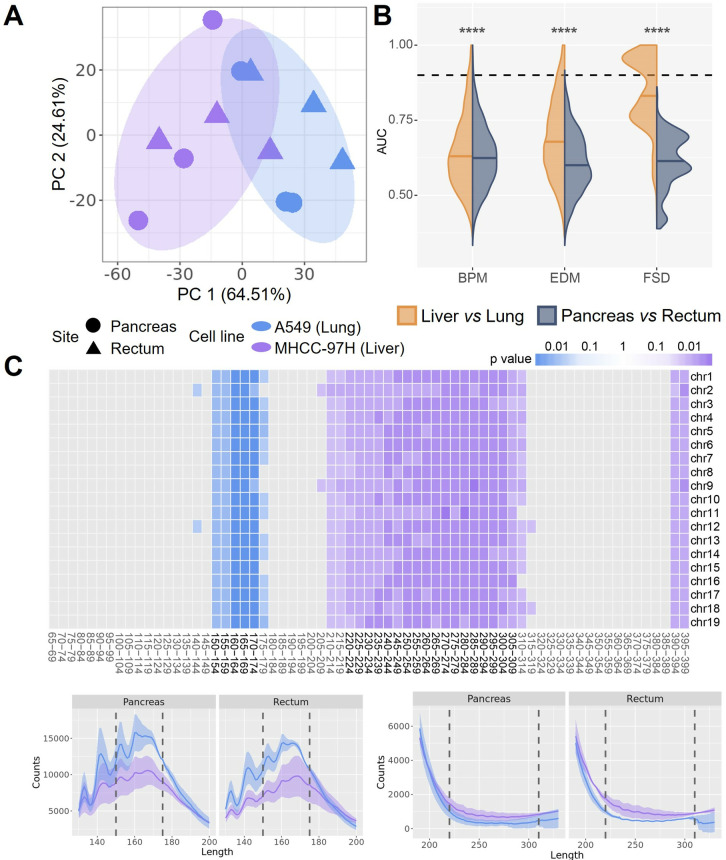 Figure 3
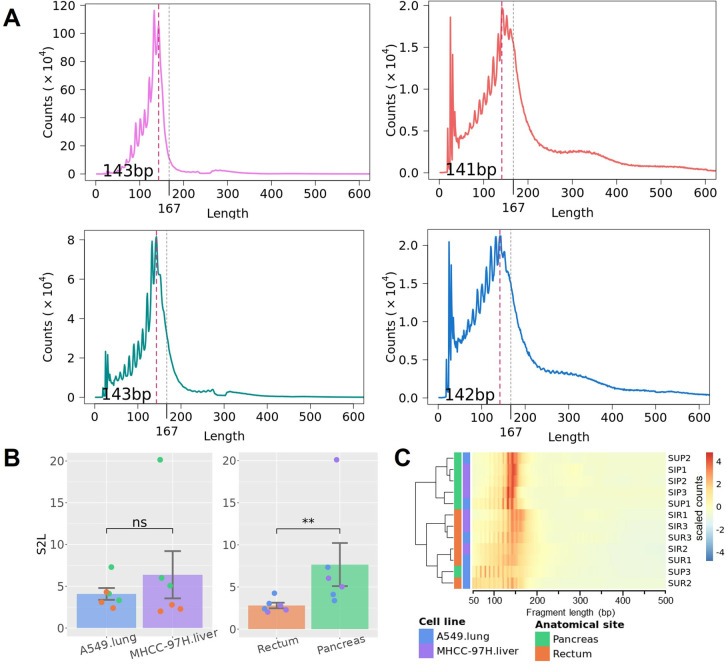 Figure 4
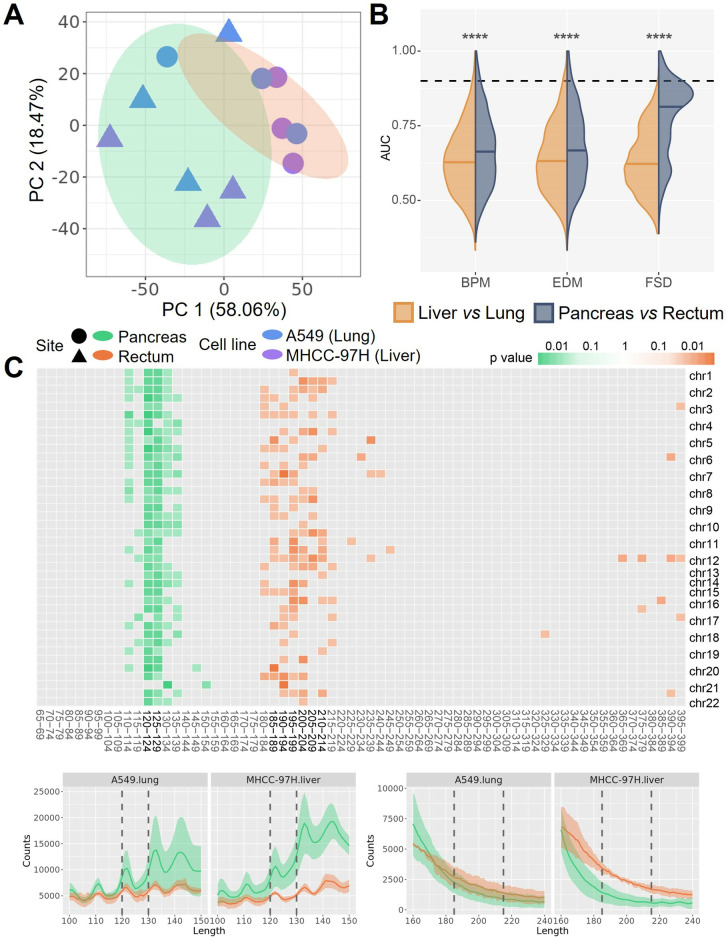 Figure 5
 Figure 6
Peer Reviews
No public reviews on file for this paper yet. If you reviewed it on a platform where reviews are public (OpenReview, ICLR, NeurIPS, ICML), you can paste yours below so the community can read it here.
Videos
No videos yet. Explain this paper in a talk, walkthrough, or lecture? Add one.
Taxonomy
TopicsCancer Genomics and Diagnostics · Pancreatic and Hepatic Oncology Research · Single-cell and spatial transcriptomics