Proteomic insights into broiler stress responses to LED lighting: Effects on liver proteome under neutral, cool, and warm spectra
Alessio Di Luca, Andrea Ianni, Francesca Bennato, Camillo Martino, Michael Henry, Paula Meleady, Giuseppe Martino

TL;DR
This study explores how different LED light colors affect the liver proteins in broiler chickens, finding that cool LED lighting may cause stress-related changes.
Contribution
The study provides new proteomic insights into how different LED light spectra affect broiler stress responses.
Findings
Cool LED lighting caused significant changes in 81 liver proteins, suggesting stress-related responses.
Neutral and Warm LED lighting showed minimal differences compared to control lighting, with only a few proteins affected.
Proteins like ribosome-binding protein 1 and ATP-citrate lyase were up-regulated under Control lighting, linked to stress adaptation.
Abstract
Light plays a critical role in poultry production, influencing broiler behavior, immune function, and growth. Effective lighting management optimizes broiler health and performance, with LED lighting emerging as an energy-efficient alternative to traditional fluorescent lights. However, the molecular impacts of different LED light spectra remain underexplored. This pilot study involved sixteen male broilers (four per treatment group), raised under four different lighting conditions. This study used label-free quantitative proteomics to analyze liver protein expression in broilers (3.30 ± 0.20 kg live weight) raised under Neutral (K = 3300 − 3700), Cool (K = 5500 − 6000), and Warm (K = 3000 − 2500) LED lighting compared to Control neon lights (n = 4 per group). On average, 1,181 proteins were identified, primarily involved in cellular functions, metabolism, regulation, localization, and…
Genes, proteins, chemicals, diseases, species, mutations and cell lines named across the full text — each resolved to its canonical identifier and authoritative record.
Click any figure to enlarge with its caption.
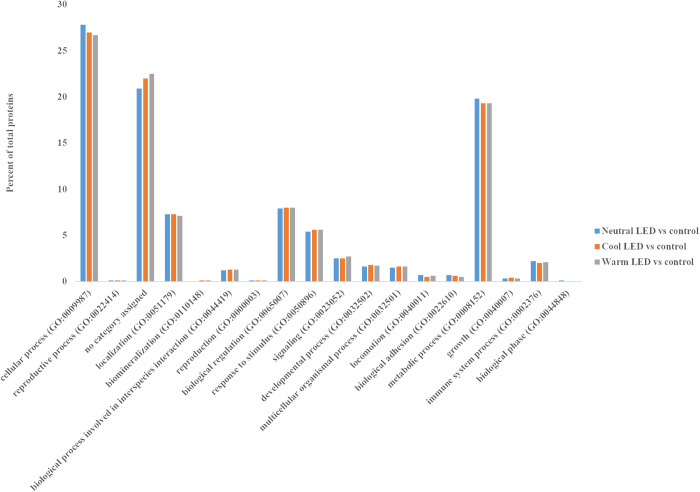 Figure 1
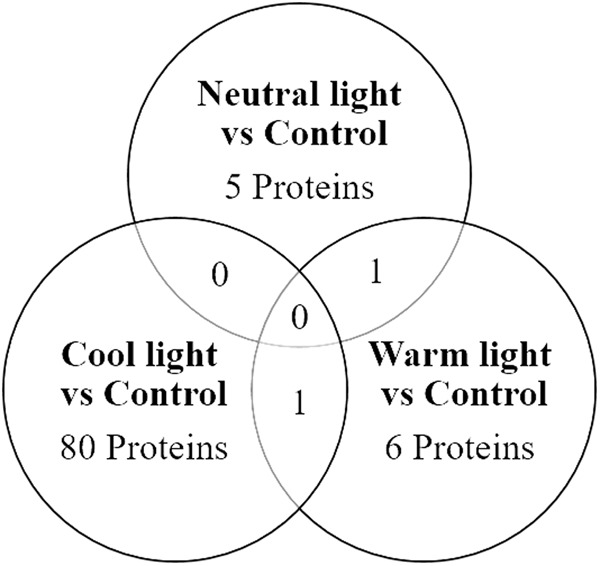 Figure 2
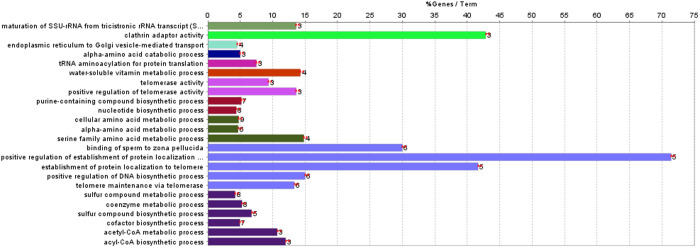 Figure 3
 Figure 4
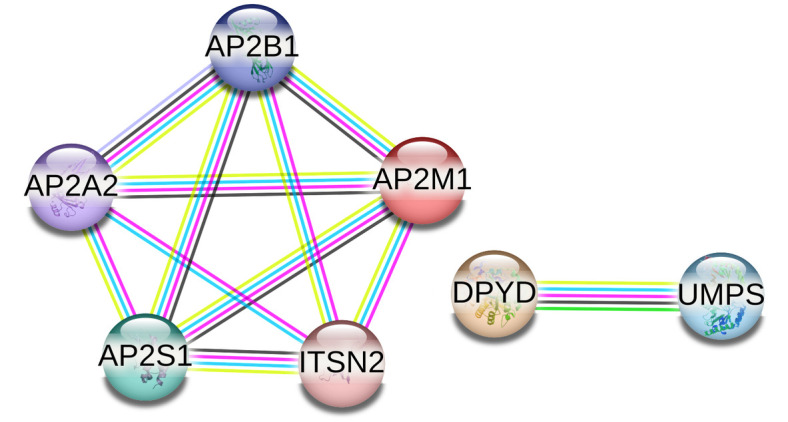 Figure 5
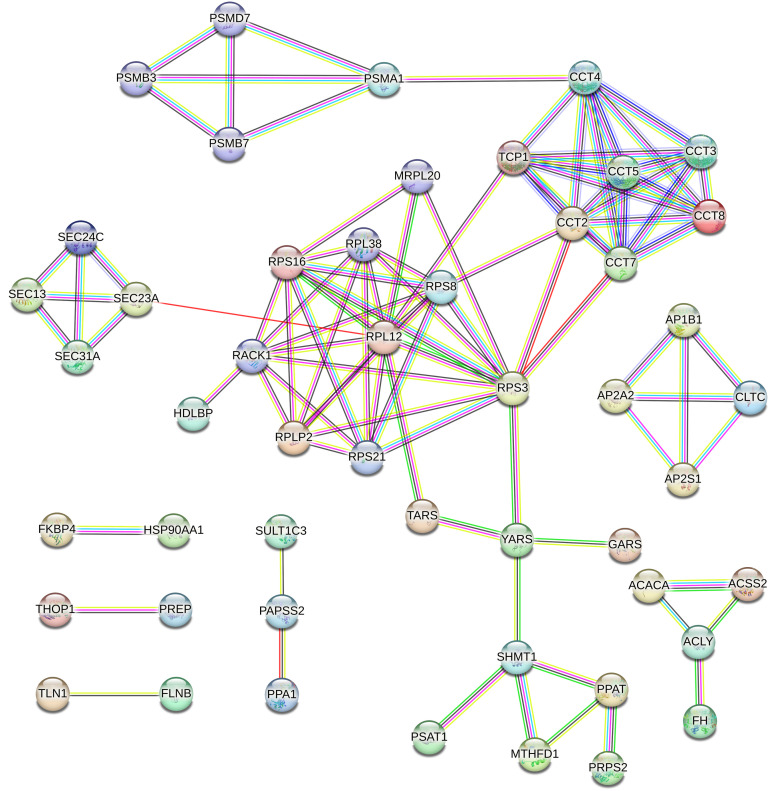 Figure 6
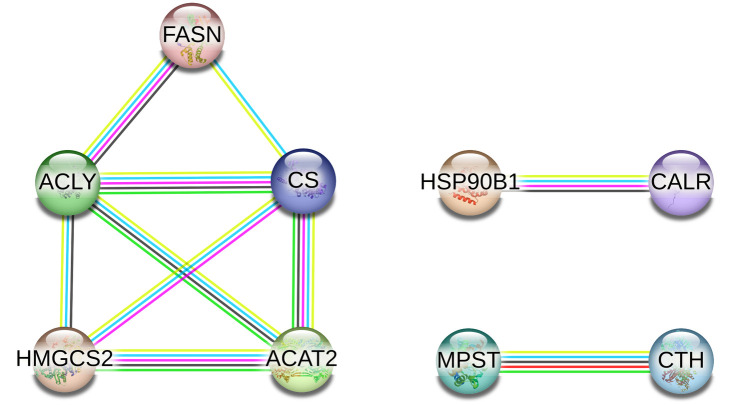 Figure 7
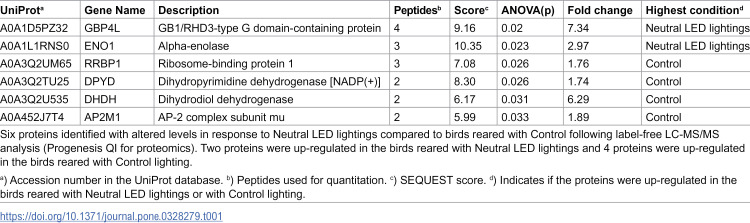 Figure 8
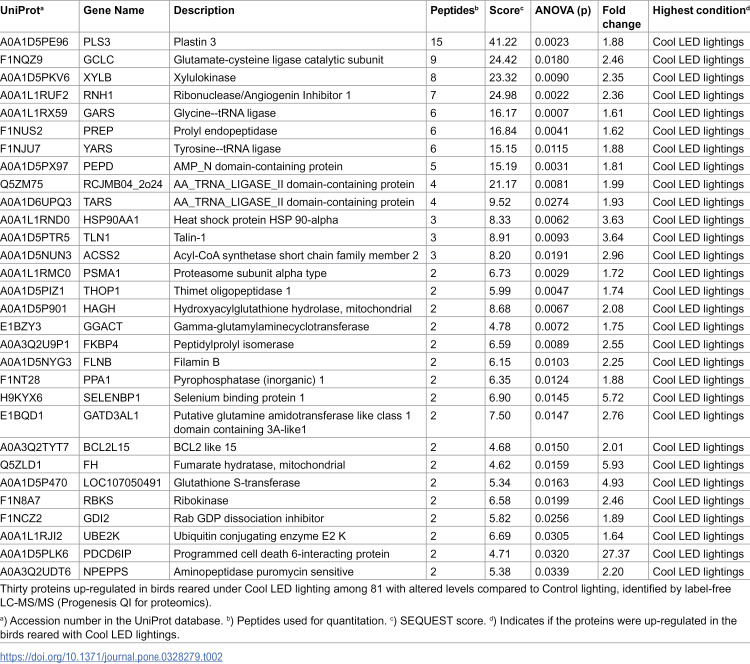 Figure 9
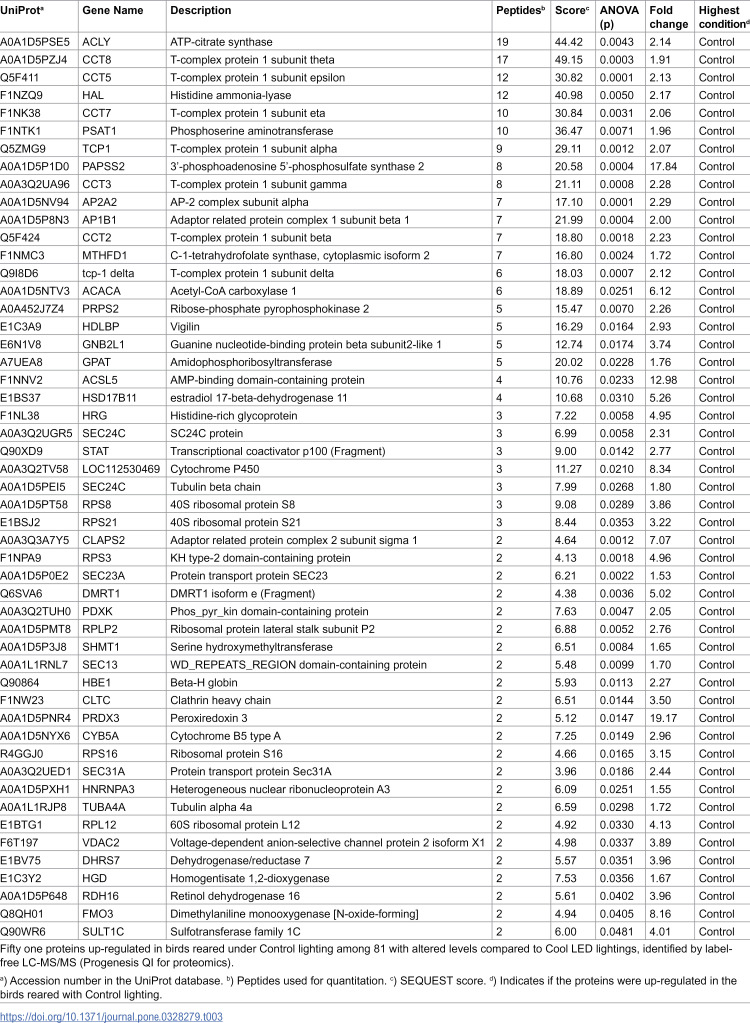 Figure 10
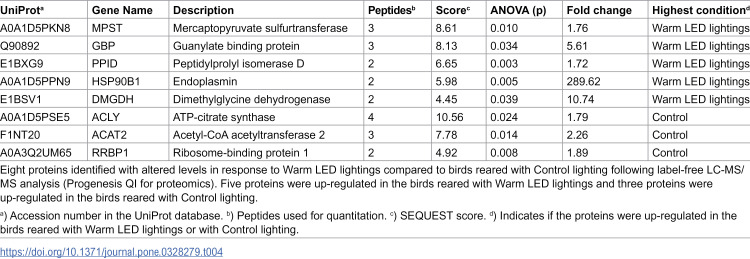 Figure 11
Peer Reviews
No public reviews on file for this paper yet. If you reviewed it on a platform where reviews are public (OpenReview, ICLR, NeurIPS, ICML), you can paste yours below so the community can read it here.
Videos
No videos yet. Explain this paper in a talk, walkthrough, or lecture? Add one.
Taxonomy
TopicsNeurobiology and Insect Physiology Research · Animal Nutrition and Physiology · Olfactory and Sensory Function Studies