Using multiple criteria for redesigning habitat corridor plans for Giant Pandas
Yixin Diao, Yue Weng, Qianqian Zhao, Xiangxue Hu, Xiaofeng Zhang, Bojian Gu, Yihan Wang, Zhuojin Zhang, Fang Wang, James K. Sheppard, James K. Sheppard, James K. Sheppard

TL;DR
This paper introduces a new framework to prioritize conservation actions for giant pandas by identifying key habitat corridors in China's Giant Panda National Park.
Contribution
The study introduces a novel framework combining biophysical, biotic, and anthropogenic criteria to prioritize habitat corridors for giant pandas.
Findings
34,486 km² of suitable habitat was identified within the Giant Panda National Park.
Six Priority Habitat Corridors were selected based on elevation, forest coverage, and anthropogenic factors.
The framework integrates multiple criteria to support effective conservation planning under future conditions.
Abstract
One key factor to long-term success in conservation planning is to allocate limited resources to the most critical locations and ensure the effectiveness of contemporary management plans under future conditions. Here, we proposed an innovative framework to quantitatively prioritize conservation actions for a vulnerable species, giant panda (Ailuropoda melanoleuca), and use it to identify Priority Habitat Corridors (PHCs) to address the threat of habitat fragmentation. We focused on the newly established Giant Panda National Park (GPNP), and combined field data with remotely-sensed landscape and anthropogenic metrics to evaluate the feasibility and effectiveness of potential habitat corridors. We first conducted habitat and corridor modeling and identified 72 candidate corridors. We then conducted gap analysis and applied multiple criteria to prioritize candidate habitat corridors. We…
Genes, proteins, chemicals, diseases, species, mutations and cell lines named across the full text — each resolved to its canonical identifier and authoritative record.
Click any figure to enlarge with its caption.
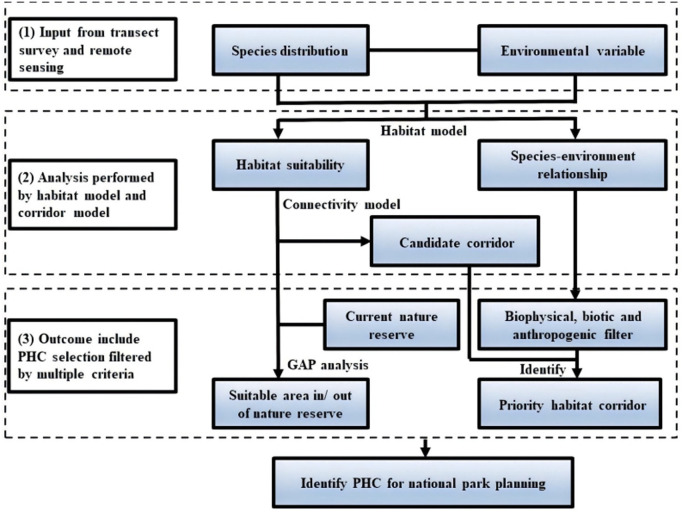 Figure 1
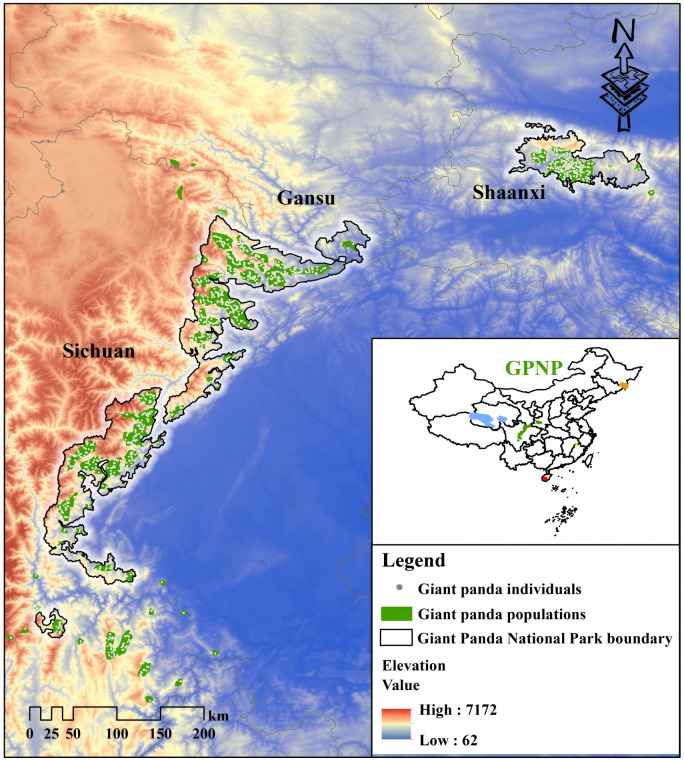 Figure 2
 Figure 3
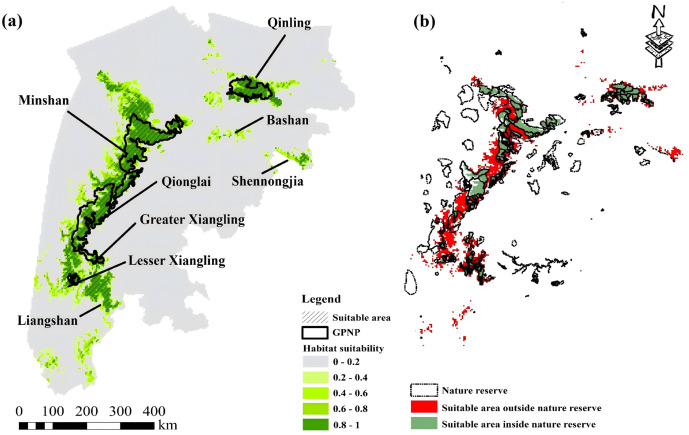 Figure 4
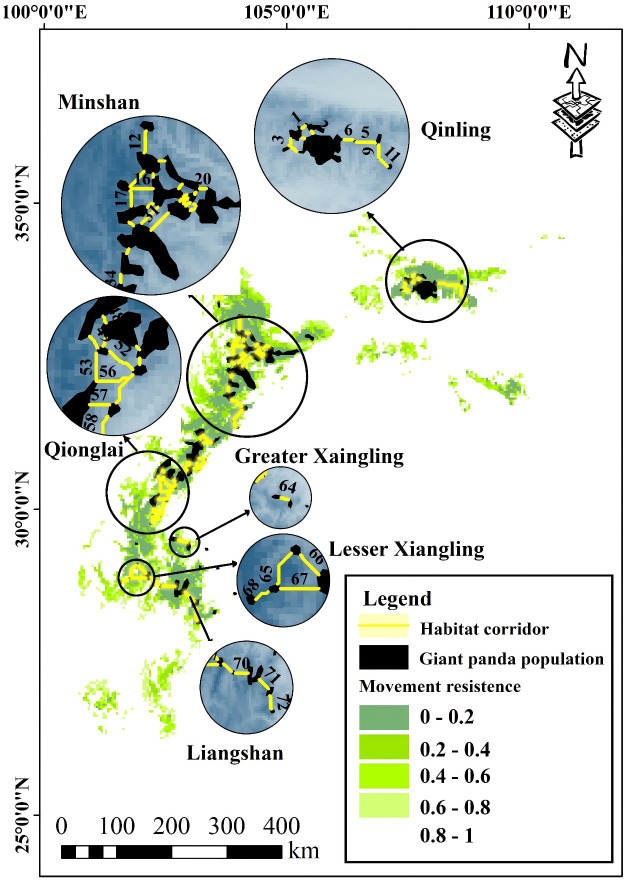 Figure 5
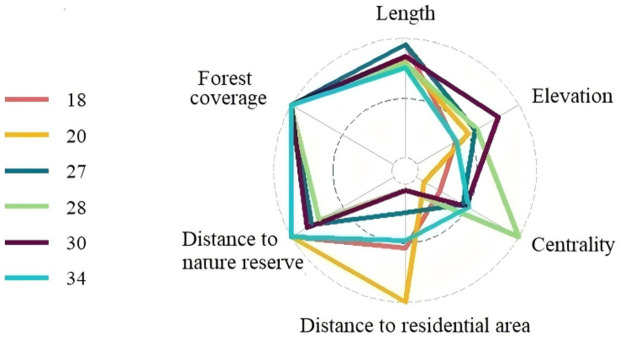 Figure 6
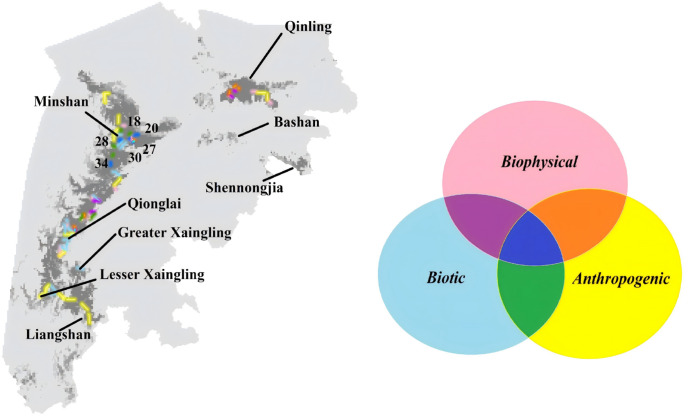 Figure 7
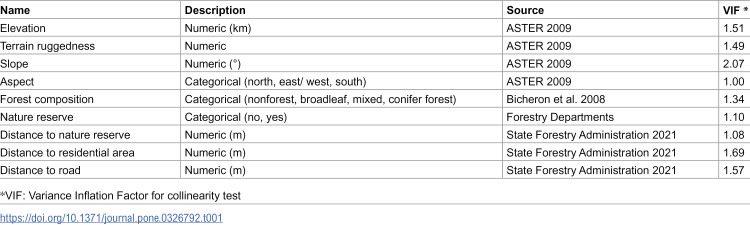 Figure 8
 Figure 9
Peer Reviews
No public reviews on file for this paper yet. If you reviewed it on a platform where reviews are public (OpenReview, ICLR, NeurIPS, ICML), you can paste yours below so the community can read it here.
Videos
No videos yet. Explain this paper in a talk, walkthrough, or lecture? Add one.
Taxonomy
TopicsSpecies Distribution and Climate Change · Wildlife Ecology and Conservation · Wildlife-Road Interactions and Conservation