Adult-Onset Still’s Disease Associated With Hyperimmunoglobulin-E: A Case Report
Parishad Yakhchalian, Mahwish Sheikh, Mohammed G Elhassan

TL;DR
A middle-aged woman with a rare inflammatory disease showed high immunoglobulin-E levels and responded well to prednisone treatment.
Contribution
This case report highlights a rare association between AOSD and hyperimmunoglobulin-E without allergic or parasitic causes.
Findings
The patient had AOSD with very high immunoglobulin-E levels.
She responded well to prednisone treatment.
No history of allergic disease or parasitic infection was found.
Abstract
Adult-onset Still's disease (AOSD) is a rare, chronic, multisystem inflammatory disorder of unknown etiology. Diagnosis is made clinically and can be challenging. AOSD typically affects young adults but can occur in older patients. The association between AOSD and very high immunoglobulin-E levels (also known as hyperimmunoglobulin-E) is not well studied. In this report, we present the case of a middle-aged woman with AOSD who presented with more than two weeks of fever, severe generalized weakness, and sore throat, and responded very well to prednisone. She was found to have hyperimmunoglobulin-E without a history of allergic disease or parasitic infection.
Genes, proteins, chemicals, diseases, species, mutations and cell lines named across the full text — each resolved to its canonical identifier and authoritative record.
Click any figure to enlarge with its caption.
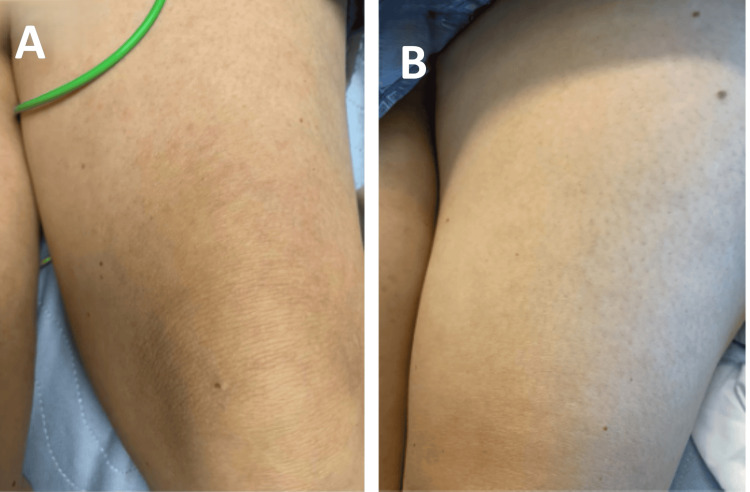 Figure 1
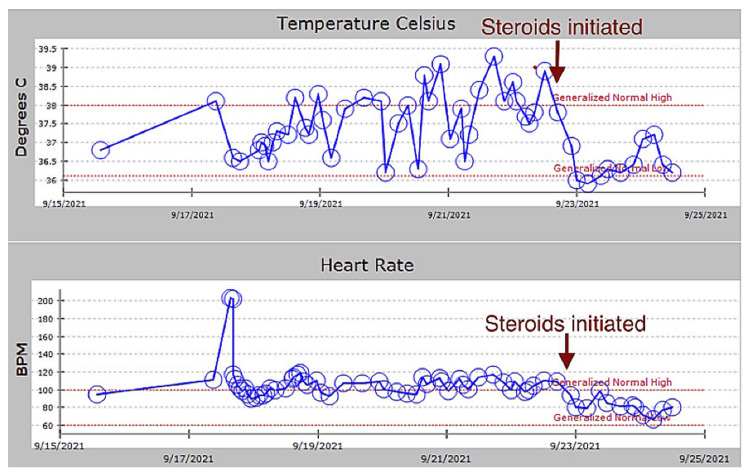 Figure 2
Peer Reviews
No public reviews on file for this paper yet. If you reviewed it on a platform where reviews are public (OpenReview, ICLR, NeurIPS, ICML), you can paste yours below so the community can read it here.
Videos
No videos yet. Explain this paper in a talk, walkthrough, or lecture? Add one.
Taxonomy
TopicsAutoimmune and Inflammatory Disorders Research · Immune Cell Function and Interaction · Family and Disability Support Research