COVID-19–Relevant Insights Into the Elevated Risk of Accidental Injuries in Survivors of SARS and Their Relatives in Taiwan: Retrospective Cohort Study
Chieh Sung, Chi-Hsiang Chung, Chien-An Sun, Chang-Huei Tsao, Daphne Yih Ng, Tsu-Hsuan Weng, Li-Yun Fann, Fu-Huang Lin, Wu-Chien Chien

TL;DR
This study found that SARS survivors and their relatives in Taiwan had higher long-term risks of accidental injuries, suggesting lasting physical and mental health effects from the 2003 outbreak.
Contribution
The study is the first to show long-term elevated injury risks in SARS survivors and their families, extending follow-up beyond 7 years and including both unintentional and intentional injuries.
Findings
SARS survivors had a 63% higher risk of accidental injuries compared to controls.
Relatives of survivors faced a 57% higher injury risk, possibly due to caregiving stress.
Subgroup analyses revealed increased risks for poisoning, falls, and traffic incidents in both groups.
Abstract
The 2003 outbreak of severe acute respiratory syndrome (SARS), caused by a novel coronavirus, heavily impacted Taiwan’s health care system, triggering clinical crises and lasting effects among affected individuals and families. The first case in Taiwan was identified on February 25, 2003, and the final case was reported on June 15, 2003. During the epidemic, 346 people were diagnosed with SARS, leading to 37 deaths. Outbreaks also occurred in China, Singapore, and Toronto (Canada), showing the vulnerability of global health systems to new zoonotic diseases. Clinically, SARS causes high fever and severe lung inflammation. Survivors often had long-term lung problems, including fibrosis, and bone issues like osteonecrosis, mostly due to high-dose steroid treatment. Although studies have looked at long-term outcomes—especially lung and bone issues—none followed patients beyond 7 years. The…
Genes, proteins, chemicals, diseases, species, mutations and cell lines named across the full text — each resolved to its canonical identifier and authoritative record.
Click any figure to enlarge with its caption.
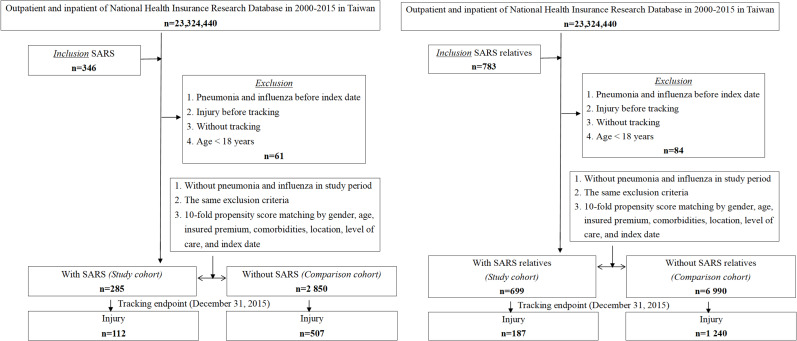 Figure 1
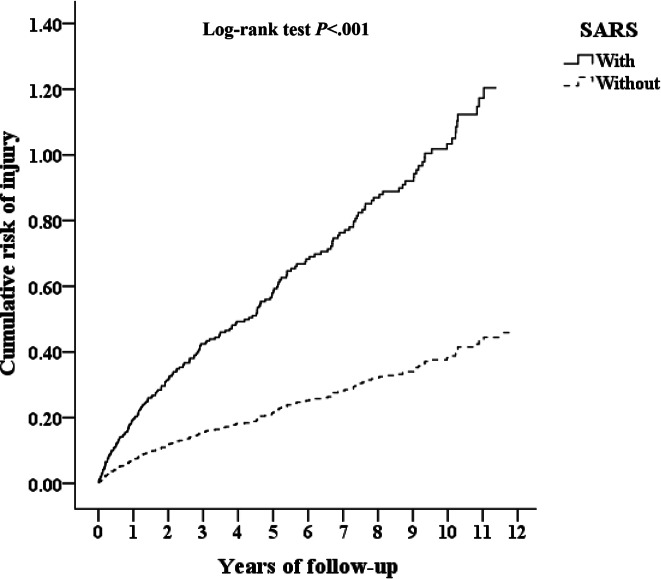 Figure 2
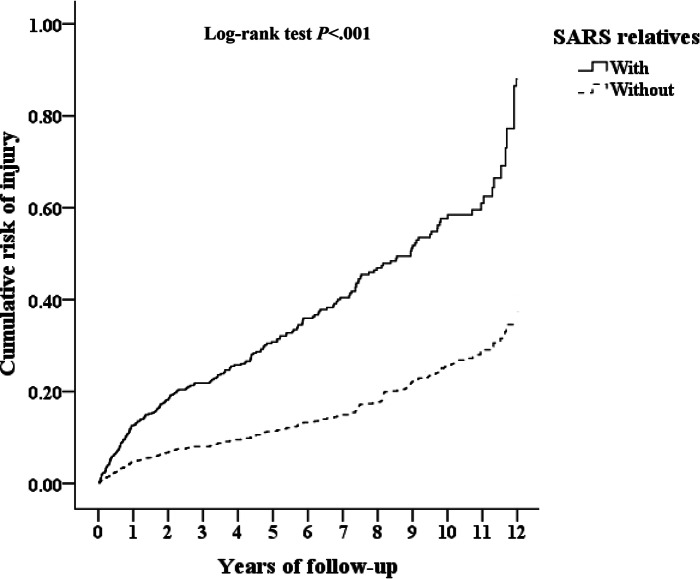 Figure 3
Peer Reviews
No public reviews on file for this paper yet. If you reviewed it on a platform where reviews are public (OpenReview, ICLR, NeurIPS, ICML), you can paste yours below so the community can read it here.
Videos
No videos yet. Explain this paper in a talk, walkthrough, or lecture? Add one.
Taxonomy
TopicsCardiac Arrest and Resuscitation · Disaster Response and Management · Trauma and Emergency Care Studies