Health literacy in five districts in Sri Lanka: a baseline assessment of health literacy levels among 18-49-year-olds and associated factors
Millawage Supun Dilara Wijesinghe, Nathasha Hithaishi Obeyesekera, Balangoda Muhamdiramlage Indika Gunawardana, Weerasinghe Mudiyanselage Prasad Chathuranga Weerasinghe, Upeksha Gayani Karawita, Nissanka Achchi Kankanamalage Ayoma Iroshanee Nissanka

TL;DR
This study assesses health literacy levels in Sri Lanka and finds that while most adults have sufficient health literacy, disparities exist among certain groups.
Contribution
The study provides a baseline assessment of health literacy in five Sri Lankan districts and identifies key factors influencing it.
Findings
84.6% of participants had sufficient health literacy, while 15.4% had limited health literacy.
Regular interaction with public health midwives and use of digital media reduced the odds of limited health literacy.
Language barriers and socioeconomic disparities were significant challenges affecting health literacy.
Abstract
Despite Sri Lanka’s high general literacy rate, disparities persist in health literacy (HL), which is a critical determinant of healthcare outcomes. This study assessed HL levels among adults aged 18–49 years in five districts and identified the associated sociodemographic and behavioral factors. A cross-sectional study was conducted (October 2022 - March 2023) via multistage cluster sampling across five districts (Colombo, Hambantota, Kurunegala, Monaragala, and Mullaitivu). Participants (n = 532) were recruited. The validated HLS-EU-Q16 (European Health Literacy Survey- 16-item version) tool was used, and HL was categorized as “limited” (0–12) or “sufficient” (13–16). Multivariable logistic regression was used to analyze the predictors of limited HL. The analysis was conducted via SPSS software (version 23.0). Overall, 84.6% of the participants demonstrated sufficient HL, whereas…
Genes, proteins, chemicals, diseases, species, mutations and cell lines named across the full text — each resolved to its canonical identifier and authoritative record.
Click any figure to enlarge with its caption.
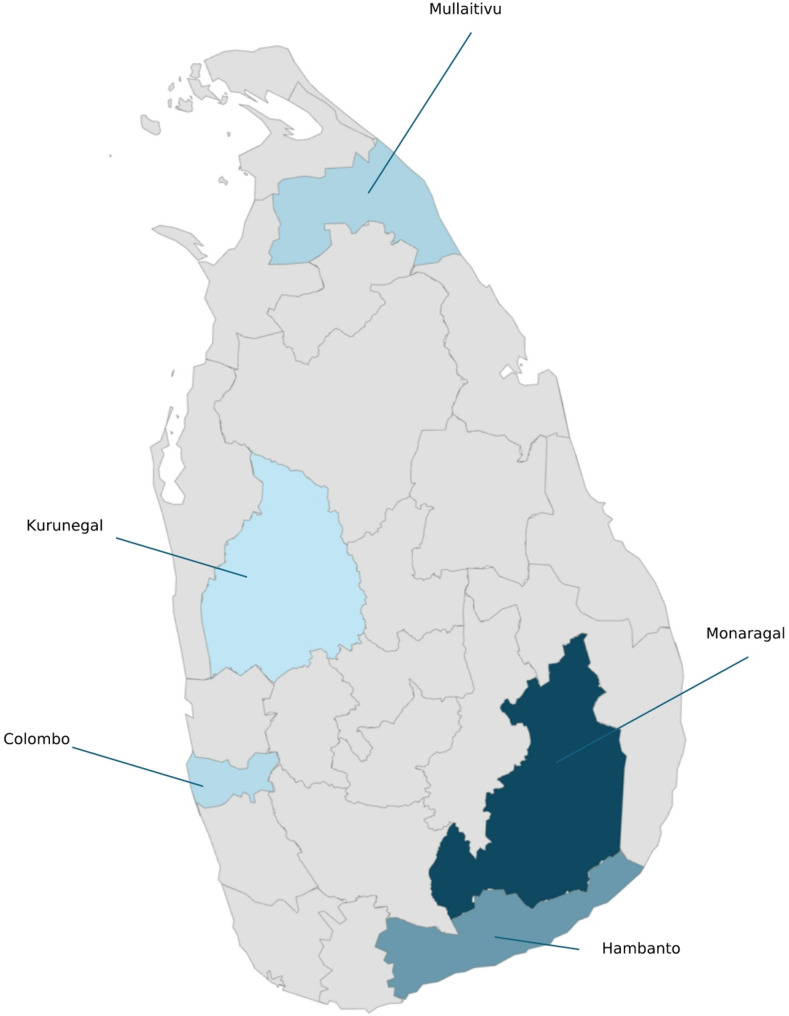 Figure 1
Peer Reviews
No public reviews on file for this paper yet. If you reviewed it on a platform where reviews are public (OpenReview, ICLR, NeurIPS, ICML), you can paste yours below so the community can read it here.
Videos
No videos yet. Explain this paper in a talk, walkthrough, or lecture? Add one.
Taxonomy
TopicsHealth Literacy and Information Accessibility · Mobile Health and mHealth Applications · Breastfeeding Practices and Influences