Advancing shock prediction: leveraging prior knowledge and self-controlled data for enhanced model accuracy and generalizability
Cheng-Yu Tsai, Xiu-Rong Huang, Po-Tsun Kuo, Tzu-Tao Chen, Yun-Kai Yeh, Kuan-Yuan Chen, Arnab Majumdar, Chien-Hua Tseng

TL;DR
This study improves shock prediction in ICU patients by using physiological waveforms and medical knowledge, enabling early warning without blood tests.
Contribution
A novel machine learning model using self-controlled data and feature engineering from physiological waveforms to predict shock one hour in advance.
Findings
A weighted ensemble model achieved an AUC of 0.93 and 84.15% accuracy in predicting shock.
Key predictive features included ECG heart rate variability and respiratory waveform characteristics.
The model successfully predicted shock using only four physiological waveforms and no blood tests.
Abstract
Timely intervention in shock is vital, as delays over one hour greatly increase mortality. This study aims to develop an enhanced machine learning model that improves predictive performance by utilizing self-controlled data and applying feature engineering informed by medical knowledge to physiological waveforms, enabling the prediction of shock one hour in advance without relying on blood tests. Patient data and physiological waveforms were obtained from the Medical Information Mart for Intensive Care III (MIMIC-3) database. Shock was defined as a mean arterial pressure ≤ 65 mmHg for more than one minute, combined with serum lactate levels ≥ 2 mmol/L within 12 h before or after the hypotension event. Waveforms used for prediction were extracted from 30 min time-segment before a 1-hour period prior to the event. Self-controlled waveforms were obtained from the same patient either one…
Genes, proteins, chemicals, diseases, species, mutations and cell lines named across the full text — each resolved to its canonical identifier and authoritative record.
Click any figure to enlarge with its caption.
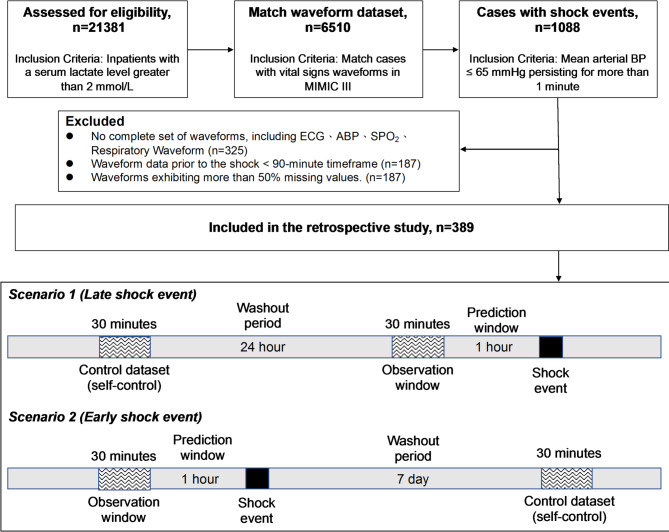 Figure 1
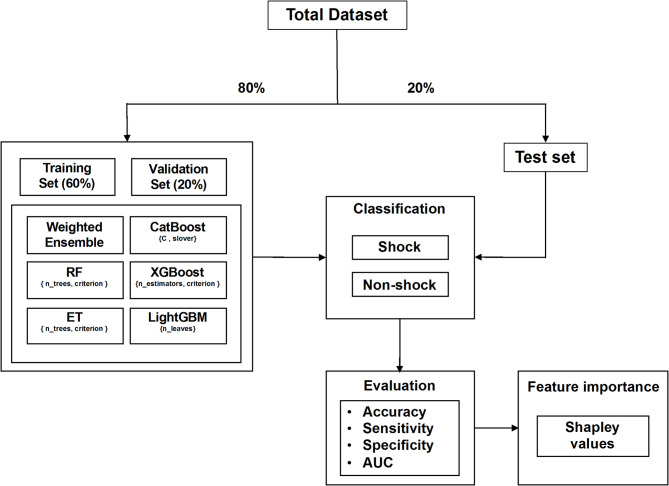 Figure 2
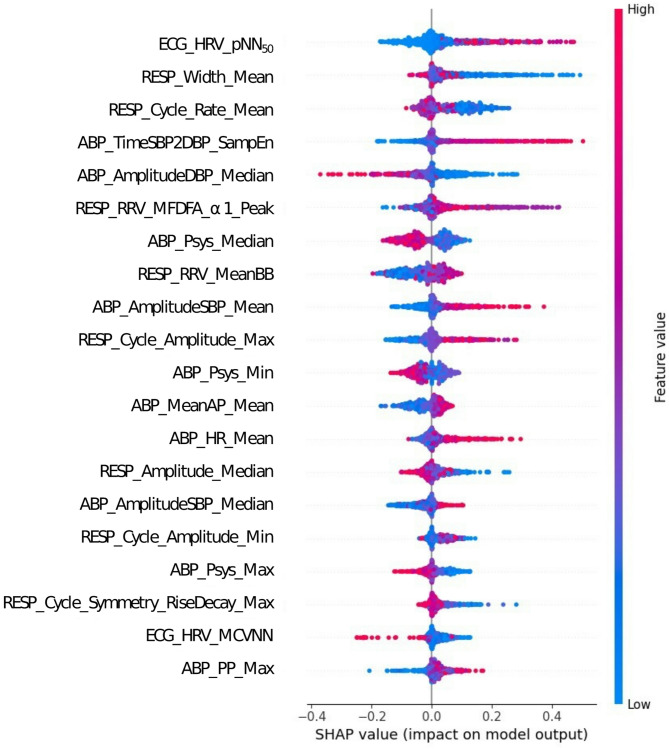 Figure 3
Peer Reviews
No public reviews on file for this paper yet. If you reviewed it on a platform where reviews are public (OpenReview, ICLR, NeurIPS, ICML), you can paste yours below so the community can read it here.
Videos
No videos yet. Explain this paper in a talk, walkthrough, or lecture? Add one.
Taxonomy
TopicsSepsis Diagnosis and Treatment · Hemodynamic Monitoring and Therapy · Heart Rate Variability and Autonomic Control