Needle aspiration technique as a supportive tool for clinical diagnosis of anorectal atresia in calves
Ahmed Abdelrahiem Sadek, Kamal Hussein

TL;DR
Needle aspiration helps diagnose anorectal atresia in calves and guides treatment decisions, especially when other signs are unclear.
Contribution
Needle aspiration is shown as a useful, non-invasive diagnostic tool for anorectal atresia in calves under field conditions.
Findings
Needle aspiration and radiography confirmed atresia ani in 62 calves and atresia ani et recti in 54 calves.
Needle aspiration was positive in 46.30% of cases with rectal ends ≤ 5 cm from the perineal skin surface.
Calves with rectal ends > 5 cm from the skin surface required laparo-typhlostomy.
Abstract
Early diagnosis and treatment of anorectal atresia, a common congenital abnormality in calves, are crucial for preventing complications and ensuring the animal’s survival. Typically, newly born calves with this condition are present with an inability to defecate due to an absence of or an obstructed anal opening, often accompanied by abdominal pain and distension. History, physical examination, and radiographic imaging are frequently utilized diagnostic tools. This study aimed to evaluate the effectiveness of needle aspiration as a supportive diagnostic technique for anorectal atresia in bovine calves under field conditions and to assess its role in decision-making to proceed with surgical intervention. A total of 116 male calves, aged six hours to five days, were examined through clinical inspection, needle aspiration, and plain radiography. Clinical findings indicated that 62 cases…
Genes, proteins, chemicals, diseases, species, mutations and cell lines named across the full text — each resolved to its canonical identifier and authoritative record.
Click any figure to enlarge with its caption.
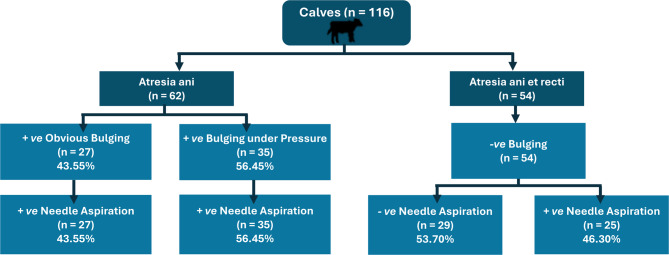 Figure 1
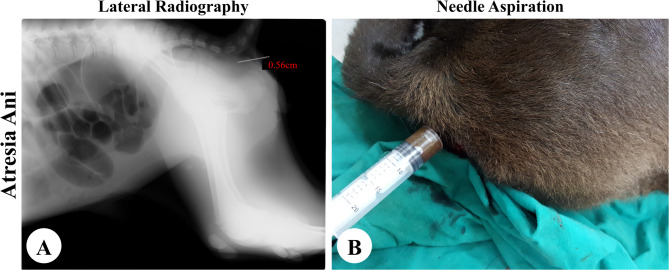 Figure 2
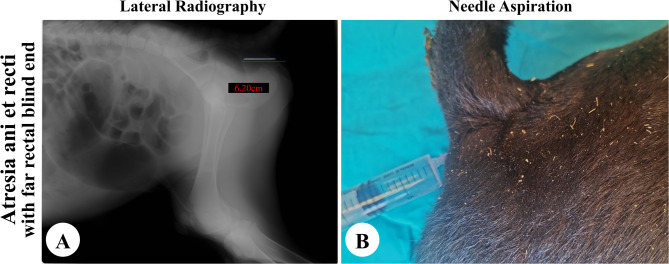 Figure 3
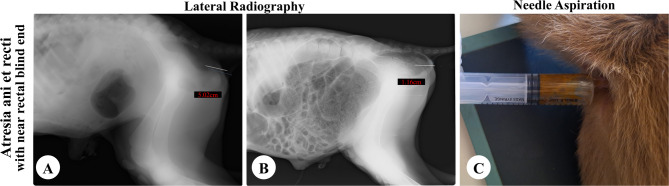 Figure 4
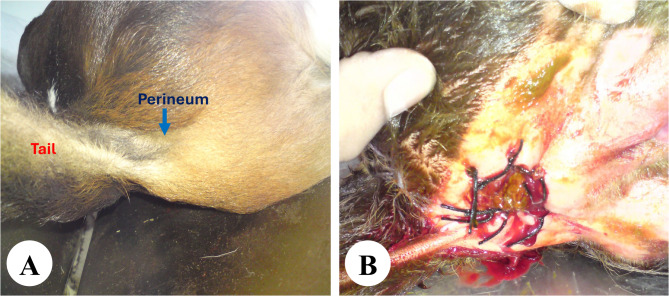 Figure 5
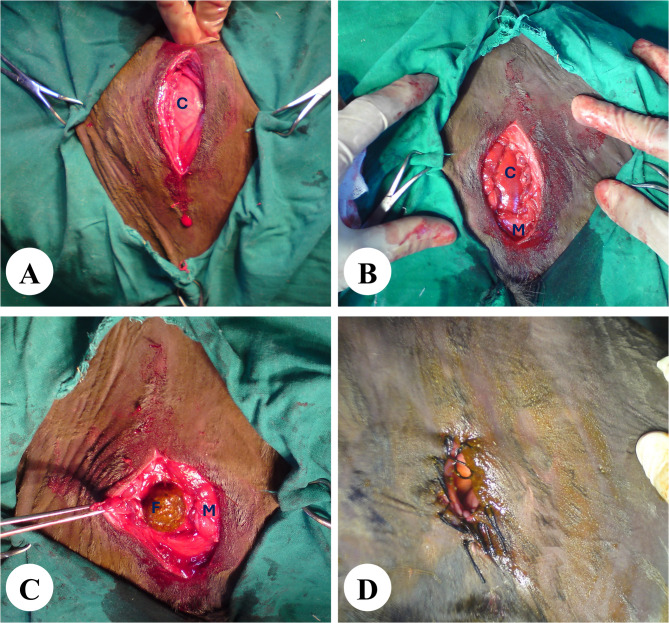 Figure 6
Peer Reviews
No public reviews on file for this paper yet. If you reviewed it on a platform where reviews are public (OpenReview, ICLR, NeurIPS, ICML), you can paste yours below so the community can read it here.
Videos
No videos yet. Explain this paper in a talk, walkthrough, or lecture? Add one.
Taxonomy
TopicsCongenital gastrointestinal and neural anomalies · Gastrointestinal disorders and treatments · Tumors and Oncological Cases