Left ventricular myocardial functions in pediatric patients with primary nephrotic syndrome: a comprehensive evaluation using conventional echocardiography, two-dimensional speckle tracking, and three-dimensional echocardiography
Amira Hussein, Shaimaa Rakha, Ayman Hammad, Mona Hafez, Mai S Korkor

TL;DR
This study found early signs of heart function issues in children with kidney disease using advanced imaging techniques, even when basic tests showed no problems.
Contribution
The study introduces the use of advanced echocardiography techniques to detect subclinical left ventricular dysfunction in pediatric nephrotic syndrome patients.
Findings
Subclinical diastolic dysfunction was detected in NS patients using tissue Doppler, especially in steroid-resistant cases.
Systolic dysfunction was identified using 2D speckle tracking and 3D echocardiography in NS patients.
Biochemical markers like cholesterol and serum albumin correlated with certain cardiac parameters in NS patients.
Abstract
Nephrotic syndrome (NS) has been linked to cardiac morbidity and mortality. However, early cardiac implications in NS were studied on a limited scale using basic echocardiography (ECHO). Therefore, the study aimed to evaluate subclinical Left ventricle (LV) functional alterations using conventional and advanced ECHO modalities. A prospective observational study was conducted from January 2022 to August 2024 on 40 primary NS patients and 40 controls. Demographic, clinical, and laboratory data were collected. ECHO was performed, including LV functional assessment using conventional ECHO, tissue Doppler, two-dimensional (2D) speckle tracking, and three-dimensional (3D) ECHO. NS patients, whose mean age was 10.93 ± 2.78 years, were subclassified into steroid-sensitive NS (SSNS) 15(37.5%) and steroid-resistant NS (SRNS) 25 (62.5%). Compared with controls, there was no significant…
Genes, proteins, chemicals, diseases, species, mutations and cell lines named across the full text — each resolved to its canonical identifier and authoritative record.
Click any figure to enlarge with its caption.
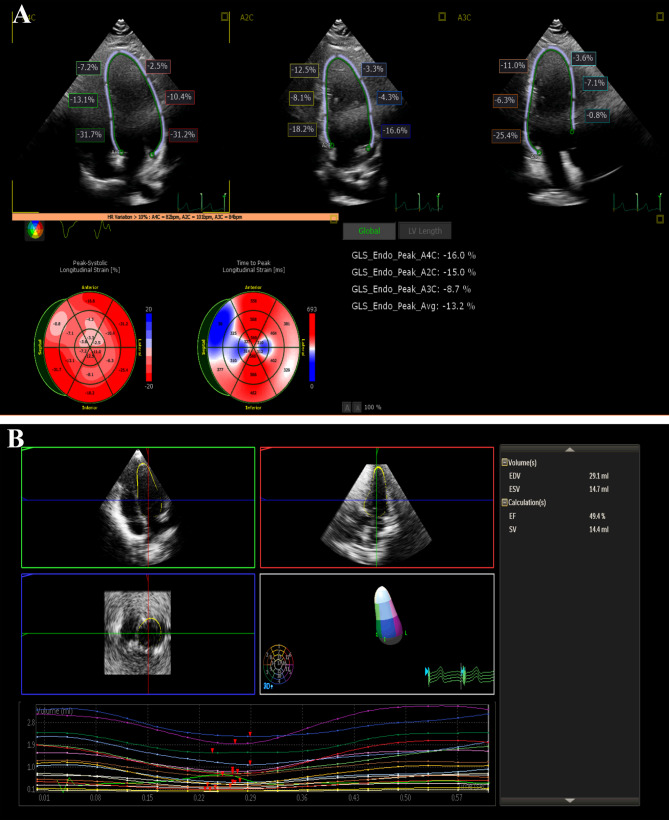 Figure 1
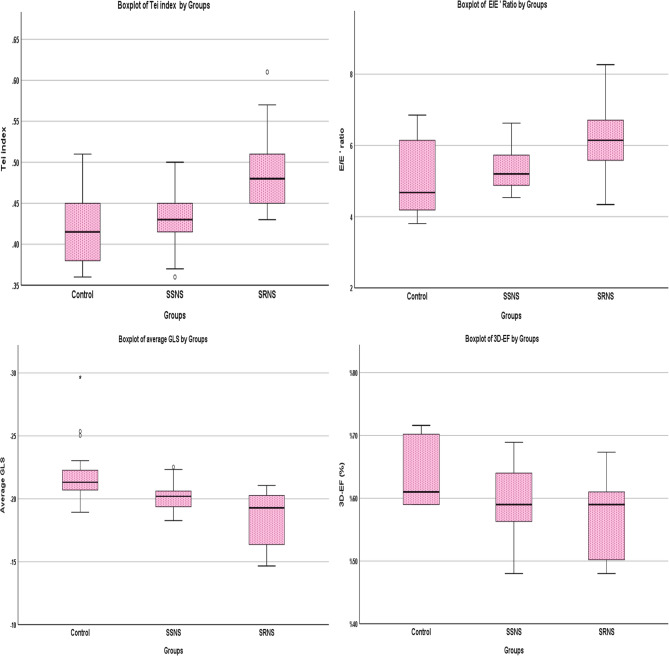 Figure 2
Peer Reviews
No public reviews on file for this paper yet. If you reviewed it on a platform where reviews are public (OpenReview, ICLR, NeurIPS, ICML), you can paste yours below so the community can read it here.
Videos
No videos yet. Explain this paper in a talk, walkthrough, or lecture? Add one.
Taxonomy
TopicsRenal Diseases and Glomerulopathies · Ion Transport and Channel Regulation · Hormonal Regulation and Hypertension