Plasma carotenoids are inversely correlated with granulocyte counts and soluble inflammatory markers in a middle-aged population: a cross-sectional study with mediation analysis
Jan Neelissen, Per Leanderson, Fredrik H. Nyström, Lena Jonasson, Rosanna W. S. Chung

TL;DR
This study finds that higher plasma carotenoids are linked to lower granulocyte counts and inflammation markers in middle-aged people.
Contribution
It is the largest study showing carotenoids' inverse relationship with inflammation, mediated by granulocyte counts.
Findings
Plasma carotenoids are inversely correlated with granulocyte counts and inflammatory markers like CRP and MMP-9.
Mediation analysis shows granulocyte counts mediate the link between carotenoids and inflammation markers.
Lutein and β-cryptoxanthin remain independently associated with MMP-9 after adjusting for granulocyte mediation.
Abstract
High intake of fruits and vegetables is generally associated with reduced levels of inflammation. In line with this, plasma levels of carotenoids have shown inverse associations with inflammatory markers, in particular C-reactive protein (CRP) and leukocyte counts. However, it remains unclear to what extent carotenoids are associated with specific leukocyte subsets or other inflammatory markers. This study systematically assessed the inter-relationships among total and individual carotenoids, circulating leukocyte subsets, and soluble inflammatory markers in a middle-aged population. A subcohort of 1078 subjects, aged 50–64, was recruited from the Swedish CArdioPulmonary bioImage Study (SCAPIS) cohort. Leukocyte subsets were determined by whole blood flow cytometry. Five major carotenoids, namely lutein, β-cryptoxanthin, lycopene, α-carotene and β-carotene, and inflammatory markers…
Genes, proteins, chemicals, diseases, species, mutations and cell lines named across the full text — each resolved to its canonical identifier and authoritative record.
Click any figure to enlarge with its caption.
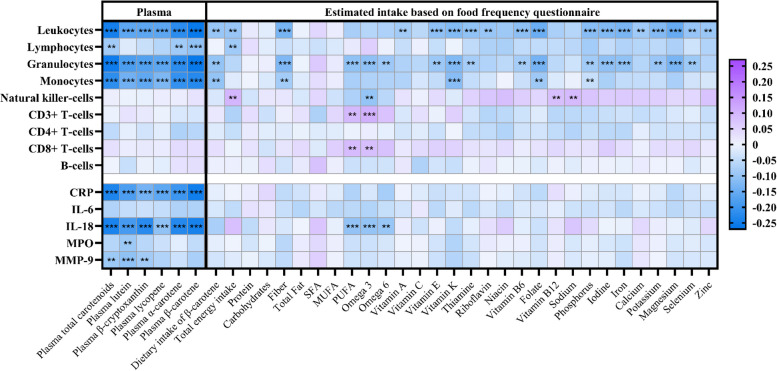 Figure 1
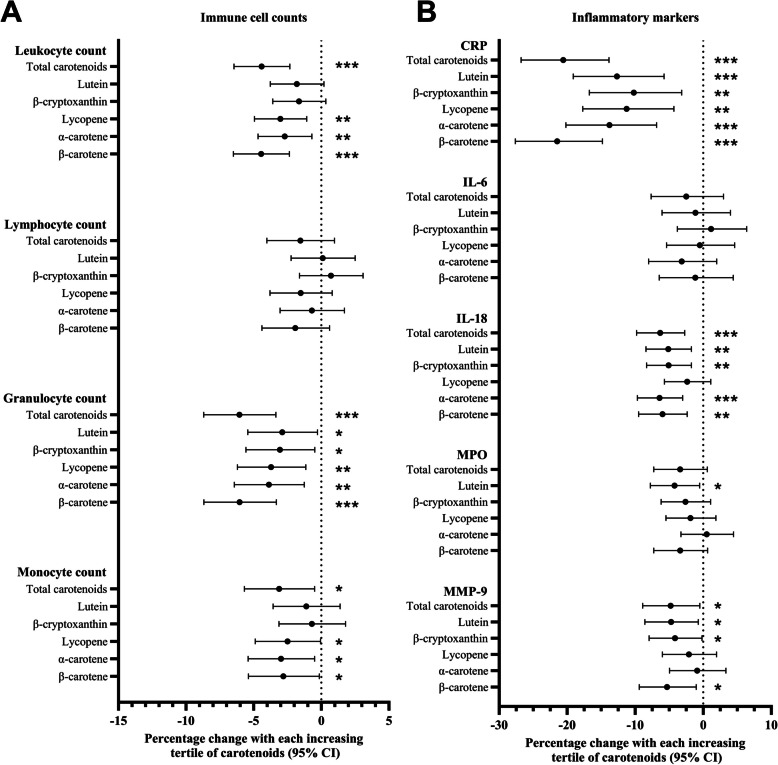 Figure 2
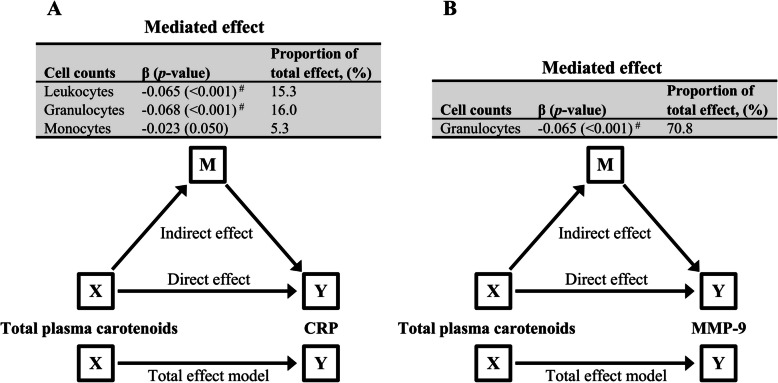 Figure 3
Peer Reviews
No public reviews on file for this paper yet. If you reviewed it on a platform where reviews are public (OpenReview, ICLR, NeurIPS, ICML), you can paste yours below so the community can read it here.
Videos
No videos yet. Explain this paper in a talk, walkthrough, or lecture? Add one.
Taxonomy
TopicsAntioxidant Activity and Oxidative Stress · Adipokines, Inflammation, and Metabolic Diseases · Clusterin in disease pathology