Semi-supervised data-integrated feature importance enhances performance and interpretability of biological classification tasks
Jun W Kim, Russ B Altman

TL;DR
This paper introduces DIFI, a method that improves model performance and interpretability by integrating biological knowledge into feature weighting.
Contribution
DIFI is a novel semi-supervised method that aligns model feature weighting with a priori biological knowledge.
Findings
DIFI improves performance in cancer type prediction using gene expression data.
DIFI enhances enzyme classification from protein sequences by aligning with catalytic residue knowledge.
Abstract
Accurate model performance on training data does not ensure alignment between the model’s feature weighting patterns and human knowledge, which can limit the model’s relevance and applicability. We propose Semi-Supervised Data-Integrated Feature Importance (DIFI), a method that numerically integrates a priori knowledge, represented as a sparse knowledge map, into the model’s feature weighting. By incorporating the similarity between the knowledge map and the feature map into a loss function, DIFI causes the model’s feature weighting to correlate with the knowledge. We show that DIFI can improve the performance of neural networks using two biological tasks. In the first task, cancer type prediction from gene expression profiles was guided by identities of cancer type-specific biomarkers. In the second task, enzyme/non-enzyme classification from protein sequences was guided by the…
Genes, proteins, chemicals, diseases, species, mutations and cell lines named across the full text — each resolved to its canonical identifier and authoritative record.
Click any figure to enlarge with its caption.
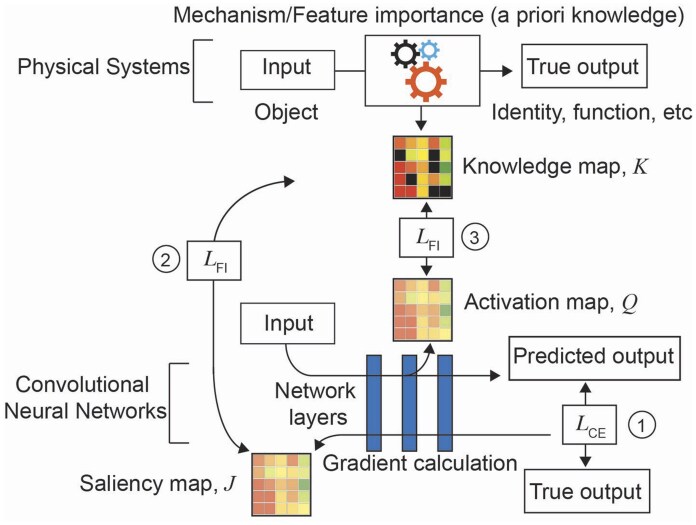 Figure 1
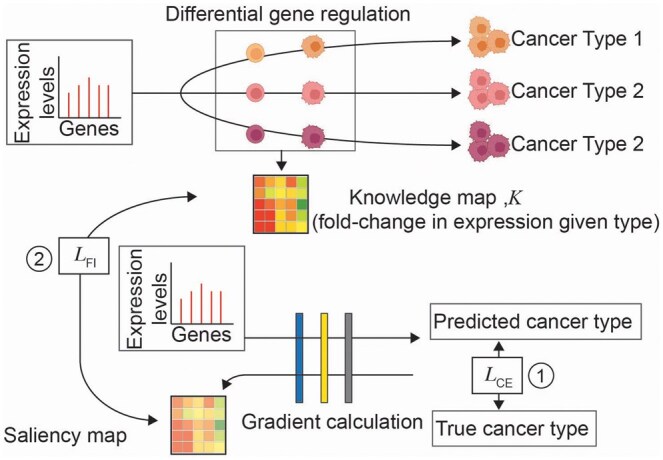 Figure 2
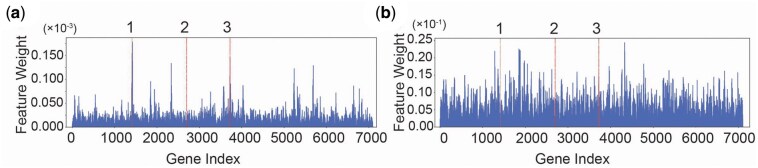 Figure 3
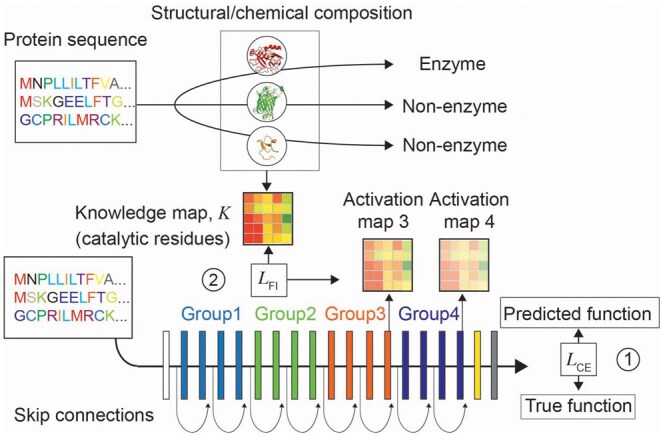 Figure 4
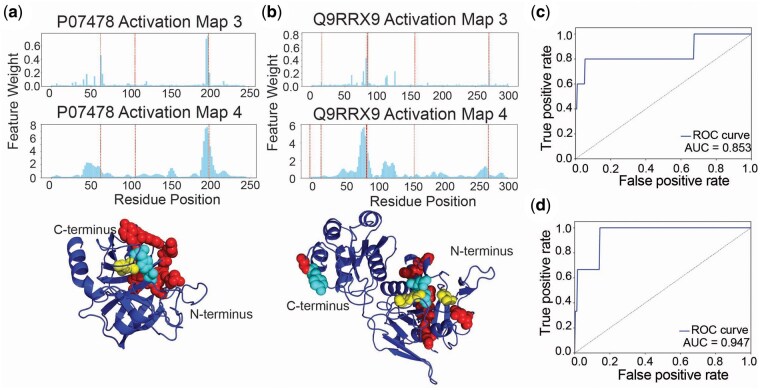 Figure 5
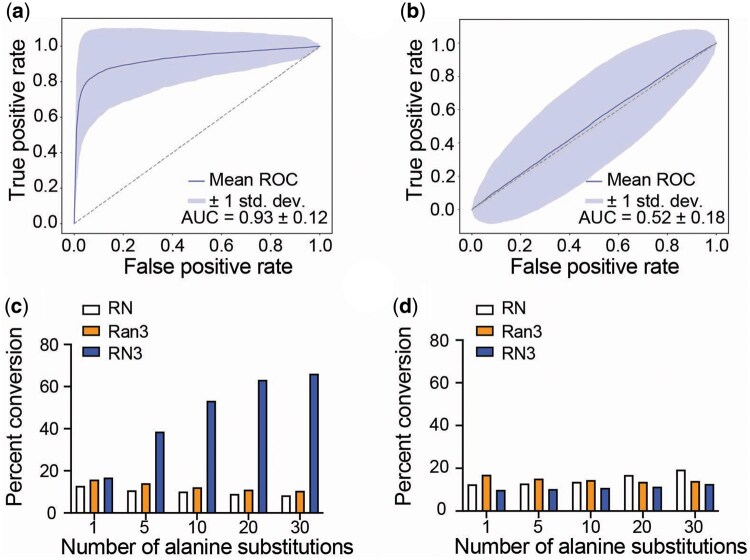 Figure 6
Peer Reviews
No public reviews on file for this paper yet. If you reviewed it on a platform where reviews are public (OpenReview, ICLR, NeurIPS, ICML), you can paste yours below so the community can read it here.
Videos
No videos yet. Explain this paper in a talk, walkthrough, or lecture? Add one.
Taxonomy
TopicsMachine Learning in Materials Science · Computational Drug Discovery Methods · Machine Learning in Bioinformatics