Development of DNA Microarray for Indication of Viral Community-Acquired Pneumonia Pathogens
N.A. Sakharnov, E.N. Filatova, M.I. Popkova, L.B. Lukovnikova, M.O. Bahmeteva, S.L. Slavin, O.V. Utkin

TL;DR
This study developed a DNA microarray to detect viruses causing pneumonia in children and young adults, improving diagnostic accuracy.
Contribution
A novel DNA microarray was developed for the specific detection of multiple viral pathogens in community-acquired pneumonia.
Findings
The microarray includes 544 DNA probes targeting seven viral pathogens, with optimal hybridization at 47°C.
Effective probes for adenovirus group B, bocavirus, and SARS-CoV-2 were identified with high specificity.
The microarray results matched PCR findings, validating its potential for clinical diagnostics.
Abstract
The aim of the study is to develop a DNA microarray for the indication of viral pathogens causing community-acquired pneumonia. The study materials were swab samples from the nasopharyngeal and oropharyngeal mucous membranes of patients aged 2 months to 18 years with X-ray confirmed pneumonia. The selection of DNA probes for the specific detection of viral community-acquired pneumonia pathogens and development of the microarray design were carried out using our previously developed disprose program. The nucleotide sequences of pathogens were obtained from the NCBI Nucleotide and GISAID databases. The selected DNA probes were synthesized on CustomArray slides (USA). The optimal hybridization temperature was selected on a model pooled sample containing adenovirus DNA and SARS-CoV-2 coronavirus RNA. The selection criteria were the percentage of effective probes with a standardized…
Genes, proteins, chemicals, diseases, species, mutations and cell lines named across the full text — each resolved to its canonical identifier and authoritative record.
Click any figure to enlarge with its caption.
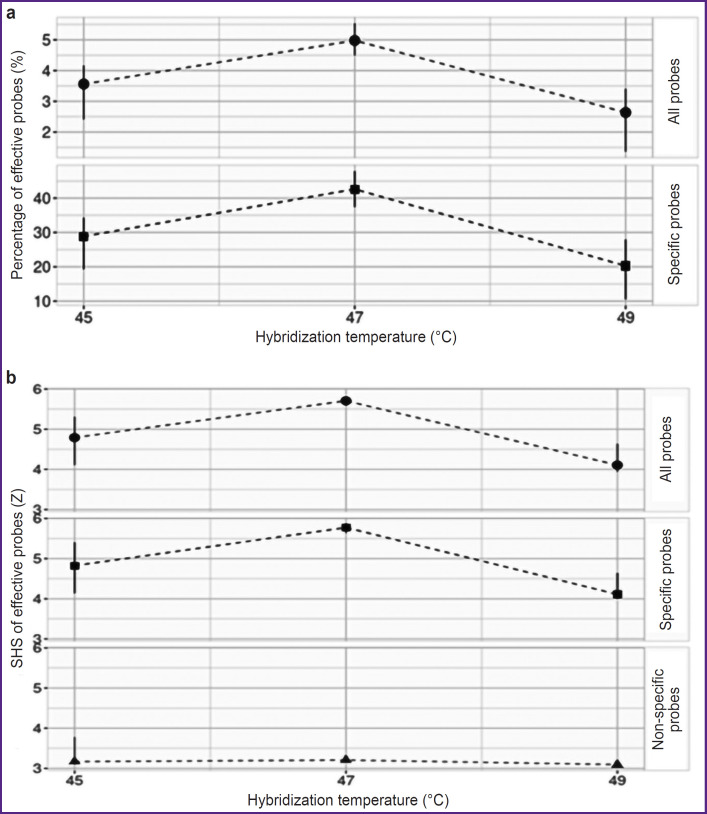 Figure 1
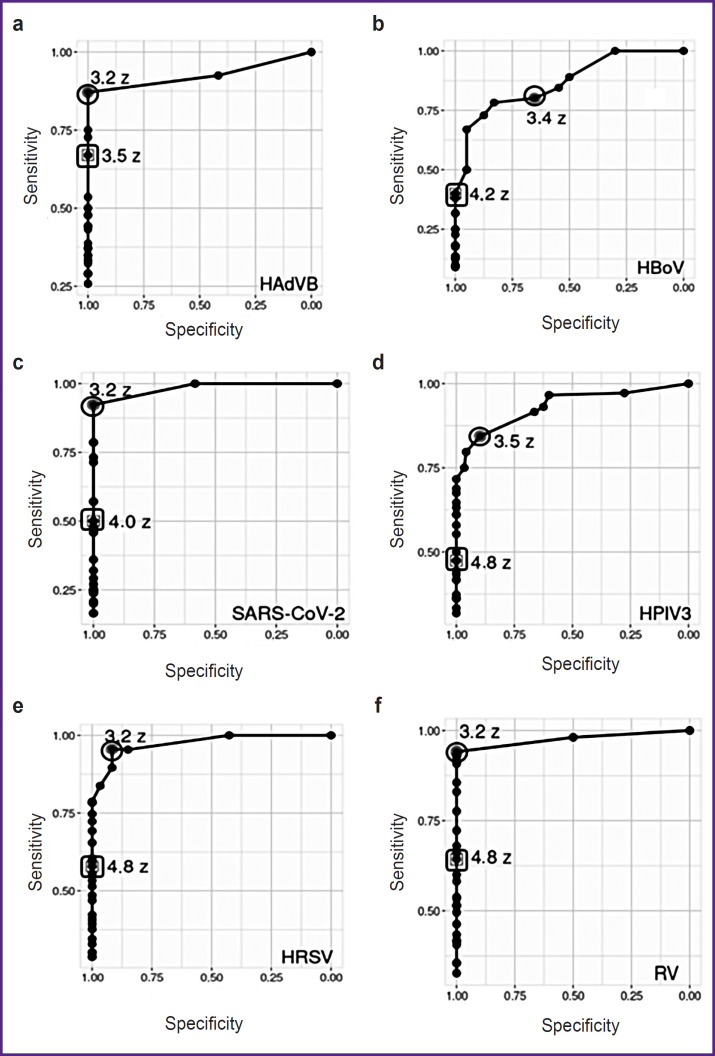 Figure 2
Peer Reviews
No public reviews on file for this paper yet. If you reviewed it on a platform where reviews are public (OpenReview, ICLR, NeurIPS, ICML), you can paste yours below so the community can read it here.
Videos
No videos yet. Explain this paper in a talk, walkthrough, or lecture? Add one.
Taxonomy
TopicsBacteriophages and microbial interactions