Machine Learning Efficiency in Predicting Obstructive Coronary Artery Disease in Patients with Non-ST Elevation Acute Coronary Syndrome in the First Hours of Admission
M.M. Tsivanyuk, K.I. Shakhgeldyan, M.A. Markov, V.G. Shirobokov, B.I. Geltser

TL;DR
This study shows that machine learning models, especially stochastic gradient boosting, can accurately predict obstructive coronary artery disease in patients with non-ST elevation acute coronary syndrome within the first few hours of hospital admission.
Contribution
The study introduces high-accuracy machine learning models for early prediction of obstructive coronary artery disease in NSTE-ACS patients using clinical data from the first hours of admission.
Findings
Stochastic gradient boosting models achieved the highest accuracy (AUC 0.949) in the third scenario with data collected 3 hours after admission.
Anthropometric indicators and echocardiographic parameters were key predictors of obstructive coronary artery disease.
Risk stratification using these models can help guide optimal myocardial revascularization strategies.
Abstract
The aim of the study was to assess the accuracy of prognostic models for obstructive coronary artery disease (OCAD) in the first hours of admission in patients with non-ST segment elevation acute coronary syndrome (NSTE-ACS). The study involved 610 patients with low- and intermediate-risk NSTE-ACS (Me — 62 years). Based on invasive coronary angiography findings the patients were divided into 2 groups: the first — 363 (59.5%) patients with OCAD (coronary artery luminal occlusion ≥50%), the second — 247 (40.5%) patients without coronary obstruction (<50%). Clinical and functional status was assessed using 62 parameters available at the early hospitalization including: clinical and demographic, anthropometric, laboratory, electrocardiographic and echocardiographic data. OCAD predictive models were developed using machine learning methods: multifactorial logistic regression, random…
Genes, proteins, chemicals, diseases, species, mutations and cell lines named across the full text — each resolved to its canonical identifier and authoritative record.
Click any figure to enlarge with its caption.
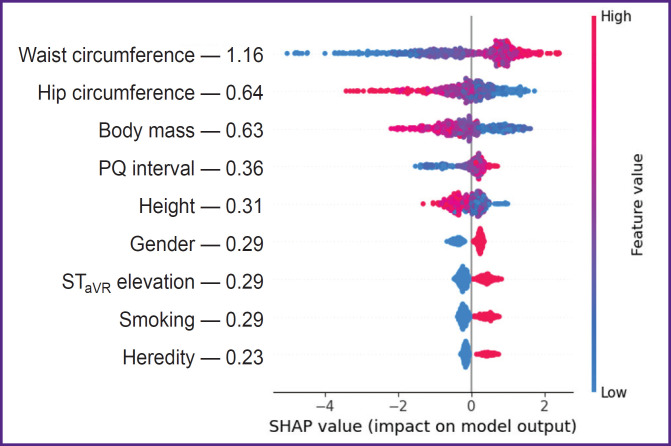 Figure 1
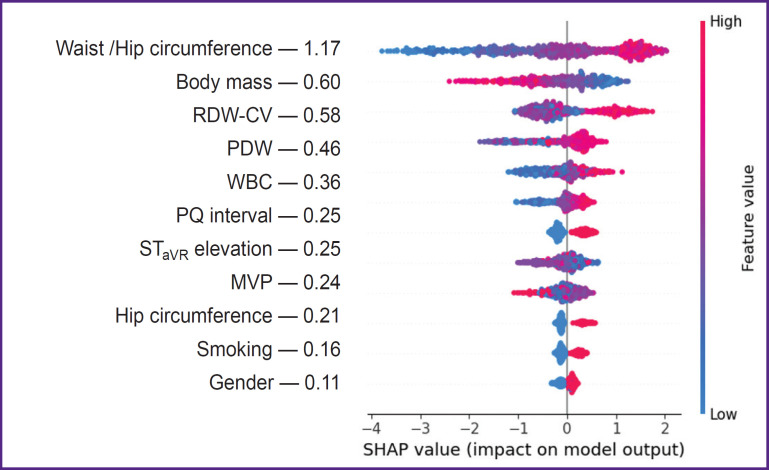 Figure 2
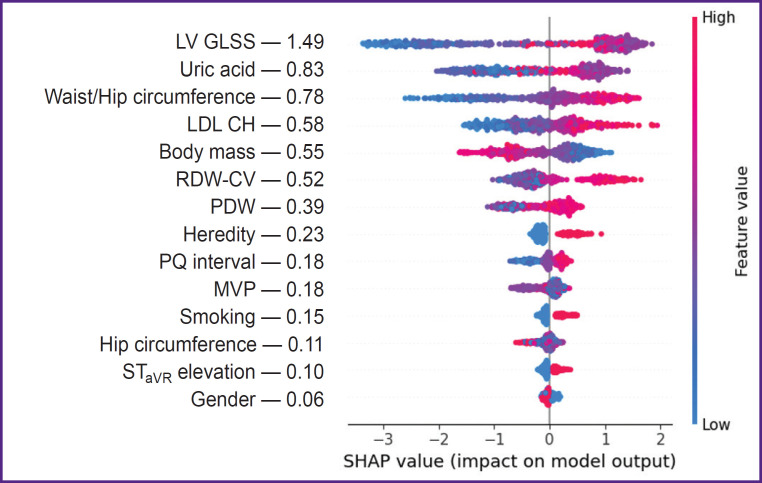 Figure 3
Peer Reviews
No public reviews on file for this paper yet. If you reviewed it on a platform where reviews are public (OpenReview, ICLR, NeurIPS, ICML), you can paste yours below so the community can read it here.
Videos
No videos yet. Explain this paper in a talk, walkthrough, or lecture? Add one.
Taxonomy
TopicsHealthcare Systems and Public Health · Cardiovascular Disease and Adiposity · Artificial Intelligence in Healthcare