The Development of Inner Ear Membrane Analog for Experimental Otorhinolaryngology
A.A. Riabinin, O.S. Rogovaya, A.I. Kryukov, N.L. Kunelskaya, E.S. Yanyushkina, V.V. Mischenko, M.M. Ilyin, E.A. Shershunova, V.V. Voyevodin, S.V. Nebogatkin, K.I. Pomanov, E.A. Vorotelyak

TL;DR
Researchers developed a model of the inner ear's round window membrane to study drug delivery and tested methods to speed up drug passage using electrophysical techniques.
Contribution
A novel in vitro model of the human round window membrane with living cells and a method for accelerating drug permeation using electrophysical techniques.
Findings
The optimal mRWM model was constructed using Viscoll collagen membranes with primary fibroblasts and HaCaT epithelial cells.
Electrophysical methods like iontophoresis and electroporation accelerated dexamethasone passage through the mRWM.
The mRWM model maintained morphological and functional integrity during experiments.
Abstract
The aim of the investigation was to develop and evaluate a model of the human round window membrane (mRWM) of the inner ear that is suitable for representative studies of drug permeation and cytotoxicity. Several substrate options were tested to create the mRWM, including 2 variants of Viscoll collagen membranes (IMTEK, Russia) and a multi-component G-Derm membrane (G-DERM, Russia). In the first variant, only HaCaT epithelial cells were seeded on the membranes, and in the second variant, primary human dermal fibroblasts were seeded together with HaCaT epithelial cells (sequential application). The obtained mRWM were evaluated by morphological criteria using histochemical methods. As a result, the decision was made to use mRWM constructed on Viscoll membranes with the inclusion of both primary fibroblasts and human epithelial cells. A series of scientific experiments has been performed…
Genes, proteins, chemicals, diseases, species, mutations and cell lines named across the full text — each resolved to its canonical identifier and authoritative record.
Click any figure to enlarge with its caption.
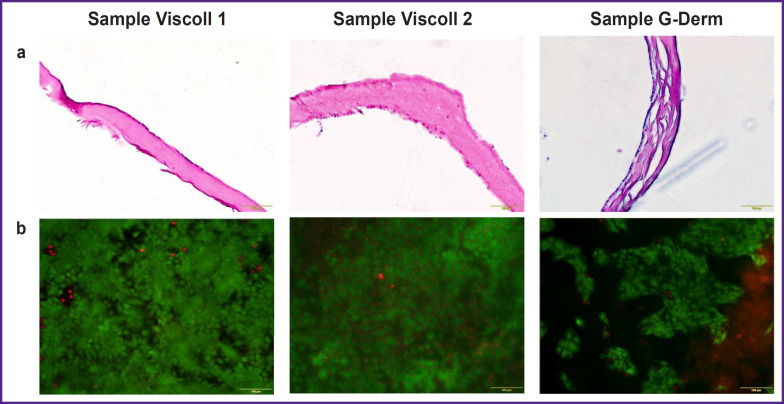 Figure 1
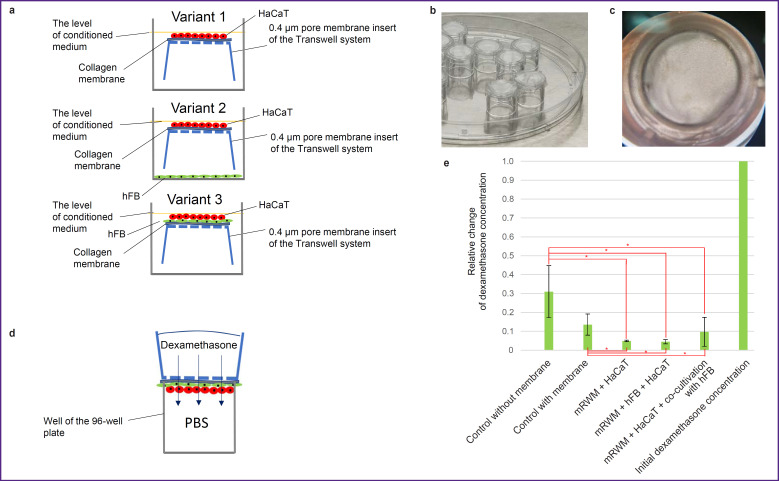 Figure 2
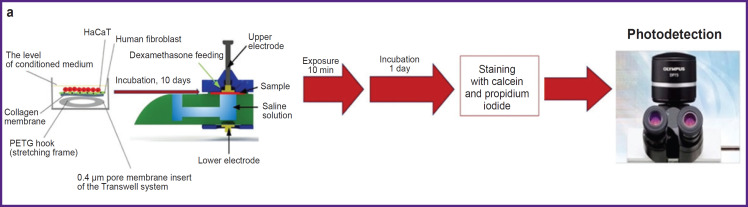 Figure 3
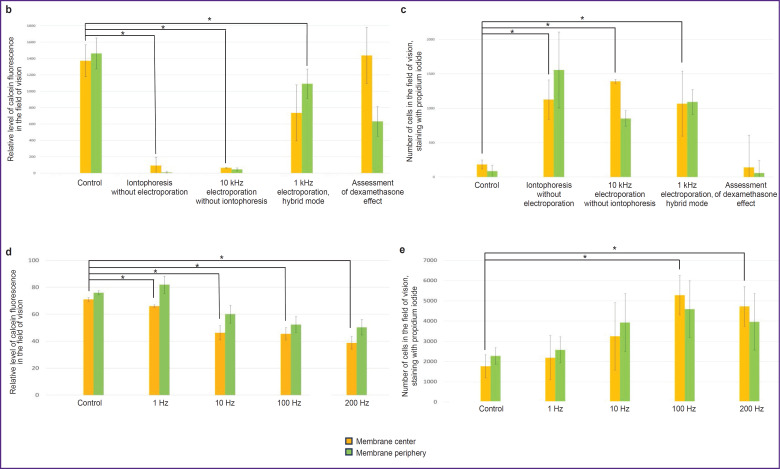 Figure 4
Peer Reviews
No public reviews on file for this paper yet. If you reviewed it on a platform where reviews are public (OpenReview, ICLR, NeurIPS, ICML), you can paste yours below so the community can read it here.
Videos
No videos yet. Explain this paper in a talk, walkthrough, or lecture? Add one.
Taxonomy
TopicsHearing, Cochlea, Tinnitus, Genetics