Slim V-shaped frenectomy: Description of a minimally invasive surgical technique
Abdusalam E. Alrmali, Paolo Nava, Jacob Martin Zimmer, Syed Hanan Rufai, Andreas Onisiforou, Hom-Lay Wang

TL;DR
This paper introduces a new, minimally invasive surgical method for correcting high labial frenulum attachment, aiming to improve dental outcomes and reduce recovery time.
Contribution
The paper presents a novel slim V-shaped frenectomy technique adaptable to various frenulum types with reduced postoperative discomfort.
Findings
The technique involves a slim V-shaped incision and repositioning to prevent recurrence.
It minimizes wound expansion and ensures optimal healing.
The method is suitable for mucosal, gingival, papillary, and papilla penetrating frenula.
Abstract
This article introduces a minimally invasive slim V-shaped surgical technique for labial frenectomy, specifically targeting high labial frenulum attachment. Proper frenulum management is critical in dental specialties, influencing aesthetics, phonetics, and prosthetic rehabilitation outcomes. The described technique is adaptable to various types of labial frenulum, including mucosal, gingival, papillary, and papilla penetrating. It involves a slim V-shaped incision, consecutive frenulum detachment, and repositioning within the vestibule, effectively addressing potential recurrence growth. Its minimally invasive nature reduces wound expansion into neighboring structures, ensuring optimal healing and minimizing postoperative discomfort. In conclusion, the slim V-shaped surgical technique offers a promising solution, minimizing complications and maximizing treatment success for high labial…
Genes, proteins, chemicals, diseases, species, mutations and cell lines named across the full text — each resolved to its canonical identifier and authoritative record.
Click any figure to enlarge with its caption.
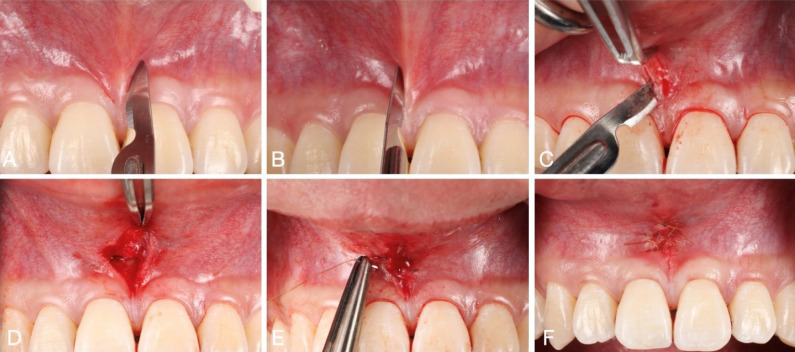 Figure 1
 Figure 2
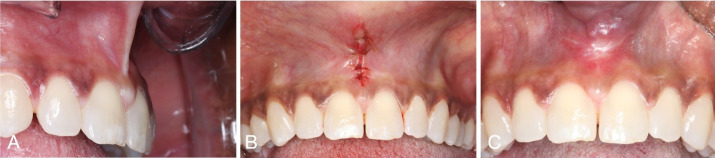 Figure 3
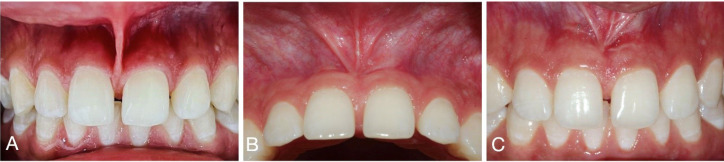 Figure 4
Peer Reviews
No public reviews on file for this paper yet. If you reviewed it on a platform where reviews are public (OpenReview, ICLR, NeurIPS, ICML), you can paste yours below so the community can read it here.
Videos
No videos yet. Explain this paper in a talk, walkthrough, or lecture? Add one.
Taxonomy
TopicsOral and Craniofacial Lesions · Urological Disorders and Treatments · Head and Neck Anomalies