Controlling Lampenflora in Heritage Sites: In Situ Testing of Polyoxometalate–Ionic Liquids in the Pommery Champagne Cellar
Stéphanie Eyssautier‐Chuine, Ludovic Besaury, Nathalie Vaillant‐Gaveau, Sandra Villaume, Anouck Habrant, Isabel Franco‐Castillo, Marine Rondeau, Dina Aggad, Maxime Gommeaux, Gilles Fronteau, Scott G. Mitchell

TL;DR
This study tests new biocidal materials to protect a historic Champagne cellar from harmful microbial growth caused by artificial lighting.
Contribution
POM-ILs are shown to be a sustainable and effective alternative to traditional biocides for preserving cultural heritage.
Findings
POM-ILs effectively inhibited microbial growth for one year with lower concentrations than Preventol RI80.
Metagenomic analysis showed reduced microbial diversity in POM-IL-treated areas.
POM-ILs had better long-term inhibition of photosynthetic organisms compared to Preventol RI80.
Abstract
Artificial lighting, essential for geotouristic purposes in subterranean sites, has facilitated the growth of colored photosynthetic organisms (lampenflora) on monumental 19th century bas‐reliefs of the Pommery Champagne cellar—a UNESCO‐protected heritage site—causing significant aesthetic and physical deterioration. To sustainably preserve these stone artworks, biocidal polyoxometalate–ionic liquids (POM‐ILs) are tested alongside the commercial biocide Preventol RI80 on three trial zones: cleaned and colonized areas of a wall and clean stone samples positioned on a testing station within the cellar. After 1 year, untreated control areas exhibit growth/regrowth of biofilms, whereas surfaces treated with POM‐ILs or Preventol RI80 remain biofilm free. Measurements of colorimetry and chlorophyll fluorescence confirm the effectiveness of both biocides in controlling photosynthetic…
Genes, proteins, chemicals, diseases, species, mutations and cell lines named across the full text — each resolved to its canonical identifier and authoritative record.
Click any figure to enlarge with its caption.
 Figure 1
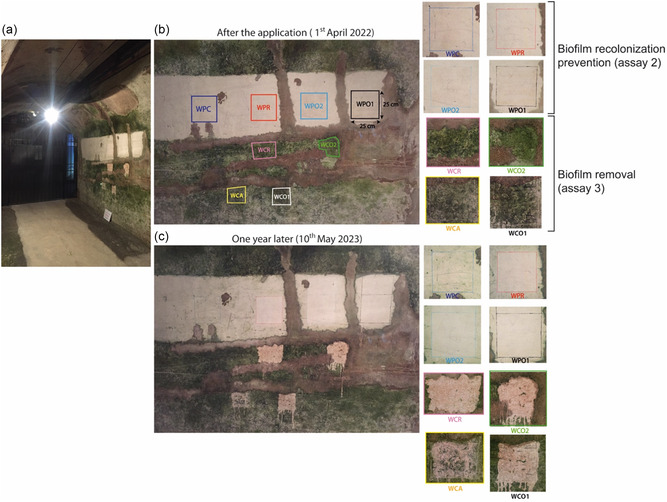 Figure 2
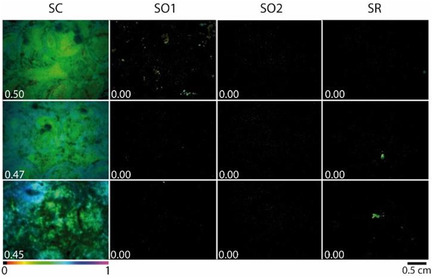 Figure 3
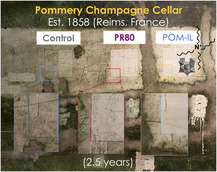 Figure 4
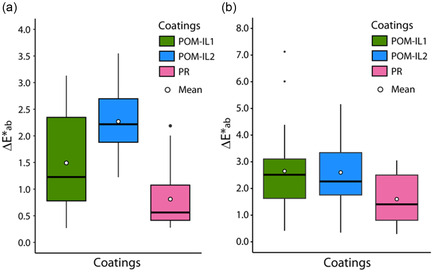 Figure 5
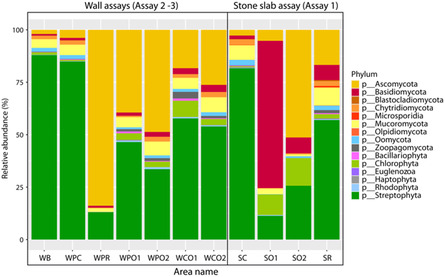 Figure 6
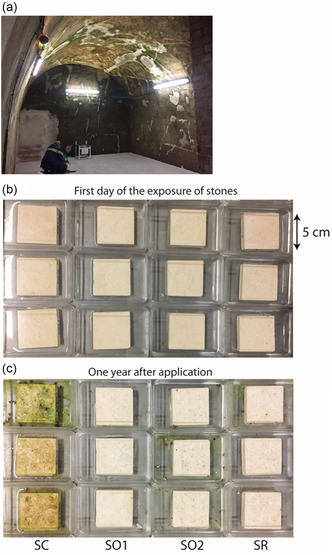 Figure 7
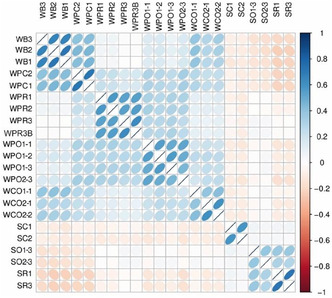 Figure 8
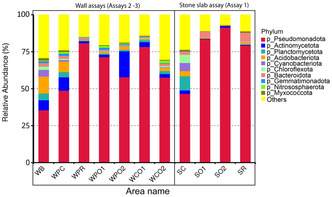 Figure 9
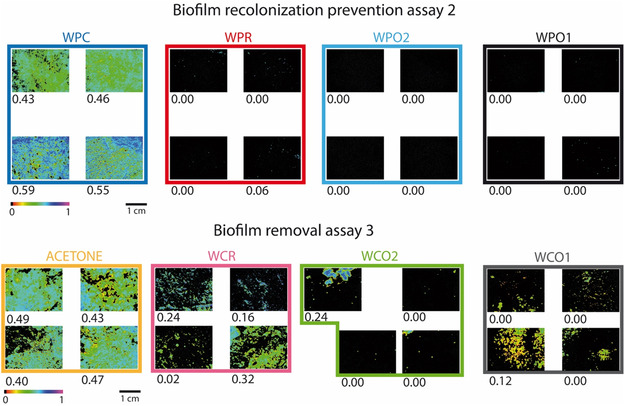 Figure 10
Peer Reviews
No public reviews on file for this paper yet. If you reviewed it on a platform where reviews are public (OpenReview, ICLR, NeurIPS, ICML), you can paste yours below so the community can read it here.
Videos
No videos yet. Explain this paper in a talk, walkthrough, or lecture? Add one.
Taxonomy
TopicsBuilding materials and conservation · Marine Biology and Environmental Chemistry · Odor and Emission Control Technologies