A Novel Intronic Mutation in MBD5 Results in Autosomal Dominant Intellectual Disability Type 1 due to Abnormal Splicing
Heng Jiang, Jingjing Mou, Qiwei Zhao, Long Ding, Yu Wang, Xiaohong Guo, Guohua Yang

TL;DR
A new mutation in the MBD5 gene causes abnormal mRNA splicing, leading to intellectual disability and expanding the known pathogenic variants for this condition.
Contribution
The study identifies a novel intronic mutation in MBD5 that causes abnormal splicing and expands the mutation database for Autosomal Dominant Intellectual Disability Type 1.
Findings
The c.114‐13A>G mutation in MBD5 leads to two types of aberrant mRNA splicing.
The mutation results in changes to the protein's spatial structure and electrostatic potential.
The mutation meets ACMG criteria PS2 and PS3, indicating it is pathogenic.
Abstract
We identified a novel variant in MBD5 located within intron 6: c.114‐13A>G (NM_018328.5) in a family with a patient presenting intellectual disability. This variant is hypothesized to be the etiological agent underlying the patient's condition. We conducted an analysis of mRNA splicing within the patient and their relatives' blood samples via reverse transcription polymerase chain reaction (RT‐PCR) to assess intronic mRNA splicing. Additionally, we employed a minigene vector construction approach to verify in vitro the splicing of mRNA containing the mutated fragment. Protein structure prediction analysis of the aberrant mRNA was performed using PyMOL software. The patient harbors a novel mutation in the MBD5 gene: c.114‐13A>G. Analysis of the patient's blood sample revealed the presence of aberrantly sized mRNA molecules. Utilizing a minigene approach, we discovered that this…
Genes, proteins, chemicals, diseases, species, mutations and cell lines named across the full text — each resolved to its canonical identifier and authoritative record.
Click any figure to enlarge with its caption.
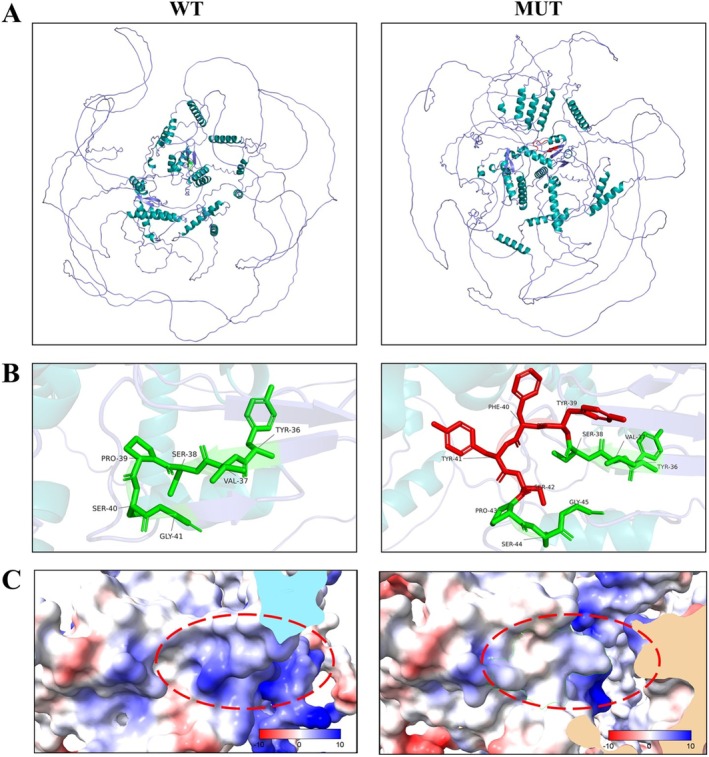 Figure 1
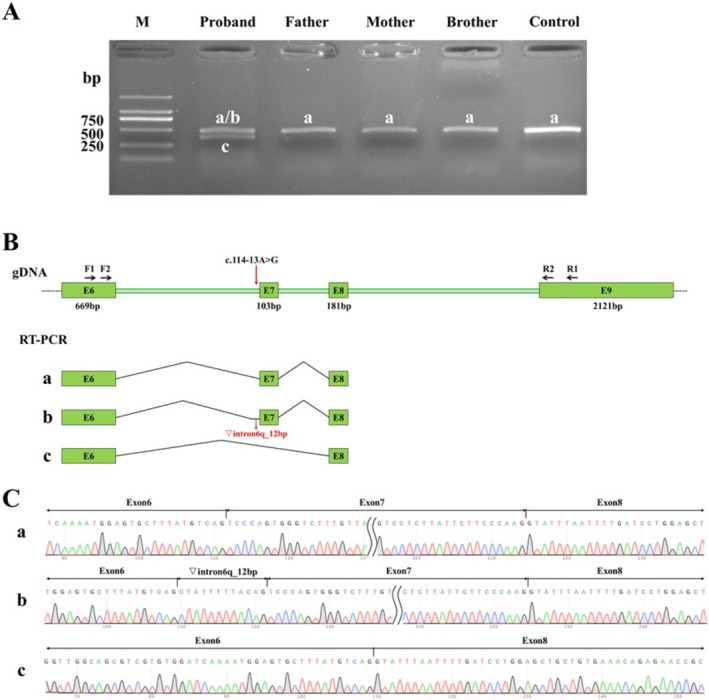 Figure 2
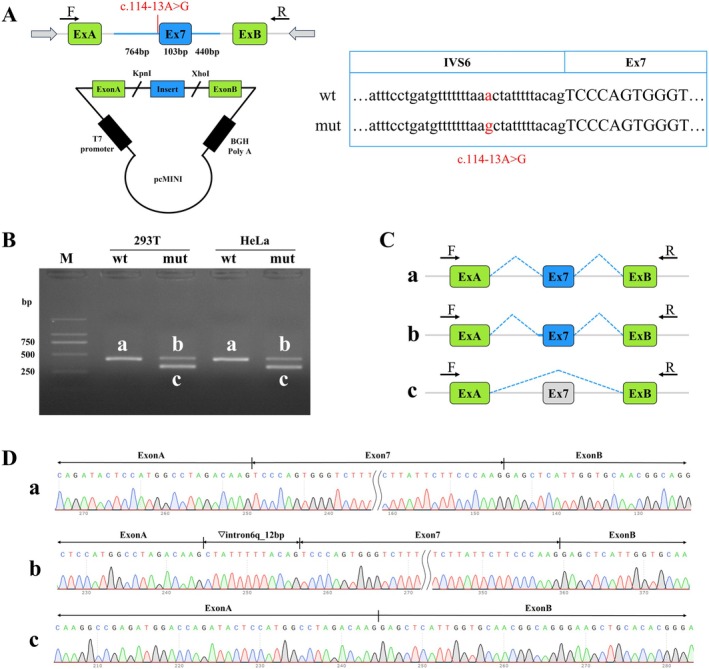 Figure 3
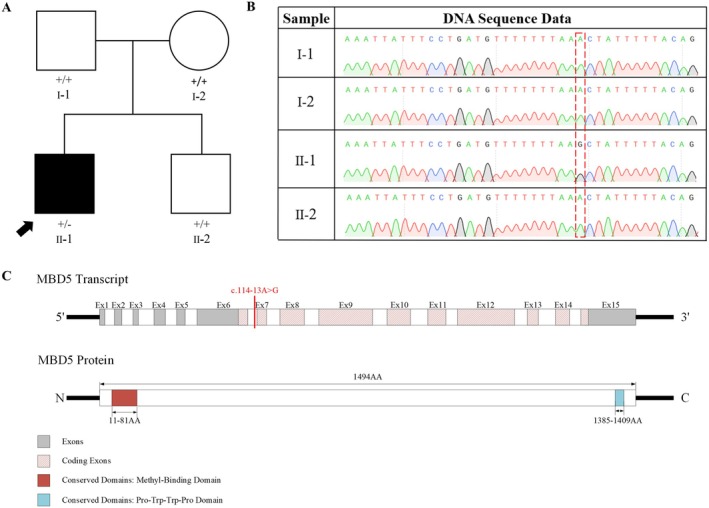 Figure 4
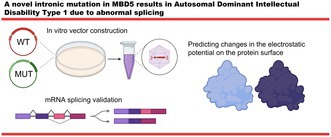 Figure 5
Peer Reviews
No public reviews on file for this paper yet. If you reviewed it on a platform where reviews are public (OpenReview, ICLR, NeurIPS, ICML), you can paste yours below so the community can read it here.
Videos
No videos yet. Explain this paper in a talk, walkthrough, or lecture? Add one.
Taxonomy
TopicsGenomics and Rare Diseases · Genomics and Chromatin Dynamics · RNA Research and Splicing