Alpha-Lipoic Acid Reduces Methemoglobin and Oxidative Imbalance in the Blood and Liver Induced by Dapsone in Mice: Molecular Mechanism of Antioxidant Action
Savio Monteiro dos Santos, Joni Tetsuo Sakai, Bruno Alexandre Quadros Gomes, Lisa Maria Mendes de Almeida Souza, Roseane Guimarães Ferreira, Kaio Murilo Monteiro Espíndola, Ana Flávia Oliveira Pampolha, Kelly Davis, Pamela Suelen da S. Seabra, Larissa de N. da Paz Lopes

TL;DR
Alpha-lipoic acid helps reduce oxidative stress and harmful effects caused by dapsone in mice, offering a potential treatment strategy.
Contribution
The study reveals the molecular mechanism by which alpha-lipoic acid counteracts dapsone-induced oxidative damage.
Findings
Alpha-lipoic acid reduced methemoglobin and oxidative stress in blood and liver of dapsone-intoxicated mice.
Molecular docking suggests alpha-lipoic acid inhibits the toxic metabolite DDS-NOH.
ALA restored redox status and reduced iron accumulation and hepatic enzyme production.
Abstract
Dapsone (DDS) is a sulfone clinically used in the treatment of dermatological disorders, such as dermatitis herpetiformis and psoriasis, besides Toxoplasma gondii, Pneumocystis carinii, and Mycobacterium leprae infections. However, the chronic use of DDS can lead to adverse effects involving all organ systems, such as dapsone hypersensitivity syndrome, methemoglobinemia, hemolytic anemia, and liver injury. These effects probably occur due to the presence of its toxic metabolite DDS-NOH, which can generate reactive oxygen species (ROS), and iron overload, causing oxidative stress. In this sense, antioxidant compounds with chelating properties such as Alpha-lipoic acid (ALA) may be an interesting adjuvant therapy strategy in treating or preventing oxidative stress and adverse reactions related to DDS. This study showed that DDS 40 mg/kg increased the methemoglobin and induced oxidative…
Genes, proteins, chemicals, diseases, species, mutations and cell lines named across the full text — each resolved to its canonical identifier and authoritative record.
Click any figure to enlarge with its caption.
 Figure 1
 Figure 2
 Figure 3
 Figure 4
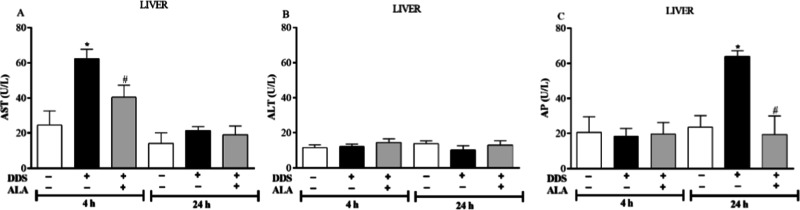 Figure 5
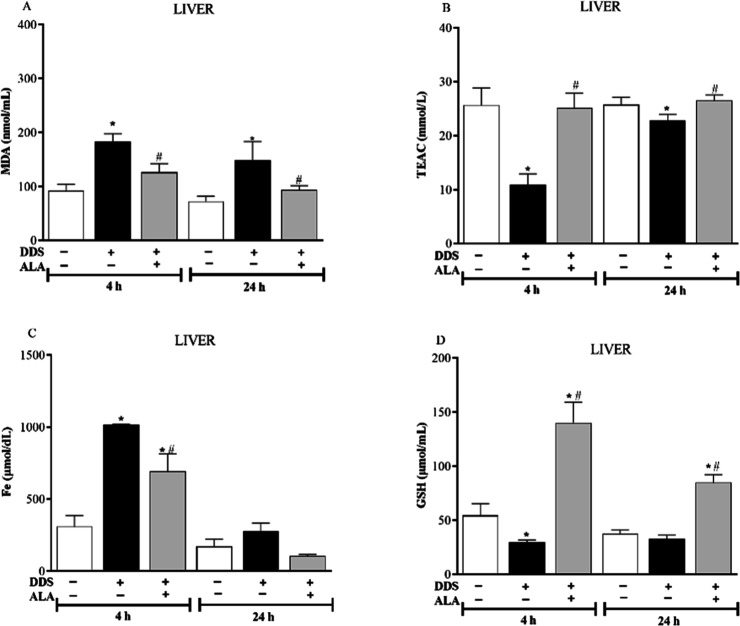 Figure 6
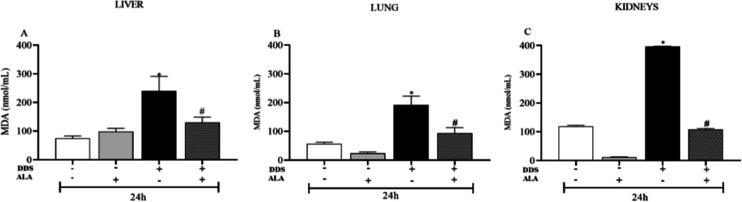 Figure 7
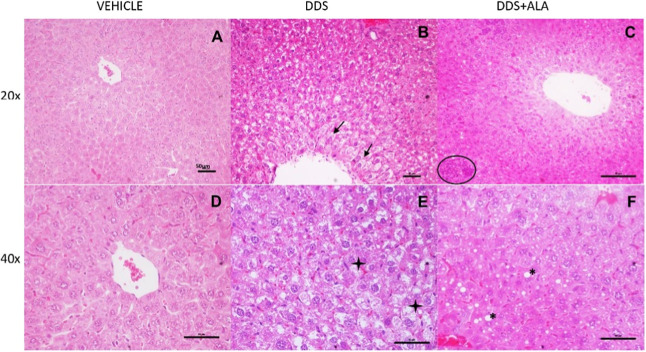 Figure 8
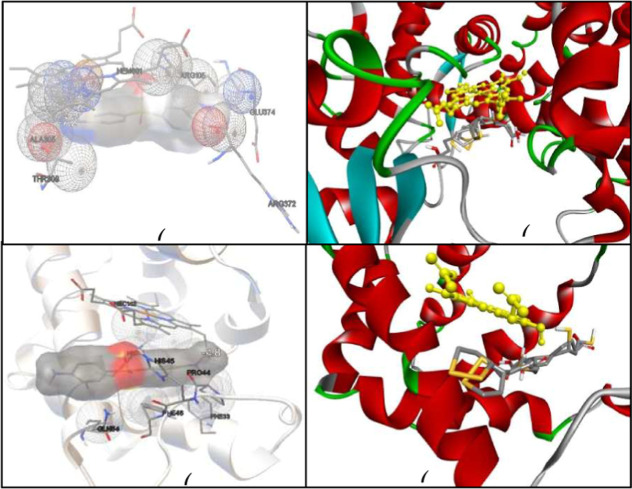 Figure 9
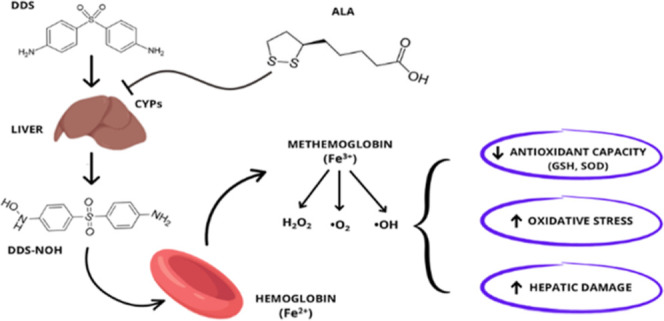 Figure 10
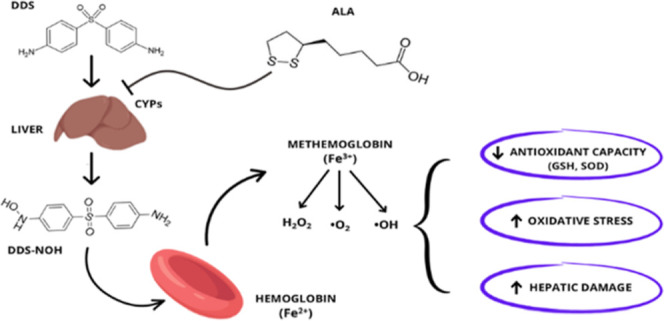 Figure 11
Peer Reviews
No public reviews on file for this paper yet. If you reviewed it on a platform where reviews are public (OpenReview, ICLR, NeurIPS, ICML), you can paste yours below so the community can read it here.
Videos
No videos yet. Explain this paper in a talk, walkthrough, or lecture? Add one.
Taxonomy
TopicsBiochemical Acid Research Studies · Tryptophan and brain disorders · Alcoholism and Thiamine Deficiency