Clinical effects and correlates of standard rTMS and theta burst stimulation (TBS) on suicidal ideation in late-life depression
Hyewon H. Lee, Katharina Göke, Rafae A. Wathra, Benoit Mulsant, Alisson P. Trevizol, Jonathan Downar, Shawn M. McClintock, Sean M. Nestor, Yoshihiro Noda, Tarek K. Rajji, Zafiris J. Daskalakis, Daniel M. Blumberger

TL;DR
This study examines how rTMS and TBS affect suicidal thoughts in older adults with depression, finding both treatments effective with possible sex differences in TBS outcomes.
Contribution
The study provides new insights into the effectiveness of rTMS and TBS for reducing suicidal ideation in late-life depression, including potential sex-based differences in TBS response.
Findings
Both standard rTMS and TBS significantly reduced suicidal ideation in late-life depression.
Females showed higher remission rates with TBS compared to males.
Improvement in cognitive flexibility and inhibition correlated with reduced suicidal ideation.
Abstract
Previous studies have shown that repetitive transcranial magnetic stimulation (rTMS) can treat suicidal symptoms; however, the effects of rTMS on suicidal ideation (SI) in late-life depression (LLD) have not been well-characterized, particularly with theta burst stimulation (TBS). Data were analyzed from 84 older adults with depression from the FOUR-D trial (ClinicalTrials.gov identifier: NCT02998580), who received either bilateral standard rTMS or bilateral TBS targeting the dorsolateral prefrontal cortex. The primary outcome was change in the Beck Scale for Suicide Ideation (SSI). The secondary outcome was remission of SI. Demographic, cognitive, and clinical characteristics that may moderate the effects of rTMS or TBS on SI were explored. There was a statistically significant change in the total SSI score over time [χ2(7) = 136.018, p < 0.001], with no difference between the two…
Genes, proteins, chemicals, diseases, species, mutations and cell lines named across the full text — each resolved to its canonical identifier and authoritative record.
Click any figure to enlarge with its caption.
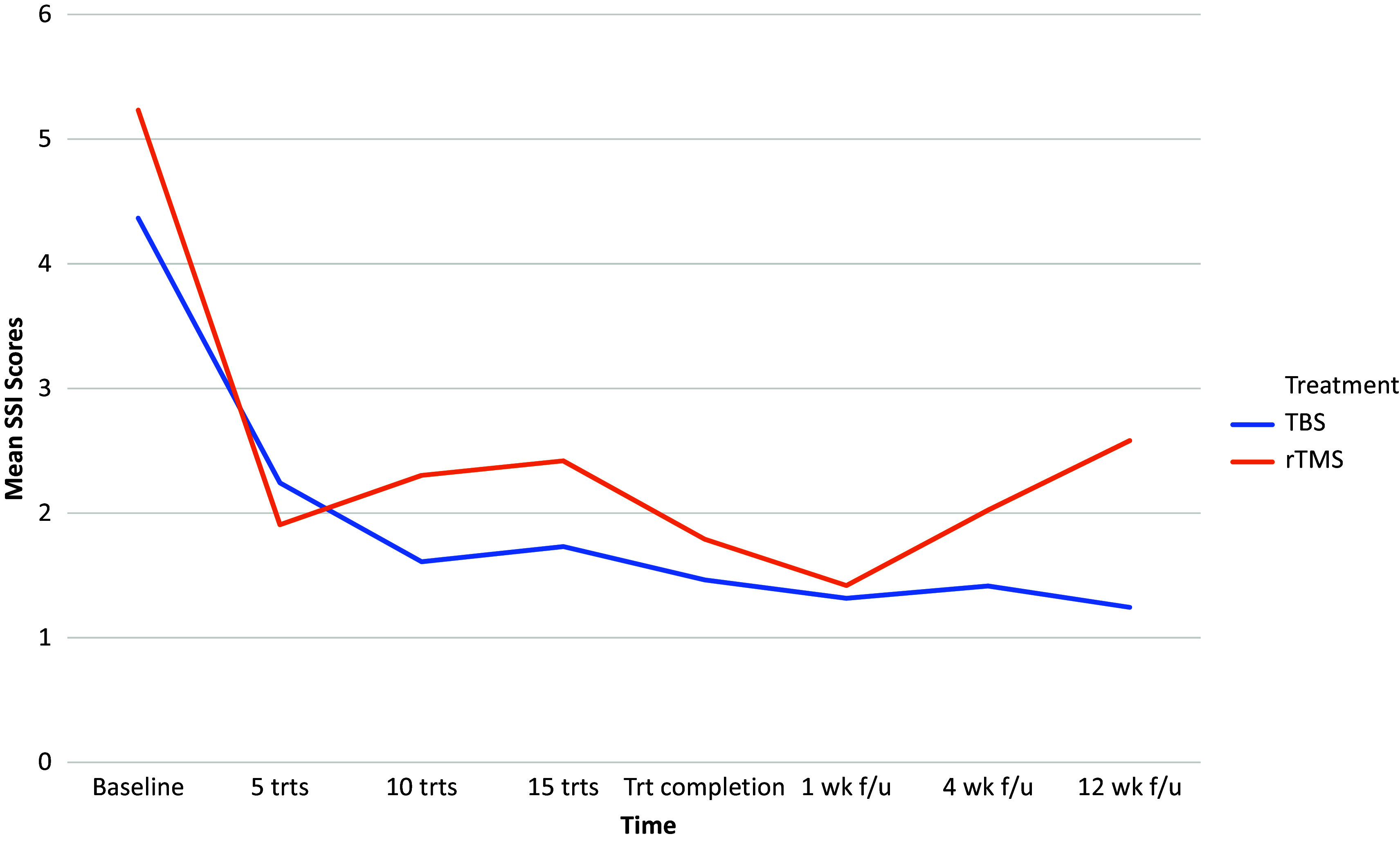 Figure 1
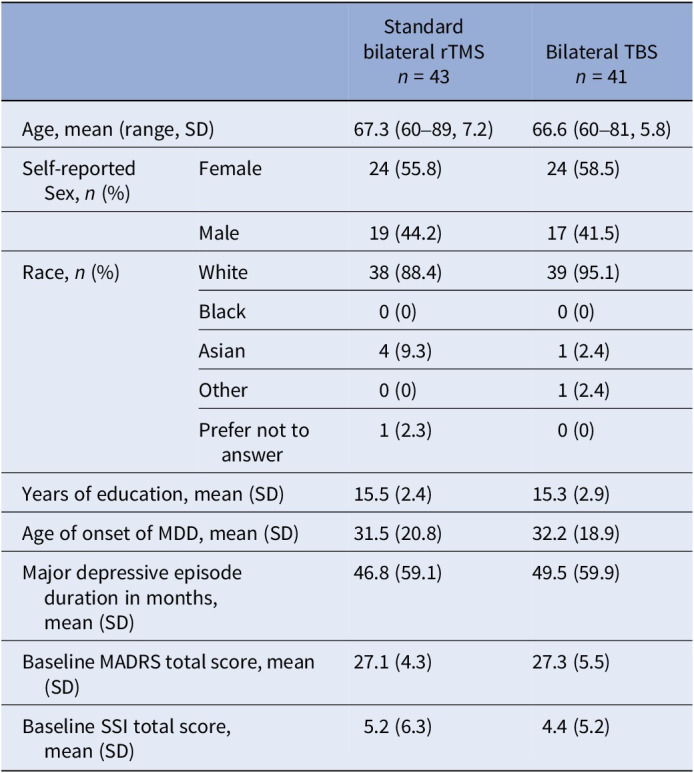 Figure 2
Peer Reviews
No public reviews on file for this paper yet. If you reviewed it on a platform where reviews are public (OpenReview, ICLR, NeurIPS, ICML), you can paste yours below so the community can read it here.
Videos
No videos yet. Explain this paper in a talk, walkthrough, or lecture? Add one.
Taxonomy
TopicsFunctional Brain Connectivity Studies · Mental Health Research Topics