Acute medical care for individuals experiencing homelessness in Kuala Lumpur
Khasnur Abd Malek, Ilham Ameera Ismail, Farnaza Ariffin, Md Yasin Mazapuspavina, Raja Ahmad Shaharul

Abstract
Genes, proteins, chemicals, diseases, species, mutations and cell lines named across the full text — each resolved to its canonical identifier and authoritative record.
Click any figure to enlarge with its caption.
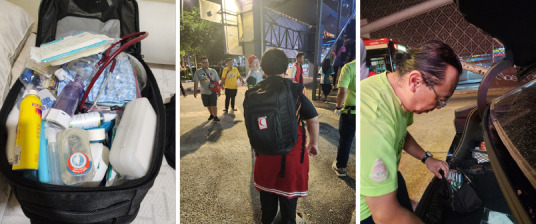 Figure 1
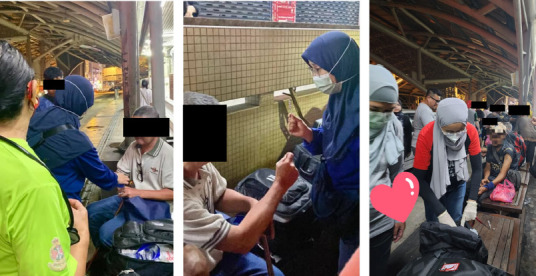 Figure 2
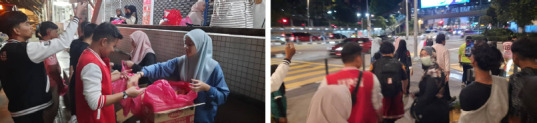 Figure 3
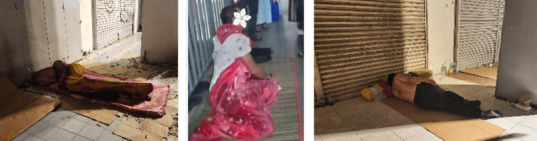 Figure 4
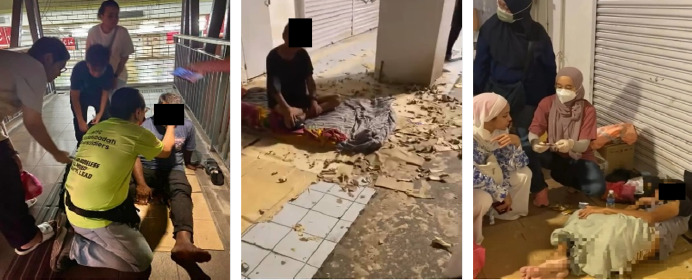 Figure 5
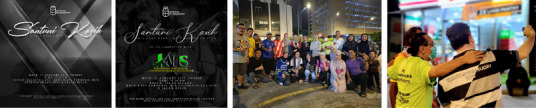 Figure 6
Peer Reviews
No public reviews on file for this paper yet. If you reviewed it on a platform where reviews are public (OpenReview, ICLR, NeurIPS, ICML), you can paste yours below so the community can read it here.
Videos
No videos yet. Explain this paper in a talk, walkthrough, or lecture? Add one.
Taxonomy
TopicsHomelessness and Social Issues · Urban and Rural Development Challenges
Unmet health needs
Individuals experiencing homelessness often suffer from acute medical conditions that go untreated due to a lack of financial means to access healthcare services and delay in seeking medical help. To help address these challenges, the Food for Gelandangan (FFG) team, established in 2013, brings together community volunteers to distribute food and hygiene items every Friday night in the heart of Kuala Lumpur, along with healthcare professionals to provide medical care. However, volunteer doctors are limited, and medical services are only available sporadically depending on volunteer availability, with a family medicine specialist providing care once a month. In response, a dedicated group of family medicine specialists came together to develop a street-based acute medical care outreach programme to support the FFG’s initiative.
The experience
Our journey began with joining the Friday rounds to better understand the group’s needs, its logistical challenges and how to best provide acute medical care. Essential medications and medical equipment were purchased using individual funds to ensure adequate medical supply (Figure 1). Commonly needed medications include treatments for skin infections, fever, toothaches, mouth ulcers, pain, wounds, upper respiratory tract infections and chronic diseases. Additionally, there is a high demand for minyak angin (medicated oil).
Medication bags filled with medicines and point-of-care assessment kits.
We arrived at the meet-up point, Kotaraya, by 9:30 pm. When we arrived, a long queue had already formed in an orderly manner, and our medical team began our service immediately, setting up a makeshift clinic on public benches (Figure 2). Other volunteers sorted donations including non-perishable food, hygiene items and mosquito coils (Figure 3).
To truly reach individuals experiencing homelessness, we then walked the streets, carrying our medical bags through the city centre. It was heartbreaking to see individuals making sidewalks, bridges and dark alleys their homes. Many had no pillows or clean mattresses, just a thin piece of cardboard between them and the cold, dirty pavement. Streetlights illuminated their makeshift beds, and the constant noise of passing vehicles was their lullaby (Figure 4).
Volunteer family medicine doctors providing acute medical care to those in need.
Volunteers packing non-perishable food and the group walk.
Unsheltered homeless and their so-called homes along the pedestrian pavement.
Encountered medical issues
The medical issues of those approached by the team included skin infections, musculoskeletal pain and wounds, although some struggled with substance use and psychiatric illness. During our visits, we treated medical emergencies, including hypertensive urgency, asthma and pneumonia (Figure 5). Despite language barriers, we provided urgent care and even coordinated an ambulance service, ensuring a critically ill patient received hospital treatment and thus preventing severe complications.
Providing aid to the homeless in harsh living conditions.
A solution for now
Street-based medical care reduces access barriers and builds trust. A consistent outreach programme (Figure 6) can improve health, reduce emergencies and encourage better health-seeking behaviours, ultimately lowering morbidity and mortality among homeless individuals.
The future
Sustaining medical care requires volunteers, government support, NGO collaboration and CSR funding to impact vulnerable communities effectively. The dream is clear, a future where every individual, regardless of their circumstances, has access to essential acute healthcare. With collective effort and firm dedication, we can turn this vision into reality.
The Food for Gelandangan team and its amazing volunteers.