Bias in vital signs? Machine learning models can learn patients’ race or ethnicity from the values of vital signs alone
Bojana Velichkovska, Hristijan Gjoreski, Daniel Denkovski, Marija Kalendar, Irene Dankwa Mullan, Judy Wawira Gichoya, Nicole Martinez, Leo Celi, Venet Osmani

TL;DR
Machine learning models can predict a patient's race or ethnicity using only vital signs, even after accounting for known biases, raising concerns about fairness in healthcare.
Contribution
The study demonstrates that racial or ethnic information is embedded in vital signs and can be learned by ML models, even when controlling for known biases.
Findings
ML models achieved an AUC of 0.74 between White and Black patients using only vital signs.
Heart rate, oxygen saturation, and blood pressure showed small but significant differences between racial groups.
The model correctly classified race or ethnicity in two out of three patients, indicating non-random results.
Abstract
To investigate whether machine learning (ML) algorithms can learn racial or ethnic information from the vital signs alone. A retrospective cohort study of critically ill patients between 2014 and 2015 from the multicentre eICU-CRD critical care database involving 335 intensive care units in 208 US hospitals, containing 200 859 admissions. We extracted 10 763 critical care admissions of patients aged 18 and over, alive during the first 24 hours after admission, with recorded race or ethnicity as well as at least two measurements of heart rate, oxygen saturation, respiratory rate and blood pressure. Pairs of subgroups were matched based on age, gender, admission diagnosis and disease severity. XGBoost, Random Forest and Logistic Regression algorithms were used to predict recorded race or ethnicity based on the values of vital signs. Models derived from only four vital signs can predict…
Genes, proteins, chemicals, diseases, species, mutations and cell lines named across the full text — each resolved to its canonical identifier and authoritative record.
Click any figure to enlarge with its caption.
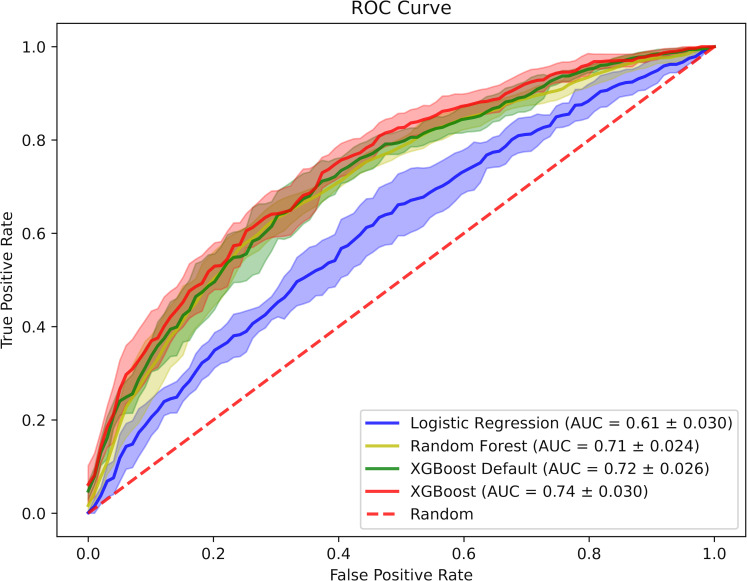 Figure 1
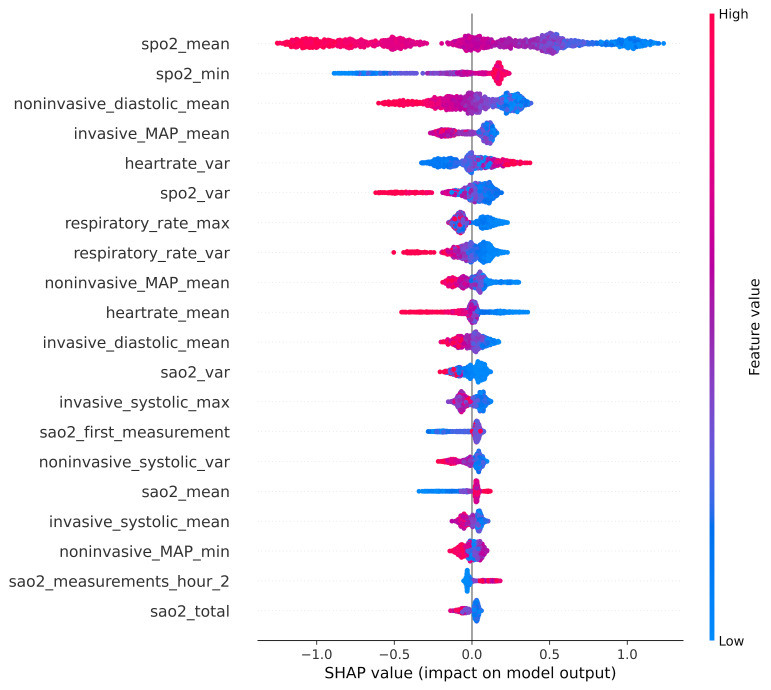 Figure 2
Peer Reviews
No public reviews on file for this paper yet. If you reviewed it on a platform where reviews are public (OpenReview, ICLR, NeurIPS, ICML), you can paste yours below so the community can read it here.
Videos
No videos yet. Explain this paper in a talk, walkthrough, or lecture? Add one.
Taxonomy
TopicsArtificial Intelligence in Healthcare and Education · Healthcare cost, quality, practices · Autopsy Techniques and Outcomes