Concordance between FVC and FEV6 for identifying chronic airflow obstruction and spirometric restriction in the Burden of Obstructive Lung Disease (BOLD) study
Ben Knox-Brown, James Potts, Frits M E Franssen, Rune Nielsen, Meriam Denguezli, Anders Ørskov Rotevatn, Sanjay K Juvekar, Hamid Hacene Cherkaski, Michael Studnicka, Karl Peter Sylvester, Kevin Mortimer, Eric D Bateman, Christer Janson, Andrei Malinovschi, Terence Seemungal

TL;DR
This study shows that FEV6 can reliably replace FVC in identifying lung conditions like chronic airflow obstruction and spirometric restriction.
Contribution
The study demonstrates that FEV6 is a valid and accurate alternative to FVC in large-scale lung disease assessments.
Findings
FEV1/FEV6 had excellent accuracy (AUC: 0.90) in identifying FEV1/FVC below the lower limit of normal.
FEV6 showed strong agreement (AUC: 0.95) with FVC in identifying spirometric restriction.
Discordant measurements were linked to worse respiratory symptoms and quality of life.
Abstract
We investigated whether the forced expiratory volume in 6 s (FEV6) can be used as a surrogate for the forced vital capacity (FVC). The Burden of Obstructive Lung Disease is a multinational cohort study. At baseline, data were collected from adults, aged 40 years or older, from 41 sites across 34 countries. Participants from 18 sites were followed-up after a median of 8.3 years. Participants who completed the study core questionnaire and had acceptable post-bronchodilator spirometry were included. We performed receiver operating characteristic analyses to measure the ability of FEV1/FEV6 less than the lower limit of normal (LLN) to correctly classify FEV1/FVC less than the LLN, and FEV6 less than the LLN to correctly classify FVC less than the LLN. We used multilevel regression analyses to assess the association of discordant measurements with respiratory symptoms, quality of life and…
Genes, proteins, chemicals, diseases, species, mutations and cell lines named across the full text — each resolved to its canonical identifier and authoritative record.
Click any figure to enlarge with its caption.
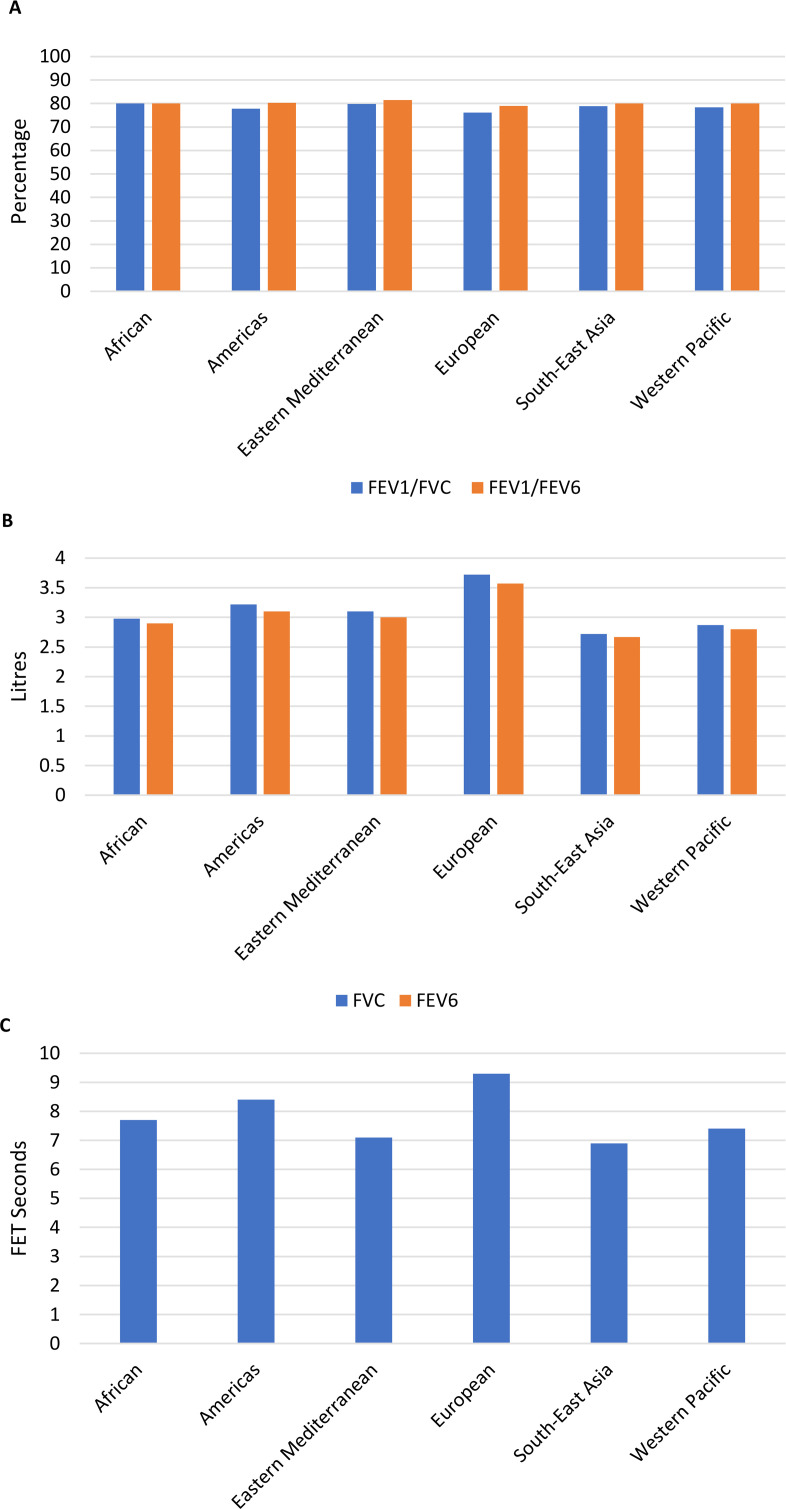 Figure 1
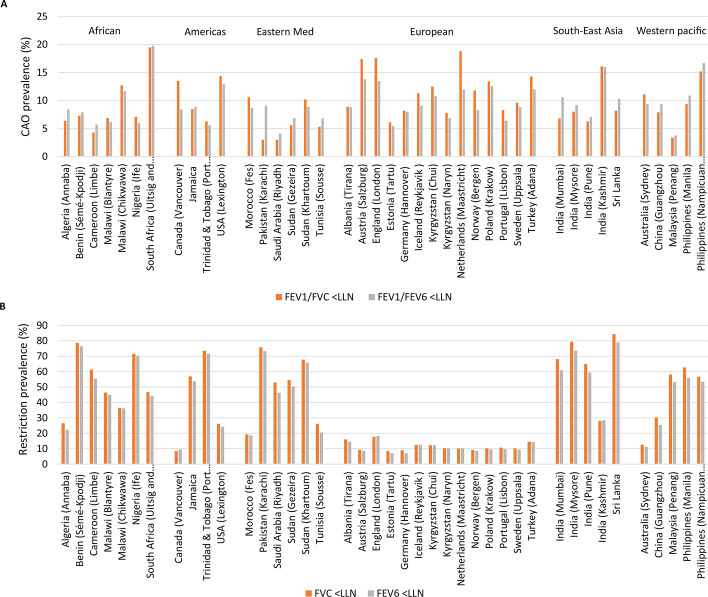 Figure 2
Peer Reviews
No public reviews on file for this paper yet. If you reviewed it on a platform where reviews are public (OpenReview, ICLR, NeurIPS, ICML), you can paste yours below so the community can read it here.
Videos
No videos yet. Explain this paper in a talk, walkthrough, or lecture? Add one.
Taxonomy
TopicsChronic Obstructive Pulmonary Disease (COPD) Research · Asthma and respiratory diseases · Respiratory Support and Mechanisms